
7 Essential Window Treatment Fabric Tips for Homeowners
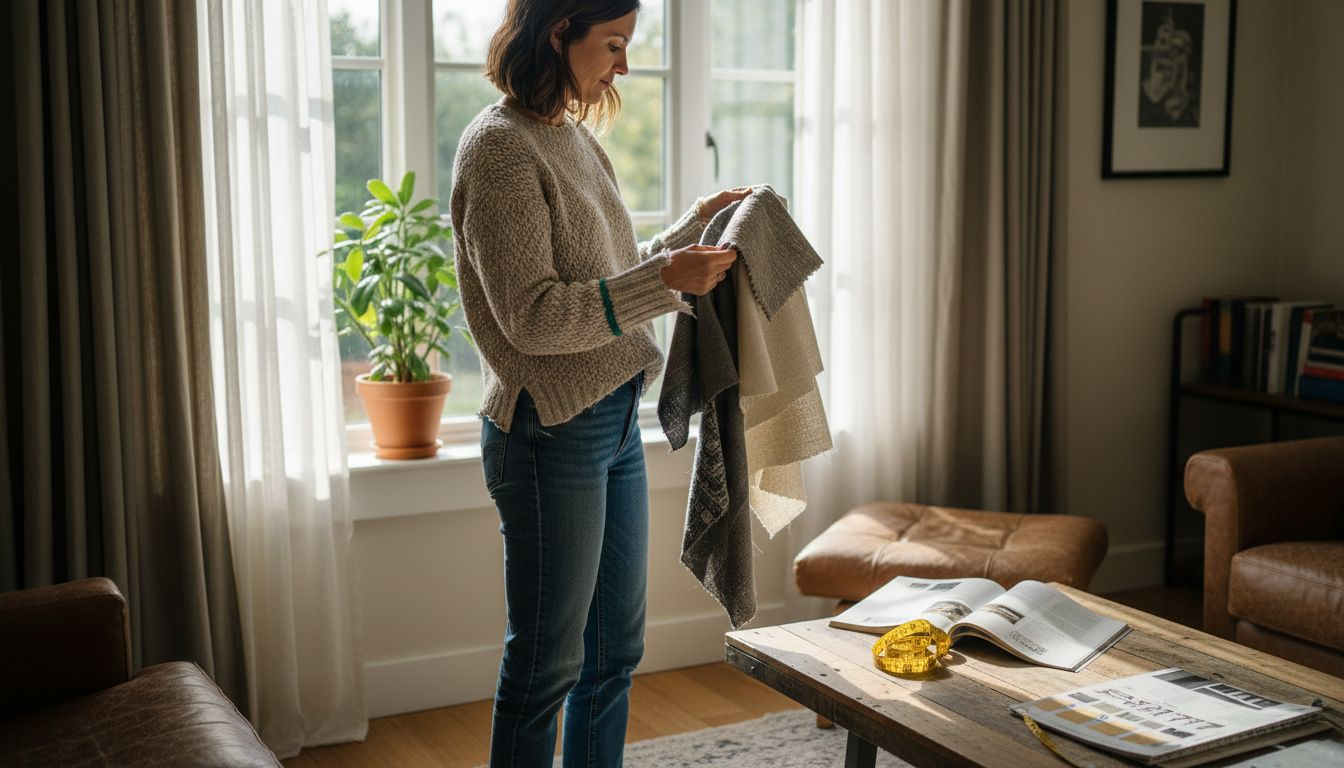
Choosing the perfect fabric for your window treatments can feel overwhelming. The wrong choice might leave your home with unwanted glare, lack of privacy, or a look that just does not fit. Knowing how fabric types, color, and patterns influence both sunlight and decor will help you create a space that is comfortable and visually appealing.
This guide gives you clear steps to match window treatment fabrics with your style and functional needs. You will find practical advice for managing light, ensuring privacy, and selecting colors that work beautifully in your rooms. Get ready to discover strategies that will make selecting window treatment fabrics easier and your interior design choices more confident.
Table of Contents
- Understand Fabric Types For Window Treatments
- Assess Light Control And Privacy Needs
- Choose Colors And Patterns For Interior Harmony
- Evaluate Durability And Maintenance Requirements
- Request Fabric Samples Before Purchase
- Consider Layering For Aesthetic And Function
- Schedule A Design Consultation For Personalized Advice
Quick Summary
| Key Insight | Explanation |
|---|---|
| 1. Choose the Right Fabric | Fabric selection impacts light control, privacy, and room aesthetics. Consider cotton, linen, silk, velvet, or polyester based on your needs. |
| 2. Assess Light and Privacy Needs | Evaluate room orientation and activities to choose window treatments that manage sunlight and ensure privacy effectively. |
| 3. Color and Pattern Harmony | Select colors and patterns that enhance room mood and design. Test swatches in your space to ensure compatibility. |
| 4. Durability and Maintenance Matter | Choose fabrics with suitable durability and low maintenance for long-lasting performance, especially in sun-exposed areas. |
| 5. Request Fabric Samples | Always request samples to assess true color, texture, and light interaction before making your final decision. |
1. Understand Fabric Types for Window Treatments
Choosing the right fabric for window treatments is more than just selecting a pretty pattern. The fabric you select directly impacts light control, privacy, and the overall aesthetic of your interior space.
Window coverings come in a diverse range of materials, each with unique characteristics that influence performance and style. Window coverings include various fabric types designed to manage sunlight, privacy, and room insulation.
Key fabric types for window treatments include:
- Cotton: Lightweight, breathable, and versatile
- Linen: Natural texture with elegant drape
- Silk: Luxurious appearance with delicate sheen
- Velvet: Rich, dense fabric providing excellent light blocking
- Polyester: Durable, wrinkle-resistant synthetic option
When selecting window treatment fabrics, consider these critical factors:
- Room lighting requirements
- Privacy needs
- Aesthetic design of your space
- Maintenance and cleaning ease
Fabric opacity and weave dramatically influence how much light enters your room and the level of privacy you’ll achieve.
Each fabric type offers distinct advantages. Cotton provides breathability and casual elegance. Silk delivers sophisticated luxury. Polyester ensures durability and easy maintenance.
Pro tip: Always request fabric samples before making a final decision to understand texture, color, and light-filtering properties in your specific home environment.
2. Assess Light Control and Privacy Needs
Window treatments do far more than just decorate your space. They are strategic solutions for managing light, maintaining privacy, and enhancing your home’s comfort and energy efficiency.
Window coverings manage sunlight and privacy through carefully selected materials and designs that balance daylight quantity and view quality.
Key considerations for light control and privacy include:
- Room orientation: South and west-facing windows require different treatments
- Interior activities: Home office versus bedroom needs differ
- Neighboring building proximity: Urban versus suburban settings impact privacy requirements
Light control strategies involve multiple factors:
- Determine sunlight intensity in each room
- Assess time of day light exposure occurs
- Consider view preservation versus complete privacy
- Evaluate thermal comfort needs
Effective window treatments transform rooms by regulating light infiltration while maintaining visual comfort.
Some homeowners prefer layered window treatments that provide flexibility. Sheer curtains underneath blackout drapes allow you to adjust light and privacy throughout the day.
Pro tip: Install adjustable window treatments with multiple control options like cordless mechanisms or top-down bottom-up designs for maximum light and privacy customization.
3. Choose Colors and Patterns for Interior Harmony
Window treatment fabrics are more than decorative elements they are powerful design tools that can transform your living spaces. Color theory plays a crucial role in creating harmonious interior environments.
Your fabric choices significantly impact the mood and aesthetic of a room. Colors and patterns communicate subtle emotional messages and can either blend seamlessly or create striking visual statements.
Key color selection strategies include:
- Neutral tones: Create calm and sophisticated spaces
- Bold patterns: Add visual interest and personality
- Complementary colors: Enhance overall room design
- Monochromatic schemes: Provide elegant simplicity
Color selection considerations:
- Analyze existing room color palette
- Consider furniture and wall colors
- Determine room’s primary function
- Evaluate natural light conditions
Fabric colors and patterns are powerful design elements that can either harmonize or dramatically transform your interior spaces.
Some homeowners prefer subtle texture variations that add depth without overwhelming the room. Soft, muted patterns in complementary colors can create a sophisticated and balanced look.
Pro tip: Always obtain fabric swatches and test them in your actual room lighting to ensure the colors and patterns work harmoniously with your existing decor.
4. Evaluate Durability and Maintenance Requirements
Window treatment fabrics are an investment that requires careful consideration of long-term performance and care. Fabric coatings improve durability by enhancing resistance to wear and environmental factors.
Durability impacts both the aesthetic appeal and functional longevity of your window treatments. Not all fabrics are created equal some require significantly more maintenance than others.
Key durability factors to consider:
- Sun exposure resistance: Prevents fading and material breakdown
- Moisture tolerance: Reduces risk of mildew and fabric degradation
- Cleaning requirements: Determines long-term maintenance effort
- Fabric weight and weave: Influences overall structural integrity
Maintenance evaluation steps:
- Check manufacturer cleaning instructions
- Assess fabric fiber composition
- Consider room-specific environmental conditions
- Evaluate cost of professional cleaning versus replacement
High-quality window treatment fabrics balance aesthetic appeal with practical durability and easy maintenance.
Synthetic fabrics like polyester often provide superior durability and low maintenance compared to delicate natural fibers. They resist wrinkles stains and require minimal care.
Pro tip: Request fabric samples and perform a simple durability test by exposing them to direct sunlight and conducting mock cleaning to assess their long-term performance potential.
5. Request Fabric Samples Before Purchase
Before investing in window treatments, seeing and feeling fabric samples is crucial to making an informed decision. Textile samples help homeowners visualize fabric performance in their specific interior environment.
Fabric samples provide critical insights that online images or descriptions cannot fully communicate. Texture light interaction and true color are best evaluated through physical samples.
Key reasons to request fabric samples:
- Color accuracy: Understand true shade in your lighting
- Texture assessment: Feel fabric weight and drape
- Light interaction: Observe how fabric filters sunlight
- Quality confirmation: Examine fabric construction
Sample evaluation process:
- Request multiple samples
- Test samples in intended room
- Observe samples at different times of day
- Compare against existing decor
Fabric samples are your insurance policy against costly window treatment mistakes.
Many homeowners underestimate the importance of physical fabric examination. Digital representations cannot replace the tactile understanding gained from actual samples.
Pro tip: Request samples during different lighting conditions and attach them temporarily to your window to see how they truly perform in your specific space.
6. Consider Layering for Aesthetic and Function
Window treatment layering transforms ordinary spaces into sophisticated interior environments. Window treatments utilize multiple fabric layers to create versatile design solutions that balance aesthetics and functionality.
Layering allows homeowners to customize light control privacy and room ambiance through strategic fabric combinations. By mixing different textures weights and opacities you can achieve remarkable design flexibility.
Effective layering strategies include:
- Sheer and opaque combinations: Create depth and light control
- Complementary fabric textures: Add visual interest
- Contrasting color palettes: Enhance room design
- Functional fabric pairings: Balance privacy and natural light
Layering techniques:
- Start with a lightweight sheer base layer
- Add heavier drapes or curtains for insulation
- Incorporate decorative valances or top treatments
- Consider functional additions like thermal liners
Layered window treatments are like architectural jewelry transforming rooms with nuanced design and practical performance.
Some homeowners prefer subtle monochromatic layering that adds sophisticated dimension without overwhelming the space. Mixing similar tones creates a refined elegant look.
Pro tip: Experiment with sample fabric swatches pinned in layered arrangements to visualize how different combinations will interact before making final window treatment selections.
7. Schedule a Design Consultation for Personalized Advice
Professional design consultations transform window treatment selection from a guessing game into a strategic decision. Window treatment consultations help homeowners optimize design choices by leveraging expert knowledge and personalized recommendations.
A professional design consultation provides comprehensive insights that go beyond standard retail advice. Experts can evaluate your specific space architectural features lighting conditions and personal style to recommend optimal window treatment solutions.
Benefits of professional design consultations include:
- Personalized recommendations: Tailored to your unique space
- Technical expertise: Understanding fabric performance
- Cost-effective solutions: Prevent expensive mistakes
- Style integration: Harmonize with existing decor
Consultation preparation steps:
- Gather room measurements
- Collect inspiration images
- Note specific functional requirements
- Prepare questions about fabric and design
Design consultations bridge the gap between aesthetic vision and practical window treatment implementation.
Some homeowners discover unexpected design possibilities through professional guidance. An expert can introduce fabric combinations or layering techniques you might not have considered.
Pro tip: Prepare a brief room overview including photos window dimensions and current decor to maximize the effectiveness of your design consultation.
Below is a comprehensive table summarizing the main considerations, strategies, and options discussed for selecting window treatment fabrics, as detailed in the article.
| Topic | Details | Considerations |
|---|---|---|
| Fabric Types | Includes cotton, linen, silk, velvet, and polyester, each offering unique benefits. | Consider light control, privacy, and overall aesthetic. |
| Light Control | Address sunlight intensity, exposure times, and privacy needs. | Layered treatments offer flexibility and adaptability. |
| Color and Patterns | Utilize neutral tones, bold patterns, or monochromatic schemes for desired styles. | Test in room-light conditions for true color accuracy. |
| Durability and Maintenance | Synthetic options like polyester are more durable and low maintenance. | Assess cleaning instructions and environmental factors. |
| Request Samples | Essential for evaluating fabric performance in real settings. | Observe colors and drape under different lighting. |
| Layering Techniques | Combine sheer and heavy fabrics for enhanced utility and aesthetics. | Experiment with combinations to refine design. |
| Professional Consultations | Experts provide tailored advice respecting space and style requirements. | Prepare room details and goals for effective input. |
Elevate Your Home with Expert Window Treatment Fabrics
Choosing the perfect fabric for your window treatments can feel overwhelming. From balancing light control and privacy to matching colors and textures that enhance your interior design, every decision impacts the comfort and style of your home. The challenges of selecting durable fabrics that are easy to maintain while reflecting your personal taste are real. That is why having access to high-quality samples and professional advice is essential before making your final choice.
Discover a wide selection of premium designer fabrics including cotton, embroidered, and jacquard satin at Beautiful Window Elgin. Whether you want to test different textures with fabric samples or schedule a personalized design consultation, our expert team is ready to guide you through every step. Start transforming your living spaces today by visiting Beautiful Window Elgin and see how the right fabrics breathe life into your windows and home.
Frequently Asked Questions
What fabric types should I consider for window treatments?
Choosing the right fabric is crucial for your window treatments. Consider materials like Cotton for versatility, Silk for luxury, and Velvet for excellent light blocking. Assess the specific needs of each room to determine the best fabric type.
How do I assess my light control and privacy needs when selecting window treatments?
Evaluate the sunlight intensity and privacy requirements of each room. For example, rooms facing south may need heavier treatments, while others might benefit from sheer options. This assessment will help you choose the right design to enhance comfort and aesthetics.
Why is it important to request fabric samples before purchasing window treatments?
Requesting fabric samples allows you to see the true color and texture in your own lighting conditions. By testing samples in your intended space, you ensure that your final selection complements your decor and performs as desired.
How can I ensure that my window treatment fabrics are durable and easy to maintain?
Look for fabrics that are resistant to sunlight and moisture for longevity. Also, consider the cleaning requirements; synthetic fabrics like Polyester generally require less maintenance than natural fibers. Prioritize durability to maximize your investment.
What are the benefits of layering window treatments for both style and function?
Layering allows you to combine different textures and opacities for enhanced light control and privacy. For example, pairing sheer curtains with opaque drapes can create a visually appealing and functional solution, enabling you to adapt your space to different lighting needs throughout the day.
Recommended
- Why Custom Window Treatments Matter for Homes – Shop Designer Fabrics by the Yard | Curtains & Drapery
- Curtain Style Selection Process for Custom Drapery Success – Shop Designer Fabrics by the Yard | Curtains & Drapery
- Cotton Drapery Explained: Style, Durability, and Impact – Shop Designer Fabrics by the Yard | Curtains & Drapery
- Purple pencil pleat curtain panel| 96" Length – Beautiful Windows Elgin | Shop Designer Fabrics by the Yard
- Upholstery Fabrics and Cleaning Guide 2025 for Yarra Valley - Yarra Valley Carpet Cleaning
- 7 Top Retractable Awning Material Options for UK Homes