
Fabric Crocking: Why Color Rubs Off and How to Test It
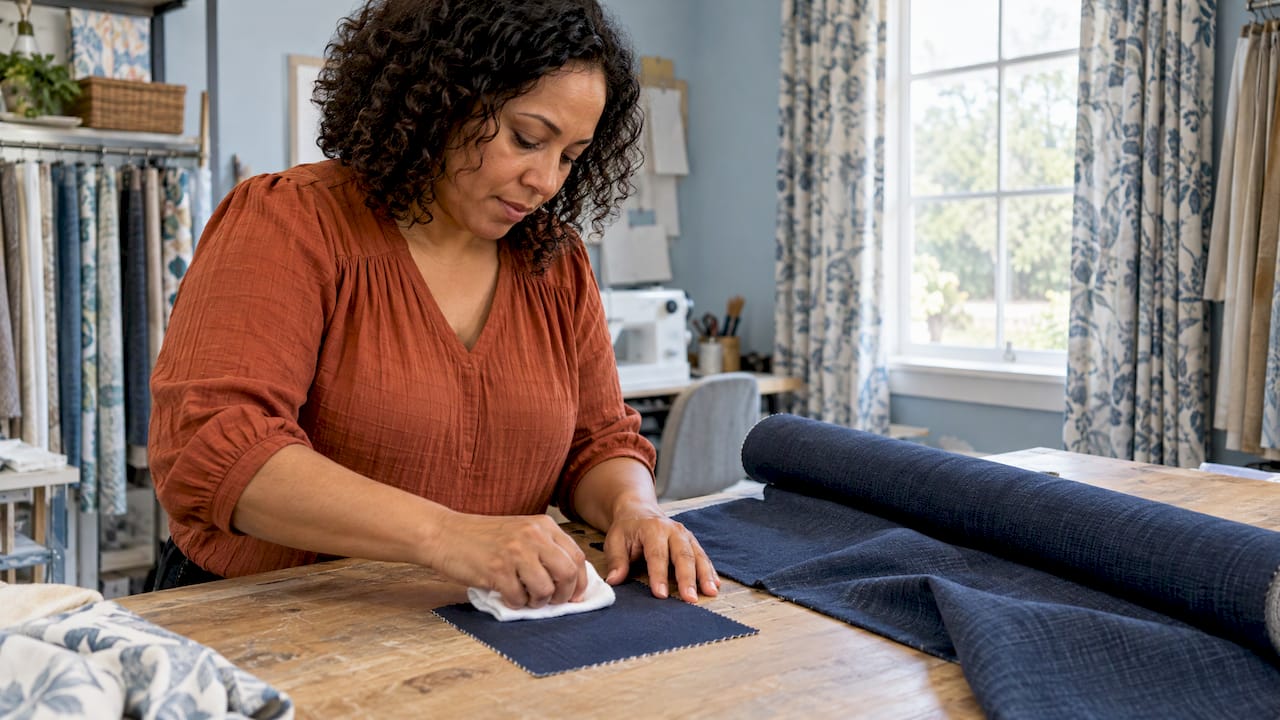
Crocking is color that rubs off a dyed or printed fabric onto another surface, such as a hand, a white sofa cushion or a light wall. It is graded on a 1 to 5 scale, and for home textiles the grade you need depends on the use: drapery and upholstery have different minimums. This guide explains what causes crocking, how the test works, which grades to look for, and how to choose curtain, upholstery, marine and utility fabric that holds its color. At Beautiful Windows Elgin, we sell designer fabric by the yard, ready-made curtains and custom drapery, so we look at crocking from the buyer’s side of the table.
BeautifulwindowselginChoose Fabrics That Hold Their ColorExplore designer fabrics, curtains, and custom drapery options for home projects where color transfer matters.Visit
TL;DR
- Crocking is dry or wet rubbing transfer of surface dye. It is not the same as color bleeding in the wash, and a fabric can pass one and fail the other.
- Results run from Grade 5 (no transfer) to Grade 1 (heavy transfer). Higher is better.
- The ACT guidelines set minimums of Grade 3 dry and wet for drapery, and Grade 4 dry and Grade 3 wet for upholstery.
- Deep shades such as black, navy and red carry more dye and have more potential to transfer.
- Wet crocking is usually the lower number, so judge a fabric by its wet grade.
Table of Contents
- What crocking is, and how it differs from bleeding
- What causes fabric to crock
- How the crocking test works
- Reading the grades
- Choosing fabric that holds its color
- Managing color transfer after purchase
- Our perspective
- Fabric and curtains from Beautiful Windows Elgin
- FAQ
- Sources
What crocking is, and how it differs from bleeding
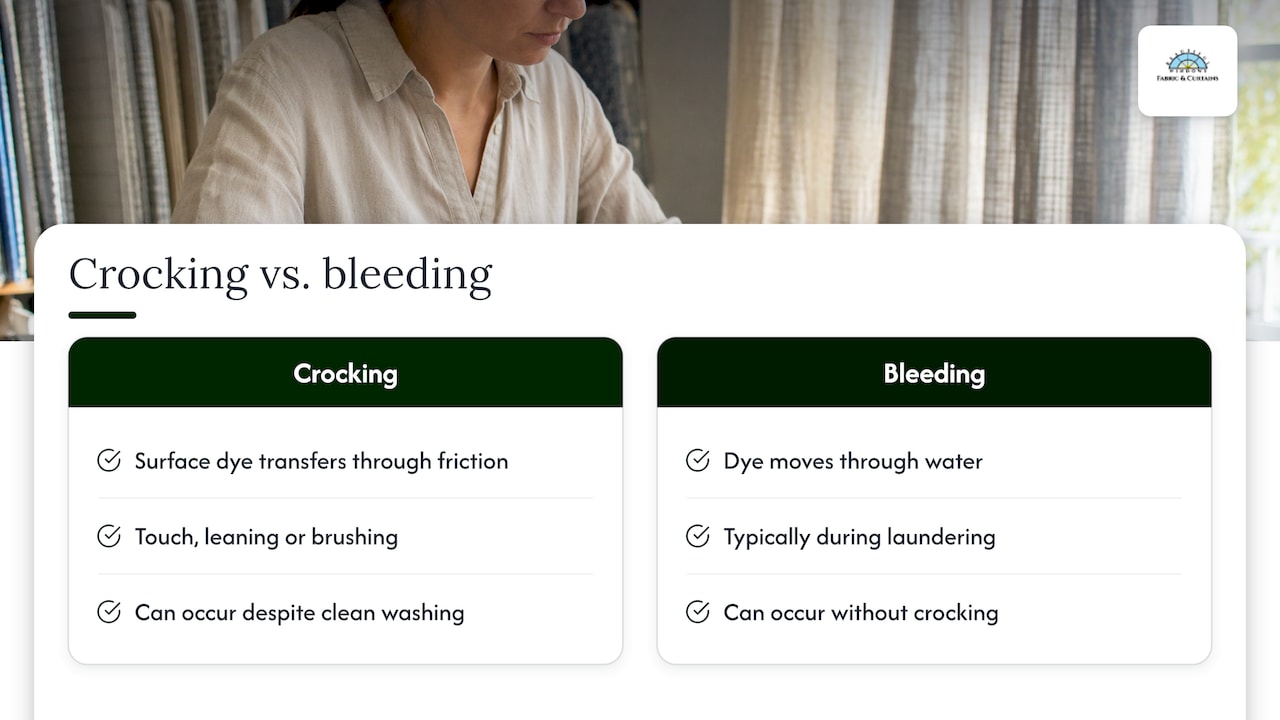
When a fabric is dyed, some dye bonds inside the fiber and some can remain loose on the surface. Crocking is the transfer of that surface color through friction. It happens when excess dye stays on the fiber after dyeing and finishing, and it shows up where fabric is touched, leaned on or brushed against: the arm of a chair, the leading edge of a drapery panel, a seat cushion next to light clothing.
Bleeding is a different problem. It is dye moving through water, typically in laundering. Iowa State University Extension explains that crocking happens when dye has not properly adhered to or set into the fabric, and that crocked dye can be hard to remove and may leave a permanent stain. Because the two behaviors are separate properties, a fabric can wash cleanly and still crock, or the reverse.
For home textiles this matters more than it might seem. A curtain is brushed when it is opened and closed, and upholstery is in constant contact with skin and clothing. Color transfer on a light-colored wall, sofa or garment is a cost the buyer notices only after installation, which is why it is worth checking before ordering.
What causes fabric to crock
Crocking severity depends on four things: unfixed dye, surface texture, moisture and pressure. Several of these are decided before the fabric ever reaches you.
Dye and finishing
Iowa State Extension lists manufacturer-side causes: a dye that is poor quality or wrong for the fiber, incorrect dyeing, improper rinsing after dyeing, or missing or improper fixer to bind dye to the fiber. Good dyeing and thorough rinsing are what leave little loose dye behind.
Depth of shade
Deeply saturated colors, particularly blacks, navies and reds, carry more dye and so have more potential for transfer. Light shades hold less dye in the first place. This does not mean dark colors are off limits: it means a deep shade deserves a closer look at its rubbing grade.
Surface texture and moisture
Rough or hairy surfaces, such as brushed cotton, crock more because raised fibers hold loose dye and create more friction. Moisture also matters: a damp cloth lifts more color than a dry one, which is the reason standards test both conditions.

BeautifulwindowselginExplore Fabrics in PersonSee fabric options for curtains and upholstery, and discuss custom drapery services with Beautiful Windows Elgin.Beautiful Windows Elgin106 Barney Lane, 29223 Richland CountyGet directions© OpenStreetMap contributors
How the crocking test works
The standard method in the United States is AATCC Test Method 8, the Crockmeter method, published by the American Association of Textile Chemists and Colorists. According to the method, it measures the amount of color transferred from a colored textile to other surfaces by rubbing.
The procedure in outline:
- Prepare the specimen. It is at least 50 × 130 mm and is conditioned for at least 4 hours at 21 ± 2°C and 65 ± 5% relative humidity, so that results are comparable from lab to lab.
- Rub with white cloth, dry. A white cotton crocking cloth square is rubbed against the specimen under controlled pressure on the Crockmeter.
- Repeat wet. A second specimen is rubbed with a cloth wetted with water to 65 ± 5% pickup.
- Grade the stain. The color on the white cloth is compared with the AATCC Gray Scale for Staining, the AATCC 9-Step Chromatic Transference Scale, or measured with an instrument. Individual results are averaged to the nearest 0.1 grade.
The method is not recommended for carpets or very small print areas. For printed fabrics that do not suit AATCC 8, AATCC 116, the rotary vertical crockmeter method, is used instead.
The idea is old. A National Bureau of Standards publication from 1941 already describes a dry-cloth rub at about two strokes per second, followed by a repeat with a dampened cloth on another specimen.
Reading the grades
The scale runs from 1 to 5. Grade 5 means no color transfer and Grade 1 means a high degree of transfer, so higher is better. The Association for Contract Textiles (ACT) publishes voluntary performance guidelines for indoor woven fabrics. Its February 2025 minimums are:
| Use | Test method | Dry crocking minimum | Wet crocking minimum |
|---|---|---|---|
| Upholstery | AATCC 8 | Grade 4 | Grade 3 |
| Drapery, solids | AATCC 8 | Grade 3 | Grade 3 |
| Drapery, prints | AATCC 116 | Grade 3 | Grade 3 |
Source: ACT performance guidelines, wet and dry crocking, woven indoor fabrics, February 2025.
A worked example: a navy upholstery fabric reports dry Grade 4 and wet Grade 2. It meets the dry minimum but misses the wet one, so a damp hand or a spill-and-wipe could leave blue on a light surface. A fabric reporting dry 4 and wet 3 meets the upholstery guideline in full.
Marine and coated fabrics
Marine upholstery is graded differently. The CFFA standard for vinyl-coated marine upholstery, published in August 2025, requires dry and wet crocking, tested to CFFA Test Method 7, to rate “Good, Slight Transfer” for both knit and non-woven constructions. The same standard recommends mildew-resistant thread, tapes, padding and substrates, since water leakage and wicking can cause fungal growth and fabric failure. For outdoor and marine projects, our guide to solution-dyed acrylic versus polyester covers how the dye method affects color performance.
Choosing fabric that holds its color
A buyer cannot see unfixed dye by looking at a swatch, so the choice rests on a few practical habits.
- Match the grade to the use. Use the table above as your reference: Grade 3 dry and wet for drapery, Grade 4 dry and Grade 3 wet for upholstery.
- Hold to the wet figure. The wet result is usually the lower of the two, and buyers typically hold orders to it.
- Think about the surface it touches. A deep shade on a seat next to white clothing or a pale wall needs more scrutiny than the same shade on a drapery panel hung away from contact.
- Consider the fabric’s construction. Smooth, tightly woven surfaces give loose dye less to hold on to than raised, brushed ones.
- Handle samples. Rubbing a swatch against a white cloth is a quick, informal impression and does not replace a lab grade, but it shows how a fabric behaves in your hands and in your light.
Our article on colorfastness for fabric buyers covers fading and washing as well, and fabric durability for lasting home textiles places color performance alongside abrasion and wear. For seating projects, the upholstery fabric checklist lists the other specifications to confirm.
For designers and workrooms
If you specify fabric for clients, ask for the dry and wet AATCC 8 grades (or AATCC 116 for prints) and record them with the order. Testing equipment makers make the same point: a fabric that fails wet or dry crocking in the lab will also fail in the field, so the grade is worth checking at the selection stage. For heavy-use seating, our hospitality grade upholstery fabric collection is a natural place to start, and the vinyl upholstery in Dark Truffle shows the kind of deep shade worth specifying carefully.
Managing color transfer after purchase
Read the care label. Iowa State Extension notes that a tag saying to wash separately signals that dye will bleed, and that washing the item alone the first time removes excess dye, which also reduces crocking, although each wash causes some fading. Crocking itself is a dry mechanical effect, so no laundry additive prevents it; removing loose surface dye is what lowers it.
For drapery and upholstery that is not machine-washed, the practical measures are about placement and care: keep deep-colored panels clear of pale walls and furniture where they can brush, and follow the cleaning code or care guidance for the fabric. Crocked dye can leave permanent marks, so prevention at selection is more reliable than removal afterward.
Our perspective
Most color complaints we hear about in home textiles come down to one question that was never asked at the start: what will this fabric touch? A drapery panel, a sofa arm and a boat cushion all face different rubbing, and the grade that suits one is not the grade that suits another.
That is why we work on curated, exclusive designer fabrics and pair them with one-on-one design consultation, sample support and installation guidance. Seeing and handling a sample, discussing the room, the light and the use, and then ordering by the yard or commissioning custom drapery is a calmer path than guessing from a screen.
Whether you are a homeowner, a designer or a workroom, our aim is the same: fabric you can specify with confidence, in colors that stay where they were dyed.
Marrion
Fabric and curtains from Beautiful Windows Elgin
We are a fabric store in Columbia, SC, with nationwide shipping. Our range includes cotton fabric for curtain and upholstery, embroidered fabric, upholstery fabric, marine textile, utility fabric, fabric by the yard and ready-made curtain panels, along with a custom drapery making service with design consultation and installation guidance. Tell us the room, the use and the shade you have in mind, and we will help you choose, starting with samples. Browse everything on our home page.
FAQ
What does crocking mean on fabric?
Crocking is the transfer of color from a dyed or printed fabric to another surface through rubbing. It occurs when excess dye sits on the fiber surface after dyeing and finishing. It is rated from Grade 1 (high transfer) to Grade 5 (none).
Is crocking the same as color bleeding?
No. Bleeding is dye moving through water during laundering, while crocking is dry or damp rubbing contact. A fabric can have an excellent washing rating and still crock, so the two are assessed separately.
What is a good crocking grade for curtains and upholstery?
The ACT guidelines call for Grade 3 dry and wet for drapery, both solids and prints. For upholstery they call for Grade 4 dry and Grade 3 wet. Higher grades mean less transfer.
How is a crocking test done?
Under AATCC Test Method 8, a white cotton cloth is rubbed against a conditioned specimen on a Crockmeter, once dry and once with the cloth wetted. The stain on the white cloth is graded against a gray scale or chromatic transference scale. Printed fabrics may be tested by AATCC 116.
Which colors crock the most?
Deep, saturated shades such as black, navy and red carry more dye and have more potential for transfer. Rough or brushed surfaces also hold loose dye and add friction.
BBeautifulwindowselginAsk About Fabric Color TransferReach out with questions about designer fabrics, curtains, or custom drapery for your home décor project.+1 8032434383+1 8038652935info@beautifulwindowselgin.com
Sources
- Crocking: fabric dye transfer explained
- Preventing color transfer by bleeding or crocking, Iowa State University Extension
- AATCC Test Method 8: Colorfastness to Crocking, Crockmeter
- Woven textile fabrics: testing and reporting, National Bureau of Standards
- ACT performance guidelines: wet and dry crocking, woven indoor fabrics
- CFFA recommended minimum performance standards for vinyl-coated marine upholstery
- How it’s tested: fabric color tests
- Colour fastness testing: methods and standards
- Crocking, rub and color transfer testing