
Transform your home: 6 inspiring window covering ideas
TL;DR:Choosing the right window covering depends on light, privacy, insulation, and aesthetic priorities.Innovative options like layered treatments, motorized blinds, and natural materials are trending in 2026.Proper measurement and installation are crucial for optimal performance and long-lasting results.
Selecting the right window covering involves far more than picking a color or pattern you like. Every room presents its own balance of light control, privacy, insulation, and visual character, and the wrong choice can leave a space feeling flat, drafty, or simply incomplete. Whether you are refreshing a single living room window or outfitting an entire home, the options available in 2026 are more refined, functional, and design-forward than ever. This article walks through a clear evaluation framework, six innovative ideas, a side-by-side comparison, and practical guidance to help you make confident, lasting decisions.
Table of Contents
- How to evaluate the best window covering for your needs
- Top 6 innovative window covering ideas for 2026
- Window covering comparison: which options work best for different needs?
- Custom vs. ready-made window coverings: which should you choose?
- Expert tips for measuring, installing, and maximizing window coverings
- Why the right window covering is about more than decor
- Bring your window inspiration to life with custom solutions
- Frequently asked questions
Key Takeaways
| Point | Details |
|---|---|
| Layered treatments are in | Pairing sheer and blackout options gives you maximum style and control. |
| Natural fabrics lead | Linen, cotton, and bamboo window coverings add comfort and modern appeal. |
| Smart options save energy | Motorized and cellular shades significantly cut heat loss and boost efficiency. |
| Professional fit matters | Custom solutions and precise measurements ensure perfect coverage and function. |
| Evaluate by your needs | Match coverings to your home’s privacy, insulation, and design priorities. |
How to evaluate the best window covering for your needs
Before browsing fabrics or pricing shades, it helps to define what you actually need from a window covering. Most homeowners benefit from ranking four core priorities: style, privacy, light control, and insulation. Knowing which matters most to you narrows the field quickly and prevents costly second-guessing later.
Window shape and type also play a significant role. Standard rectangular windows offer the most flexibility, while bay windows, arched frames, and double-hung configurations each require specific approaches. Specialty shapes often demand custom solutions, and skipping that step leads to gaps, poor function, and a finished look that falls short.
Here are the key factors to evaluate before making any selection:
- Light needs: Do you want full blackout, filtered light, or sheer diffusion?
- Privacy level: Street-facing rooms need different solutions than interior spaces.
- Insulation goals: Windows account for 25-30% of a home’s energy loss, so the right covering directly affects comfort and utility bills.
- Maintenance tolerance: Delicate fabrics require more care than faux wood or vinyl.
- Aesthetic direction: Modern, traditional, organic, or layered looks each favor different materials.
Matching fabric or material to function is equally important. A sheer linen panel softens light beautifully but offers little insulation. A cellular shade excels at energy efficiency but may not suit a formal dining room aesthetic. Reviewing window fabric tips before committing to a material helps align your expectations with real-world performance.
Pro Tip: Always measure your windows before shopping. Even a half-inch discrepancy can affect how a covering mounts, operates, and looks once installed.
Top 6 innovative window covering ideas for 2026
With evaluation criteria set, here are the most on-trend and functional ideas worth considering. Layered treatments and natural materials like linen and cotton are leading 2026 trends, and the options below reflect that direction.
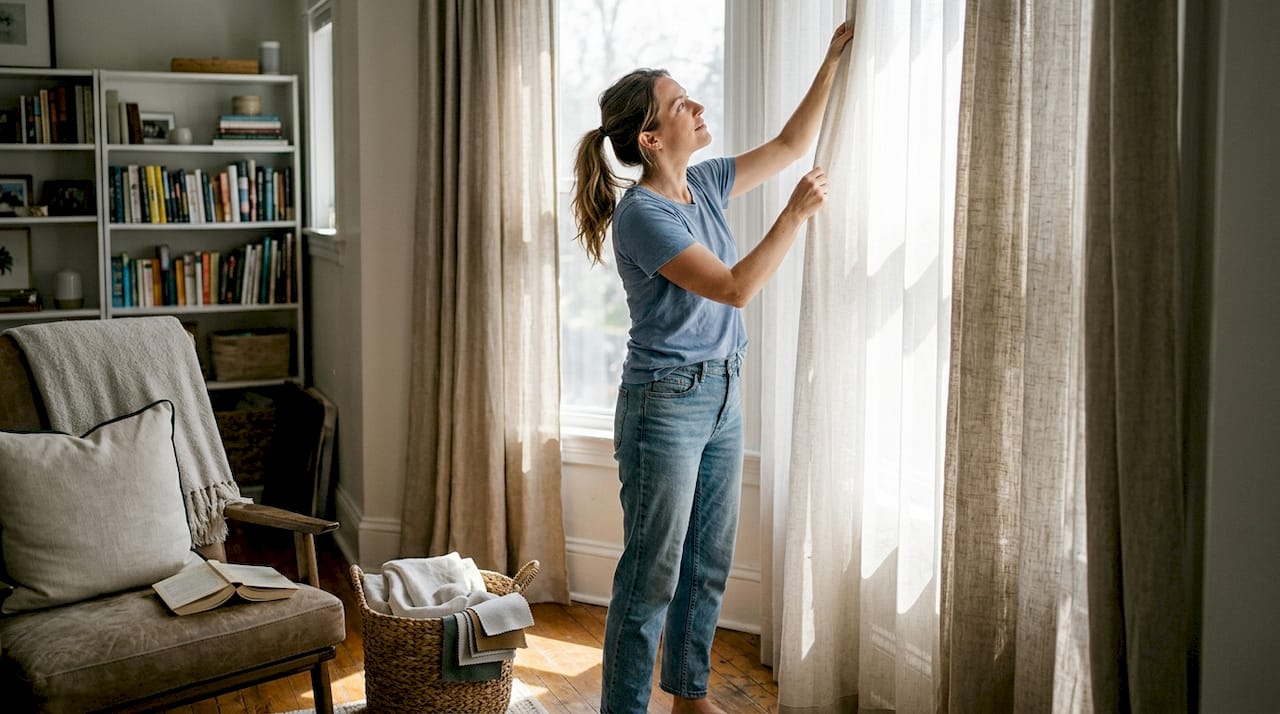
- Layered sheers and drapery: Pairing a sheer panel with a heavier drape gives you full control over light and privacy at different times of day. The layered look also adds visual depth and a sense of softness that single-layer treatments cannot achieve.
- Motorized and smart blinds: Automated window coverings connect to home systems and adjust on a schedule or via voice command. They reduce heat gain in summer and retain warmth in winter without manual effort.
- Natural material panels: Linen, cotton, and bamboo bring a biophilic quality to interiors, connecting indoor spaces to natural textures. These materials work especially well in living rooms, bedrooms, and sunrooms where a relaxed, organic feel is the goal.
- Custom Roman or cellular shades: Roman shades offer a tailored, architectural look that suits both traditional and contemporary rooms. Cellular shades add a layer of insulation that makes them practical for any climate.
- Bold color-blocked panels: A single panel in a contrasting or saturated color can anchor a neutral room and act as a focal point. This approach works well in modern and eclectic spaces where personality is a priority.
- Sustainable and recycled fabrics: Eco-conscious homeowners are choosing coverings made from recycled fibers or responsibly sourced materials. These options align with broader sustainability goals without sacrificing quality or design.
“The best window covering does two things at once: it solves a practical problem and elevates the room it lives in.”
For a broader look at what is resonating this season, the window treatment trends guide covers texture, warmth, and tailored elegance in detail. A thorough curtain fabric guide is also worth reviewing when narrowing down material choices.
Pro Tip: Combine a motorized sheer with a stationary side panel for a modern look that still feels warm and layered without complex hardware.
Window covering comparison: which options work best for different needs?
Curious how each option stacks up? Let’s compare the main types head-to-head. Each covering type has clear strengths, and understanding the trade-offs makes it easier to match the right solution to each room.
| Covering type | Privacy | Light control | Insulation | Ease of use | Price range |
|---|---|---|---|---|---|
| Drapery panels | High | Moderate | Moderate | Easy | $$ to $$$$ |
| Roman shades | High | High | Moderate | Easy | $$ to $$$ |
| Cellular shades | High | High | Excellent | Easy | $$ to $$$ |
| Roller blinds | Moderate | High | Low | Very easy | $ to $$ |
| Wood/faux wood blinds | High | High | Low | Easy | $$ to $$$ |
| Motorized/smart blinds | High | High | Moderate | Automated | $$$ to $$$$ |
| Shutters | High | Moderate | Moderate | Easy | $$$$ |
The standout performer for energy efficiency is the cellular shade. Research shows that cellular shades retain heat 3.7 times better than bare windows, delivering up to a 311% improvement in heat retention. For rooms with significant sun exposure or drafty older windows, that difference is measurable in both comfort and monthly energy costs.
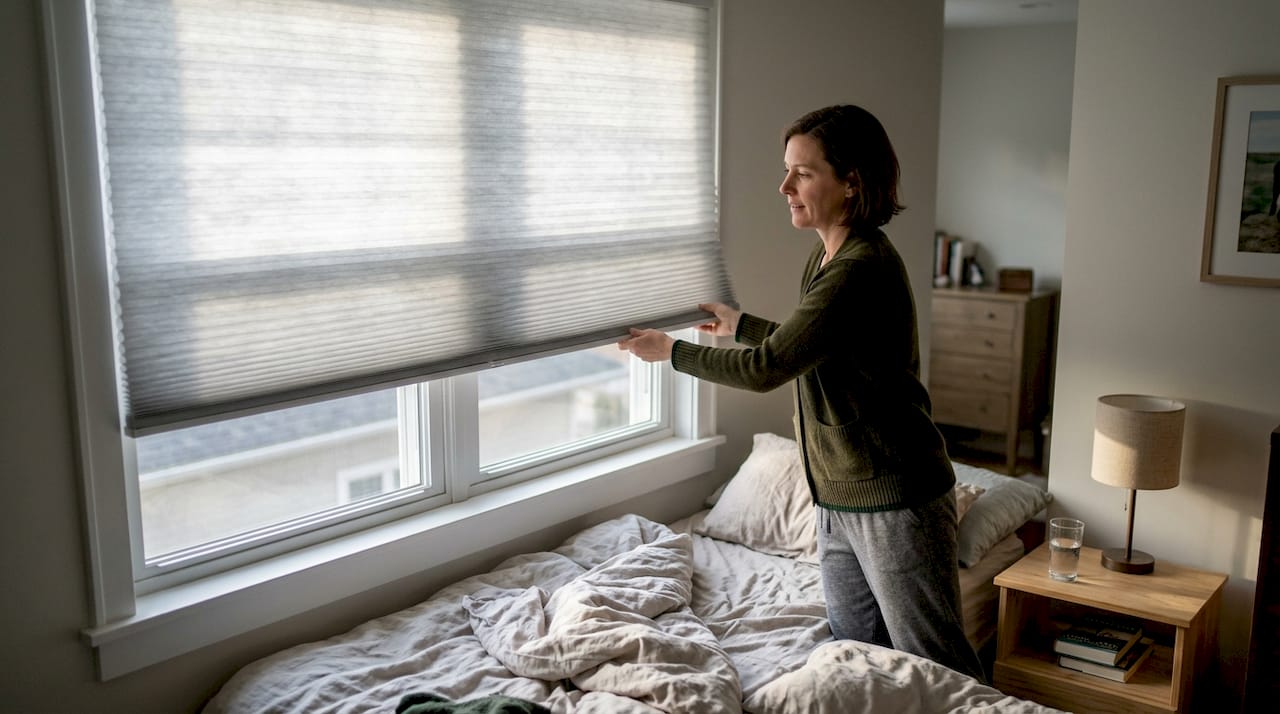
Drapery panels, while not the top insulator, offer unmatched design flexibility and the ability to layer with other treatments. Shutters provide the most durable long-term solution but require a larger upfront investment. For a closer look at how these options translate to seasonal styling, the fall cover trends resource offers useful visual context.
Custom vs. ready-made window coverings: which should you choose?
With the main options clear, it is time to decide whether a custom or off-the-shelf approach best fits your goals. Both paths have genuine merit, and the right answer depends on your windows, your timeline, and your budget.
Custom window coverings are made to your exact measurements and fabric preferences. They are the reliable choice for non-standard window sizes, specialty shapes, or rooms where a precise, polished finish is non-negotiable. The trade-off is a longer lead time and a higher price point. For guidance on achieving a tailored elegance result, custom is almost always the better path.
Ready-made coverings are widely available, budget-friendly, and can be installed the same day. They work well for standard window sizes and spaces where speed matters more than a perfect fit. The limitation is a narrower range of fabrics, colors, and sizing options.
Use this checklist to guide your decision:
- Window is a non-standard size or shape: choose custom
- Budget is the primary constraint: consider ready-made
- You need the covering installed within days: ready-made is faster
- The room is a focal point or formal space: custom delivers better results
- You want a specific fabric, pattern, or lining: custom is the only option
Professional measurement and installation are essential for non-standard windows, as DIY approaches frequently result in poor fit and reduced function. If your windows show condensation issues, address that before installing any covering to avoid moisture damage to the fabric or hardware.
Pro Tip: Order fabric samples before committing to a custom order. Colors and textures look different in natural light than they do on a screen or in a showroom.
Expert tips for measuring, installing, and maximizing window coverings
No matter the covering you pick, proper measurement and installation are key to perfect results. Errors at this stage are the most common reason a well-chosen covering underperforms once it is in place.
- Measure at three points: For both width and height, measure at three points and use the smallest dimension. Walls and frames are rarely perfectly square, and the smallest measurement prevents a covering that cannot close fully.
- Treat bay window panels separately: Each section of a bay window has its own angle and dimension. Measuring it as a single unit leads to gaps and misaligned panels.
- Check your mounting depth: Inside-mount coverings require a minimum recess depth in the window frame. Confirm this before ordering, especially for cellular or Roman shades.
- Use the right hardware: Lightweight sheers need different brackets than heavy drapery. Undersized hardware causes sagging, wall damage, and operational problems over time.
- Account for stack-back space: Drapery panels, when open, occupy wall space on either side of the window. Plan for this so panels do not block natural light when drawn back.
“A covering that fits correctly from day one will look better, function better, and last significantly longer than one that was adjusted after installation.”
For rooms prone to humidity, ensuring adequate controlled ventilation protects both the window and the covering from moisture-related wear. This is especially relevant in kitchens, bathrooms, and basement spaces.
Pro Tip: When installing drapery rods, mount them 4 to 6 inches above the window frame and extend them 6 to 8 inches beyond each side. This makes windows appear taller and wider, which adds proportion to the room.
Why the right window covering is about more than decor
There is a tendency to treat window coverings as a finishing touch, something selected after the furniture is placed and the paint is dry. That framing undersells their actual impact. The covering on a window affects how much natural light reaches a space at different hours, how warm or cool a room stays through seasonal shifts, and how much acoustic softness a room carries. These are not minor details.
We have seen homeowners invest significantly in furniture and finishes, then install a ready-made panel that undercuts the entire room. The visual result suffers, but so does the comfort and the energy performance of the space. A well-planned window covering, selected with the same care as any other design element, pays returns over years rather than just on the day it is installed.
The window trends perspective reinforces what experienced designers already know: the best rooms treat window coverings as a structural element of the design, not an afterthought. That shift in thinking changes what you select, how you install it, and what you get from it long-term.
Bring your window inspiration to life with custom solutions
Putting these ideas into practice starts with finding the right fabrics and materials for your specific space. Beautiful Window Elgin offers an extensive selection of designer-quality textiles suited to both custom drapery projects and ready-made solutions.

From durable canvas fabric options for outdoor and utility applications to refined custom drapery fabrics for interior spaces, the catalog covers a wide range of needs and aesthetics. Whether you are a homeowner planning a single room refresh or a designer sourcing materials for a full project, the selection and expertise available make it straightforward to move from inspiration to installation with confidence.
Frequently asked questions
Which window coverings save the most on energy bills?
Cellular honeycomb shades offer the highest energy efficiency, cutting heat loss by up to 311% compared to bare windows. Their layered air pockets trap heat in winter and block solar gain in summer.
What window treatments are trending in 2026?
Natural fabrics, layered treatments, motorized blinds, and sustainable materials are the leading directions in 2026. Biophilic design and textured woven panels are also gaining strong traction in both residential and commercial spaces.
How do I choose between custom and ready-made window coverings?
Choose custom for non-standard windows or when a specific fabric and precise fit are required. Ready-made options suit standard window sizes and projects where speed and budget are the primary considerations.
What’s the best way to measure for window coverings?
Measure width and height at three separate points and use the smallest dimension each time. For bay or specialty windows, treat each panel as an independent unit and consult a professional if the configuration is complex.
Recommended
- Window treatment trends for 2026: stylish solutions – Fabric Store in Columbia, SC | Drapery Making Services
- Window Treatment Trends for 2026 – Fabric Store in Columbia, SC | Drapery Making Services
- Window treatment selection guide: expert tips for every room – Fabric Store in Columbia, SC | Drapery Making Services
- 7 Essential Window Treatment Fabric Tips for Homeowners – Shop Designer Fabrics by the Yard | Curtains & Drapery
- 6 Meest Gekozen Raamtypes en Hun Voordelen voor Jouw Huis
- 7 Smart Living Room Design Inspiration Ideas for All Spaces - Projector Display