
Keep Drapery Looking Its Best: Complete Care Guide

TL;DR:Consistent, fabric-specific care routines significantly extend drapery lifespan and appearance.Protect fabrics from sun damage by rotating panels, layering sheers, and applying UV filters.Proper cleaning tools and immediate stain treatment prevent premature deterioration and maintain quality.
Custom drapery represents a real investment in your home’s comfort and style. Yet most homeowners watch that investment fade, literally, as dust settles into fabric folds, sunlight bleaches rich colors, and the occasional spill leaves a permanent reminder. Premature deterioration is rarely caused by poor-quality fabric alone. It almost always comes down to inconsistent care or the wrong cleaning approach for the specific material. The good news is that a few reliable routines, applied consistently, can preserve the beauty and structural integrity of your drapery for years. This guide walks you through every step, from gathering the right tools to preventing sun damage and fixing common mistakes.
Table of Contents
- Gather what you’ll need for drapery care
- Step-by-step: Regular drapery cleaning routines
- Deep cleaning and stain removal for drapes
- Preventing sun fading and storing drapery safely
- Quick troubleshooting: Common drapery care mistakes and fixes
- Our take: What most homeowners get wrong about drapery care
- Next steps: Enhance your drapery with quality materials
- Frequently asked questions
Key Takeaways
| Point | Details |
|---|---|
| Routine care matters | Consistent weekly and monthly cleaning keeps drapery looking fresh and dust-free. |
| Deep cleaning guidelines | Schedule deep cleans by fabric type to avoid damage and keep fabrics vibrant. |
| Sun and storage protection | Protect drapery from fading and aging by limiting sun exposure and storing properly when not in use. |
| Know your fabric | Always check care instructions, especially for specialty materials like velvet. |
Gather what you’ll need for drapery care
Before diving into the care steps, make sure you have everything at hand. Working with the right tools from the start prevents accidental damage and makes each task more efficient.
Routine cleaning supplies:
- Vacuum cleaner with a soft brush attachment (low suction setting)
- Microfiber duster or lint roller
- Clean white cloths or sponges
- Mild liquid detergent (fragrance-free preferred)
- Distilled water (for spot cleaning)
- Spray bottle
Deep cleaning supplies:
- Fabric-safe stain remover
- Chamois cloth (especially for velvet)
- Mesh laundry bag
- Padded hangers or a clean flat surface for drying
- Steamer with a fabric attachment
One of the most important steps before reaching for any cleaning agent is reading the manufacturer’s care label. That small tag tells you whether the fabric is dry-clean only, machine washable, or hand-wash only. Ignoring it is the single fastest way to ruin a quality panel.
Different fabrics also call for different tools. The table below matches common drapery materials to the appropriate cleaning approach:
| Fabric type | Routine tool | Deep clean method | Special note |
|---|---|---|---|
| Cotton | Soft brush vacuum | Machine wash, gentle cycle | Check for shrinkage risk |
| Synthetic (polyester) | Microfiber duster | Machine wash or steam | Most forgiving fabric |
| Velvet | Chamois or soft brush | Spot treat only, air dry flat | Avoid water saturation |
| Jacquard/embroidered | Soft brush vacuum | Dry clean recommended | Protect woven details |
| Linen | Soft brush vacuum | Hand wash or dry clean | Prone to wrinkling |
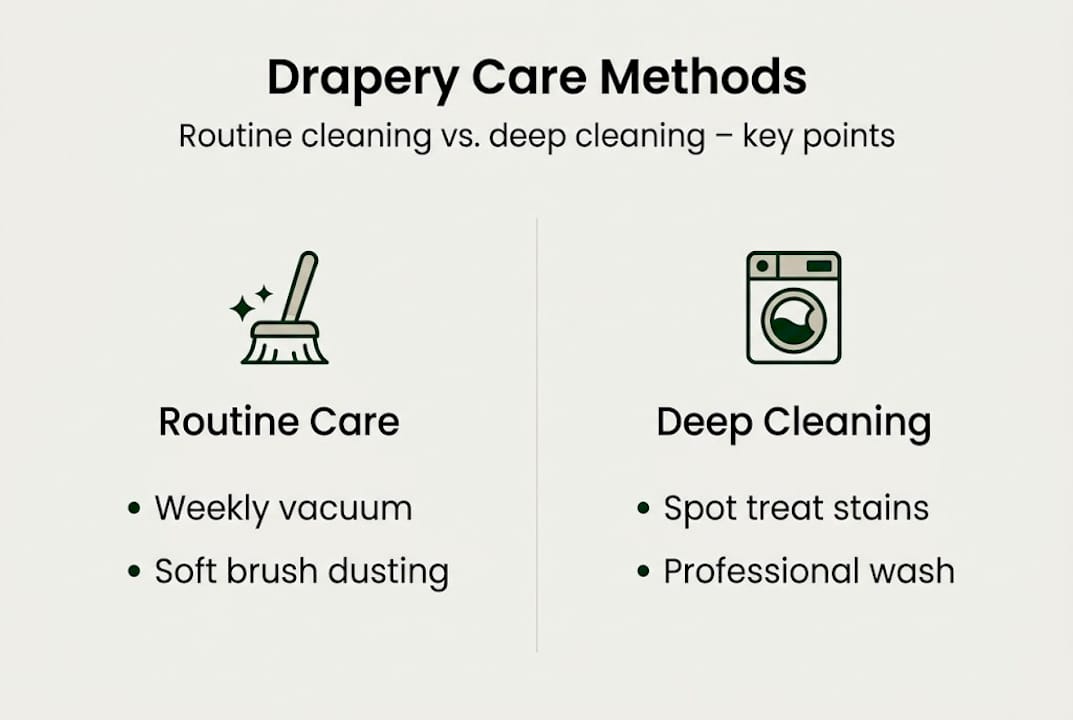
Routine maintenance involves weekly or monthly vacuuming or dusting with a soft brush attachment on low suction to remove dust and prevent allergen buildup. If you’re still deciding on materials, our guide on choosing the right drapery fabric can help you match fabric properties to your household’s specific needs.
Step-by-step: Regular drapery cleaning routines
With supplies ready, follow these specific routines to keep drapery fresh and beautiful every week or month.
Weekly routine:
- Close the drapery panels fully so the fabric hangs straight.
- Attach the soft brush tool to your vacuum and set it to low suction.
- Work from the top of the panel downward in slow, overlapping passes.
- Pay extra attention to the header (the top pleated section) where dust collects most.
- Use a lint roller on any decorative trim or embroidered areas where the vacuum may snag.
Monthly routine:
- Repeat the weekly vacuum process.
- Inspect each panel under natural light for spots, stains, or discoloration.
- Spot clean any marks immediately using distilled water and a small amount of mild detergent on a white cloth.
- Blot the area gently. Never rub, as rubbing spreads the stain and damages fiber structure.
- Allow the spot to air dry completely before closing the panels.
Pro Tip: Regular vacuuming does more than keep drapes looking clean. It actively reduces the amount of dust, pet dander, and pollen trapped in fabric folds, which can make a meaningful difference for allergy sufferers in the household.
Important: Avoid using bleach, ammonia-based sprays, or undiluted cleaning concentrates on any drapery fabric. These agents weaken fibers over time and can cause irreversible color loss, even on fabrics marketed as durable.
For more detailed guidance on specific fabric types, the drapery cleaning confidence guide covers practical techniques by material. You can also explore how drapery fabrics role in noise reduction and energy savings makes consistent care even more worthwhile.
Deep cleaning and stain removal for drapes
For periodic deeper cleans and stubborn stains, a more thorough approach is necessary.
Deep cleaning frequency follows a clear schedule: vacuum monthly, spot clean as needed, and perform a full clean every 3 to 6 months for high-use areas, or every 6 to 12 months for most fabrics, extending to annually for delicates.
Stain removal steps:
- Act immediately. Fresh stains are far easier to lift than dried ones.
- Blot (never rub) the stain with a clean white cloth to absorb as much liquid as possible.
- Mix one teaspoon of mild detergent with one cup of distilled water.
- Apply the solution to the stain using a clean cloth, working from the outer edge inward.
- Rinse by blotting with plain distilled water.
- Allow to air dry flat or hang the panel loosely.
DIY vs. professional cleaning:
| Factor | DIY cleaning | Professional cleaning |
|---|---|---|
| Cost | Low | Higher upfront |
| Convenience | High | Requires drop-off/pickup |
| Risk of damage | Moderate (fabric-dependent) | Low |
| Best for | Cotton, synthetics | Velvet, silk, embroidered |
| Frequency | Monthly/quarterly | Annually or as needed |
For velvet drapes, brush the pile with a chamois or soft brush, avoid water if possible, and air dry flat to preserve plushness. Velvet is particularly sensitive to water marks.
Pro Tip: Before machine washing any panel, check the fabric label for shrinkage warnings. Cotton and linen can shrink by up to 5% in a warm wash cycle. Use cold water and a gentle cycle when in doubt, and always air dry rather than using a dryer.
For additional curtain cleaning tips organized by fabric type and stain category, that resource provides a reliable reference for edge cases.
Preventing sun fading and storing drapery safely
After cleaning, keeping drapery vibrant and structurally sound means protecting it from sun and improper storage.

UV exposure is one of the most underestimated threats to fabric longevity. Sunlight breaks down dye molecules and weakens fiber structure over time, causing colors to shift and fabric to become brittle. The damage is gradual and often goes unnoticed until it is significant.
Top methods to prevent sun fading:
- Rotate drapery panels every few months so sun exposure is distributed evenly across all panels.
- Layer sheer curtains or blinds between the drapes and the window to diffuse direct sunlight.
- Apply UV-protective window film to glass, which blocks a significant portion of ultraviolet rays without affecting your view.
- Close drapes during peak sunlight hours, typically between 10 a.m. and 3 p.m.
Prevent sun fading by rotating panels, using sheers or blinds, and applying UV film. Store drapes clean, rolled in breathable fabric, and away from light and humidity.
Storage dos and don’ts:
- Do clean panels thoroughly before storing to prevent set-in stains.
- Do roll panels around an acid-free tube or fold loosely to avoid permanent crease lines.
- Do wrap stored panels in breathable cotton muslin or a clean pillowcase.
- Don’t store in plastic bags, which trap moisture and encourage mildew.
- Don’t place panels in direct sunlight or near heat sources during storage.
- Don’t compress panels under heavy items, which distorts the fabric structure.
If you’re considering a fabric upgrade that naturally resists fading, our article on cotton drapery benefits outlines why tightly woven cotton remains one of the most durable and color-stable options available.
Quick troubleshooting: Common drapery care mistakes and fixes
Even with the best routines, mistakes happen. Here’s how to handle them quickly and effectively.
Misshapen or wrinkled panels: Hang the panel and use a handheld steamer on a low setting, holding the steamer several inches from the fabric. Never press a hot iron directly onto drapery fabric without a pressing cloth.
Shrunken panels: Unfortunately, significant shrinkage is difficult to reverse at home. For minor shrinkage, dampen the panel and gently stretch it back to shape while damp, then hang to dry. For major shrinkage, consult a professional textile restorer.
Discoloration from overcleaning: If repeated spot cleaning has left a faded ring or pale patch, a professional dye touch-up may be the most reliable fix. Prevention is far easier than correction here.
Mildew or persistent odor: Remove the panel and air it outdoors in indirect sunlight. Brush away any visible mildew with a dry soft brush, then treat with a diluted white vinegar solution (one part vinegar to four parts water). Allow to dry completely before rehanging.
Pro Tip: Speed matters with drapery mishaps. A stain treated within the first 10 minutes has a significantly higher chance of full removal than one left for an hour. Keep a small spot-cleaning kit near your windows for fast response.
What to do if you’ve damaged drapes:
- Stop all cleaning immediately to prevent further harm.
- Blot away any excess cleaning solution with a dry cloth.
- Allow the fabric to air dry completely before assessing the damage.
- Consult the fabric care label and contact a professional if the damage is structural.
Understanding drapery lining importance also matters here. A quality lining protects the face fabric from moisture, UV exposure, and everyday wear, reducing how often troubleshooting is even necessary.
For velvet pile care, always brush with a chamois or soft brush and avoid water contact to preserve the fabric’s distinctive texture.
Our take: What most homeowners get wrong about drapery care
After years of working with homeowners and interior designers, a clear pattern emerges. Most people fall into one of two camps: they either clean their drapes too aggressively in a single annual session, or they ignore them entirely until visible damage forces action. Both approaches shorten fabric life considerably.
The real issue is that general cleaning guides rarely account for fabric specifics. A tip that works perfectly for polyester can ruin a jacquard panel. Skipping sun protection steps because they seem optional is another common error, one that leads to irreversible fading within just a few seasons.
Consistency and specificity matter far more than effort. A five-minute weekly vacuum and a deliberate sun-protection strategy will do more for your drapery’s longevity than an aggressive deep clean every six months. Understanding your fabric’s particular needs is the foundation of effective care.
For anyone planning a new installation, reviewing the custom drapery workflow from the start helps you select materials that align with your household’s maintenance capacity, making long-term care far more manageable.
Next steps: Enhance your drapery with quality materials
Ready to refresh your windows or source supplies? Here’s how to take your next step.
The care routines in this guide work best when paired with quality materials from the start. Well-constructed fabrics respond better to cleaning, hold their shape longer, and resist fading more effectively than lower-grade alternatives.

At Beautiful Window Elgin, you’ll find a curated selection of designer fabrics by the yard suited for custom drapery, upholstery, and decorative applications. For outdoor or high-moisture environments, the waterproof canvas fabric offers a durable, weather-resistant option that simplifies maintenance considerably. Whether you’re replacing worn panels or starting a new project, sourcing the right fabric makes every care step above more effective and rewarding.
Frequently asked questions
How often should I deep clean drapery?
Deep clean every 3 to 6 months for high-use areas, or every 6 to 12 months for most standard fabrics, with delicate materials cleaned no more than once a year.
What is the best way to prevent drapery fading from sunlight?
Rotate panels regularly, layer with lined sheers or blinds, and apply UV-protective window film to significantly reduce sun-related color loss.
Can I wash velvet drapes at home?
For velvet, avoid water when possible. Brush the pile with a chamois or soft brush, spot treat only when necessary, and always air dry flat to preserve texture.
What tools should I use for routine cleaning?
A soft brush vacuum attachment on low suction or a microfiber duster works best for weekly and monthly maintenance without stressing fabric fibers.
Recommended
- How to Choose the Right Fabric for Drapery – Shop Designer Fabrics by the Yard | Curtains & Drapery
- Why choose cotton drapery: benefits for your home in 2026 – Fabric Store in Columbia, SC | Drapery Making Services
- Step-by-step custom drapery workflow for flawless results – Fabric Store in Columbia, SC | Drapery Making Services
- What is drapery fullness? The key to stylish windows – Fabric Store in Columbia, SC | Drapery Making Services
- Travertine Decor Maintenance Workflow for Lasting Luxury – Marmorique