
The Role of Fabric Durability in Interior Design Choices
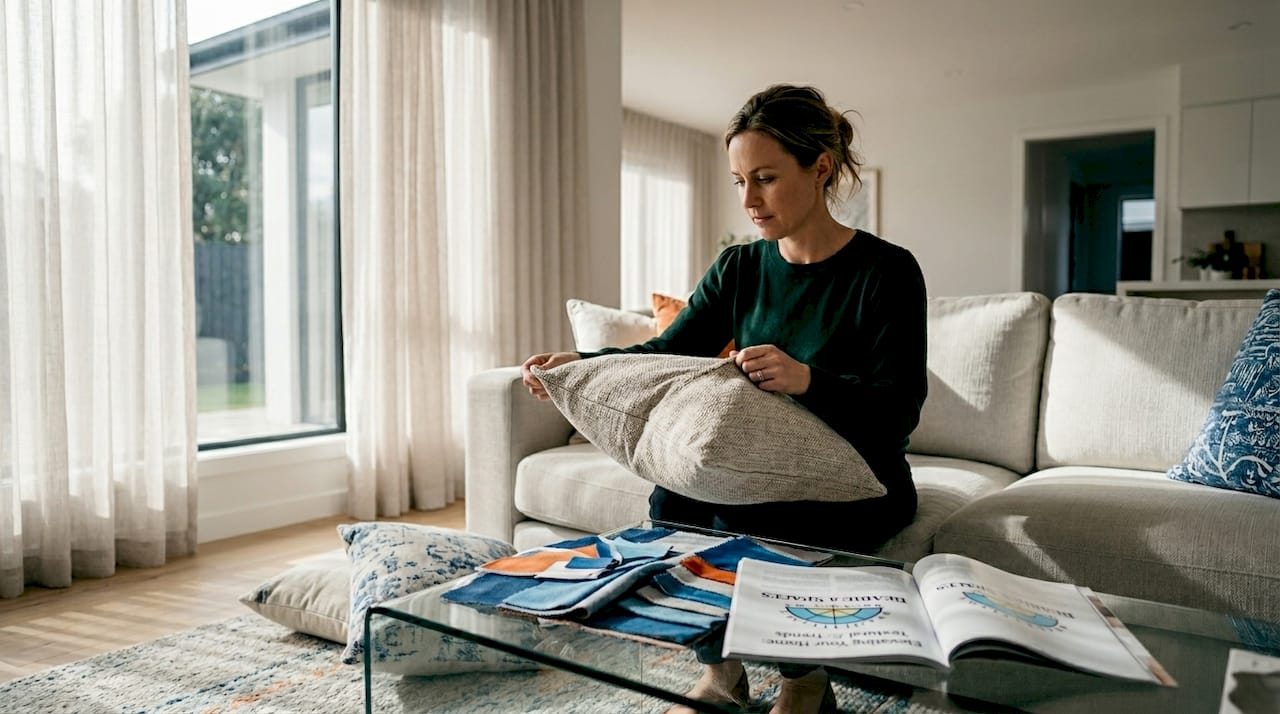
TL;DR:Fabric durability is best assessed through standardized tests, regardless of fiber content or price, to ensure long-term performance. Key dimensions include abrasion resistance, pilling, dimensional stability, elasticity, and strength, which must be evaluated with appropriate methods. Matching test results to actual use conditions helps prevent costly mistakes and guarantees materials withstand environmental and wear challenges.
Fabric durability is one of the most consequential factors in any interior design or furnishing project, yet it remains one of the most misunderstood. Many homeowners and even seasoned professionals assume that a higher price point or a premium fiber name signals long-lasting performance. It does not. The role of fabric durability is far more nuanced than fiber content or brand reputation can convey. Durability cannot be assumed from price or composition alone. It must be measured through standardized testing protocols that evaluate specific performance properties in real-use conditions.
Table of Contents
- Key takeaways
- The role of fabric durability: key dimensions explained
- How fabric durability is measured
- Impact on interior design applications
- Practical guidance for choosing durable fabrics
- My take on fabric durability myths
- Discover durable fabrics at Beautifulwindowselgin
- FAQ
Key takeaways
| Point | Details |
|---|---|
| Durability requires measurement | Fiber type and price do not reliably predict textile longevity; standardized testing is necessary. |
| Multiple metrics matter | Abrasion resistance, pilling, dimensional stability, and strength all define a fabric’s durability profile. |
| Tests have limits | The Martindale rub test does not account for UV fading, staining, or seam strength. |
| Match fabric to application | Upholstery and drapery have distinct durability requirements that should guide specification choices. |
| Verify documentation | Always request certified test results before purchasing fabric for high-use interior applications. |
The role of fabric durability: key dimensions explained
Fabric durability is not a single property. It is a collection of measurable performance characteristics that together determine how a textile holds up under real conditions. Understanding each dimension helps you specify materials that will perform appropriately for their intended use.
Abrasion resistance measures how well a fabric withstands rubbing and friction over time. In interior textiles, this is typically assessed through the Martindale test, which simulates the circular motion of a seated user on upholstery. The result is expressed in rub counts, and higher counts signal greater wear resistance for contract or high-use residential settings.
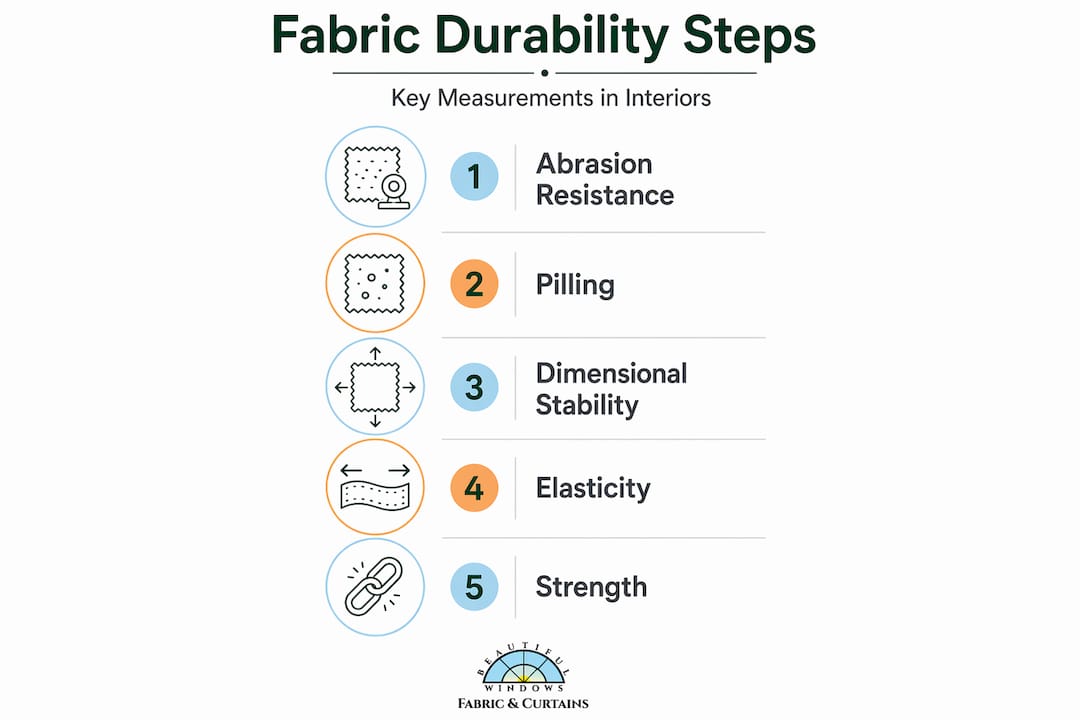
Pilling is a separate concern entirely. Pilling occurs when short or broken fibers tangle into small balls on the fabric surface, degrading its appearance without necessarily compromising structural integrity. A fabric can achieve excellent abrasion scores and still pill significantly. Grade 4 or higher pilling resistance at 2,000 cycles is the standard benchmark for upholstery applications. This is why abrasion and pilling must always be specified as separate requirements.
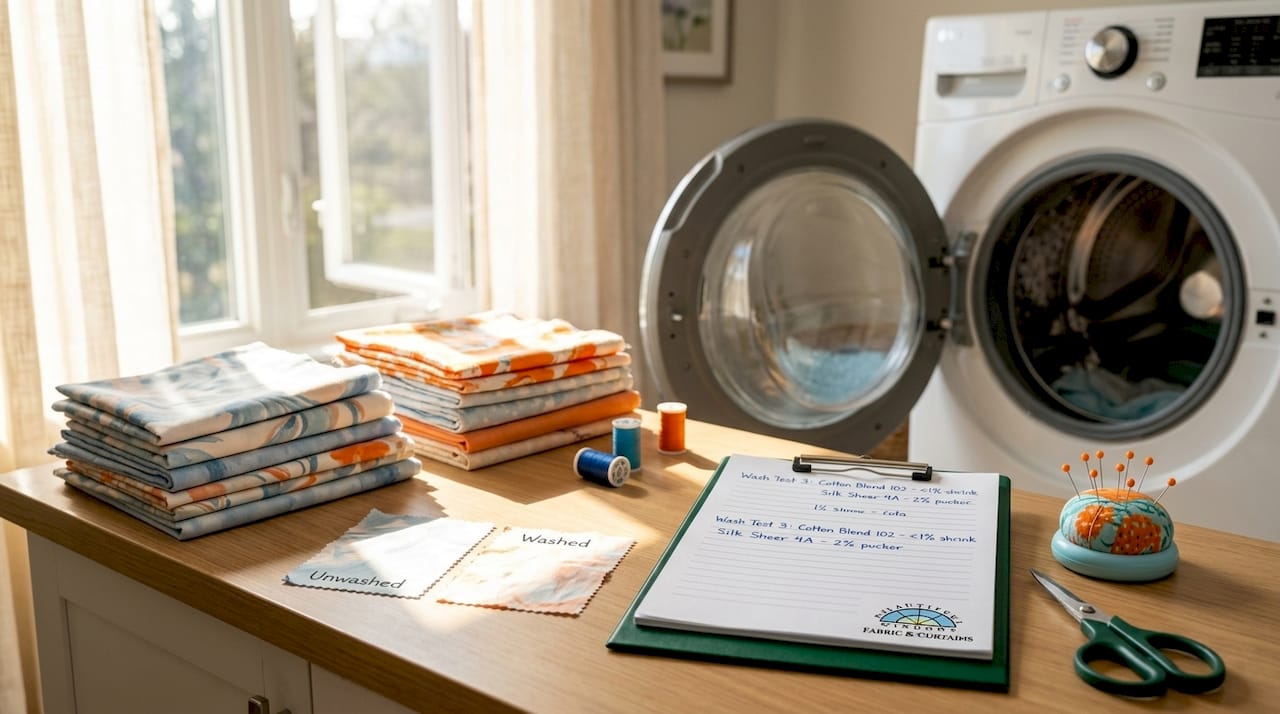
Dimensional stability refers to a fabric’s ability to retain its shape and size after cleaning. Repeated cleaning cycles can cause deformation that visibly impacts long-term appearance, particularly in drapery panels where uneven shrinkage creates ripples or misalignment.
Elasticity and shape recovery matter most in upholstery fabrics that stretch across frames and cushions. Fibers like polyamide (PA 6.6) offer reliable shape retention with no permanent elongation under normal conditions, which supports long-term structural performance.
Strength metrics, including breaking strength, tearing strength, and bursting strength, round out the durability picture. These tests must match the fabric construction. A bursting strength test suits knitted fabrics; a tearing strength test is more appropriate for woven materials.
| Durability Dimension | What It Measures | Primary Test Method |
|---|---|---|
| Abrasion resistance | Fabric surface wear from friction | Martindale, Wyzenbeek |
| Pilling resistance | Surface fiber tangling and balling | Martindale pilling scale |
| Dimensional stability | Shape and size retention after washing | ISO 6330, AATCC 135 |
| Elasticity | Stretch recovery and shape retention | Elongation tests |
| Tensile / tear strength | Resistance to breaking and tearing | ASTM D5034, D5587 |
Pro Tip: When sourcing upholstery fabric, request both the abrasion and pilling test results independently. A single combined durability score can hide poor pilling performance behind strong abrasion numbers.
How fabric durability is measured
Standardized testing gives durability a language that professionals and homeowners alike can read and compare. Without these benchmarks, fabric selection becomes guesswork dressed up as decision-making.
- Martindale abrasion test. This is the most widely referenced test in European and international upholstery specification. The fabric is rubbed against a standard wool abrasive in a figure-eight motion, and results are recorded in cycles of 5,000 rubs. Exceeding 50,000 rubs delivers diminishing returns for residential use but is critical in contract environments like hotels and offices.
- Wyzenbeek rub test. This method, more common in North American specifications, uses a back-and-forth motion with a cotton duck or wire mesh abrasive. The two tests are not directly comparable. A fabric rated at 30,000 double rubs (Wyzenbeek) cannot be equated to 30,000 Martindale cycles.
- Martindale pilling test. Though it shares the same machine as the abrasion test, the pilling assessment uses a different abrasive and evaluates visual surface change on a 1 to 5 scale. Both tests should be run and reported separately, as abrasion and pilling resistance can diverge significantly.
- ISO and ASTM dimensional stability tests. These involve marking fabric specimens, running them through defined wash cycles, and measuring dimensional change as a percentage. The goal is to understand how a fabric will behave after the homeowner or maintenance team cleans it.
- Strength tests. ASTM D5034 (grab tensile), ASTM D5587 (trapezoidal tearing), and ISO burst tests give designers a quantitative measure of structural integrity relevant to the end use.
What these tests do not measure is equally important. The Martindale and Wyzenbeek tests say nothing about UV fading, stain resistance, seam slippage, pet damage, or mold resistance. These properties must be specified separately and evaluated through distinct protocols or real-world exposure testing.
Pro Tip: When reviewing a fabric specification sheet, check whether durability results come from an accredited third-party laboratory. Manufacturer self-reported results are not equivalent and may not follow standardized protocols.
Impact on interior design applications
Understanding how fabric durability affects garments and furnishings in real-world conditions is where the technical knowledge translates into practical decision-making. Durability requirements for upholstery and drapery are genuinely different, and applying one standard to both leads to costly mistakes.
Upholstery fabrics bear direct physical contact, repeated friction, and flexing across cushion edges and seat frames. For a family room sofa, a Martindale rating of 25,000 cycles is adequate for residential use. A hospitality project demands 50,000 or more. Drapery fabrics, by contrast, rarely face abrasion but are exposed to UV radiation and the mechanical stress of being drawn and stacked repeatedly. For choosing durable fabrics in window treatments, light stability and dimensional stability after dry cleaning matter far more than rub count.
Pilling is a durability issue that quietly undermines aesthetics. A sofa that develops surface pilling within two years did not fail structurally, but it looks worn and unkempt. Contract-grade mohair velvet achieves high pilling resistance due to its long staple fibers and smooth surface, while natural-synthetic blends tend to pill more readily. Knowing this helps you make a more informed choice when weighing beauty against long-term appearance.
Maintenance and cleaning also shape the durability equation. A fabric with excellent abrasion scores but poor dimensional stability will look worse after cleaning than a lower-rated fabric that holds its shape through wash cycles. Dimensional stability alongside laundering scenarios should inform purchasing decisions for any fabric that will need routine cleaning.
One of the most common specification errors is over-relying on rub count as the sole metric of quality. Specifying a 100,000-cycle Martindale rating for a residential bedroom accent chair is unnecessary and often leads to selecting stiff, less comfortable textiles when a softer 30,000-cycle fabric would perform perfectly well for light use.
Pro Tip: Match your durability specification to actual use conditions. A guest bedroom accent chair and a primary living room sectional do not need the same performance thresholds. Over-specifying wastes budget; under-specifying creates complaints.
Practical guidance for choosing durable fabrics
Selecting a durable fabric requires more than reading a product description. Here is what to evaluate before committing to a material for any interior or furnishing project.
- Request certified test documentation. Ask suppliers for third-party laboratory reports, not just marketing claims. Verified data gives you confidence and protects against warranty disputes.
- Identify the relevant test method. Martindale and Wyzenbeek results are not interchangeable. Confirm which standard was used before comparing fabrics across suppliers.
- Assess cleaning requirements against lifestyle. A fabric rated for dry-clean only in a household with pets and children will deteriorate faster than a lower-rated but washable material.
- Look into fabric finishes. Performance treatments such as stain-resistant coatings, soil-release finishes, and UV inhibitors can meaningfully extend the life of a fabric beyond what base fiber properties suggest.
- Use physical samples in real conditions. Order samples and expose them to the actual conditions of the space: sunlight, humidity, and contact. Test them with the cleaning products you intend to use. No specification sheet replaces direct observation.
- Check for fabric longevity factors such as weave density, thread count, and backing treatments, which affect long-term wear resistance.
The long-lasting fabric benefits of choosing wisely go beyond aesthetics. Durable materials reduce replacement frequency, lower total cost of ownership, and maintain interior quality over time. For design professionals managing client expectations, verified durability data is also a form of professional accountability.
My take on fabric durability myths
I have worked with enough textiles to say with confidence that the biggest mistake people make is equating expense with endurance. A beautifully woven silk at a premium price will pill and degrade far faster on a dining chair than a mid-range performance velvet with verified test data behind it. Price reflects aesthetics, brand positioning, and fiber cost. It does not reflect tested durability.
What I find genuinely surprising is how rarely clients or even designers ask for the pilling test result. They request the Martindale rub count, feel reassured by a five-digit number, and move on. Then six months later, the sofa looks tired. Specifying both abrasion and pilling is not an advanced technique. It is basic due diligence that most specifications skip.
I have also seen the opposite problem: a designer specified a contract-grade fabric rated for 100,000 rubs on a residential window seat that sees light use twice a week. The fabric performed flawlessly, but it was stiff, less tactile, and honestly unnecessary for the application. Durability specification is about fit, not maximum performance.
The most reliable approach I have found is to start with the use condition, identify which durability dimensions are actually relevant, request certified test data for those specific properties, and then evaluate aesthetics within that verified performance range. That sequence consistently produces better outcomes than starting with a beautiful fabric and hoping it holds up.
— Marrion
Discover durable fabrics at Beautifulwindowselgin
At Beautifulwindowselgin, the fabric selection is built around both aesthetic quality and verified performance. Whether you are sourcing upholstery textiles for a high-use living space or selecting refined drapery materials for a tailored window treatment, the collection is curated with durability and design in mind.
Explore the designer drapery fabrics available by the yard, featuring woven, embroidered, and jacquard satin options selected for lasting appearance and structural integrity. For furnishing projects, the upholstery fabric collection includes textiles with verified durability credentials suited for both residential and professional applications. Design consultations and fabric samples are available to help you match materials to real-use requirements before committing to a purchase.
FAQ
What does the role of fabric durability mean in interiors?
Fabric durability in interior applications refers to a textile’s ability to retain its appearance, structure, and functionality under repeated use, cleaning, and environmental exposure. It encompasses abrasion resistance, pilling resistance, dimensional stability, and tensile strength, each relevant to different end uses.
How is fabric durability tested for upholstery?
Upholstery fabrics are typically evaluated using the Martindale or Wyzenbeek abrasion tests, alongside a separate Martindale pilling test. Specifying both results is necessary, as a fabric can perform well on abrasion but still develop surface pilling under regular use.
What rub count is adequate for residential upholstery?
For standard residential use, a Martindale rating of 15,000 to 30,000 cycles is generally sufficient. High-traffic residential areas and contract settings call for 50,000 cycles or more, though exceeding that threshold offers limited additional benefit for home environments.
Do durability tests cover UV fading and stain resistance?
No. The Martindale and Wyzenbeek tests measure surface abrasion only. UV fading, stain resistance, and seam slippage must be tested separately through dedicated protocols and should be specified as independent requirements based on the intended installation environment.
How does fiber type influence fabric wear resistance?
Fiber type affects pilling behavior, strength, and elasticity, but it does not reliably predict overall durability without testing. Natural-synthetic blends tend to pill more than pure long-staple natural fibers, while engineered fibers like polyamide offer strong shape recovery in elastic upholstery constructions.
Recommended
- Understanding fabric durability for lasting home textiles – Fabric Store in Columbia, SC | Drapery Making Services
- Decorative fabric options: a guide for homeowners – Fabric Store in Columbia, SC | Drapery Making Services
- Role of Fabric in Window Treatments– Impact on Style & Function – Shop Designer Fabrics by the Yard | Curtains & Drapery
- How fabric shapes your home’s comfort and style – Fabric Store in Columbia, SC | Drapery Making Services