
What Are Pleat Styles? A Curtain Guide for Every Room
TL;DR:Pleat styles in curtains determine how fabric is folded, affecting fullness, formality, and operation. French pleats, including triple pinch pleats, create a fuller, more formal look, while grommets and rod pockets produce casual aesthetics. Selecting the appropriate pleat style involves considering room style, fabric weight, hardware compatibility, and desired room mood for a cohesive window treatment.
Pleat styles are one of the most consequential decisions you’ll make when choosing curtains or drapes, yet most people treat them as an afterthought. The style of pleat built into a curtain header determines how the fabric falls, how much fullness you see, how formal the room feels, and even how well the curtain operates on its rod or track. This guide covers what are pleat styles in detail, from the most traditional pinch pleat to modern ripple fold alternatives, so you can match the right heading to your space with confidence.
Table of Contents
- Key takeaways
- What are pleat styles and how they work
- Popular curtain pleat styles explained
- How pleat style affects function and room mood
- Choosing the right pleat style for your space
- Non-pleated curtain headers worth knowing
- My perspective on pleat style decisions
- Bring your pleat style vision to life
- FAQ
Key takeaways
| Point | Details |
|---|---|
| Pleats shape the entire look | The header style controls curtain fullness, formality, and how fabric falls at the window. |
| French and pinch pleats are not the same | French pleat is specifically the triple pinch pleat, which creates a fuller, more formal effect than a standard pinch. |
| Fabric weight matters | Heavier fabrics suit structured pleats like pinch or box; lighter fabrics work well with pencil pleats or rod pockets. |
| Hardware must match the pleat | Pinch pleats require traverse rods or drapery rings; grommets and rod pockets slide directly onto a rod. |
| Non-pleated headers are valid choices | Grommets, tab tops, and ripple folds are not inferior, just designed for a different aesthetic and function. |
What are pleat styles and how they work
A pleat is a controlled fold of fabric stitched or pinched at a header to create volume, structure, and a consistent hang pattern. Pleat styles define curtain header design and directly influence curtain look, formality, and drape pattern. Understanding the basic categories of pleats borrowed from fashion and fabric design makes it much easier to decode what you see in curtain catalogs and showrooms.
The foundational pleat types include:
- Knife pleats: Sharply folded pleats all facing the same direction, creating a crisp, uniform surface
- Box pleats: Fabric folded outward on both sides of a center point, adding structured, even volume
- Inverted pleats: The reverse of box pleats, where the fullness is tucked behind the fabric for a cleaner face
- Accordion pleats: Alternating folds that expand and compress, similar to the instrument they are named after
- Cartridge pleats: Rounded, tubular folds that stand away from the header and create a full, gathered look
Folding direction in pleats predicts where curtain fullness appears or hides, which is genuinely useful when choosing a heading style for a specific window size or room proportion. A knife pleat pushes all volume to one side, while a box pleat distributes it symmetrically. Those differences translate directly into how a finished curtain looks on your wall.
Pro Tip: When you look at a curtain and feel uncertain about why you like or dislike how it hangs, study the header first. The pleat is almost always the reason.
Popular curtain pleat styles explained
Getting specific about different pleat designs used in window treatments helps narrow down your options quickly. Here is a clear overview of the most common styles you will encounter.
| Pleat Style | Formality Level | Best Fabric Type | Typical Use |
|---|---|---|---|
| Pinch pleat | Traditional to formal | Medium to heavy | Living rooms, dining rooms |
| French (triple pinch) | Formal | Heavy, structured | Grand rooms, classic interiors |
| Tailor pleat | Modern, refined | Medium weight | Contemporary spaces |
| Pencil pleat | Casual to semi-formal | Light to medium | Bedrooms, family rooms |
| Box pleat | Structured, modern | Medium to heavy | Valances, formal panels |
| Grommet | Casual to contemporary | Light to medium | Modern homes |
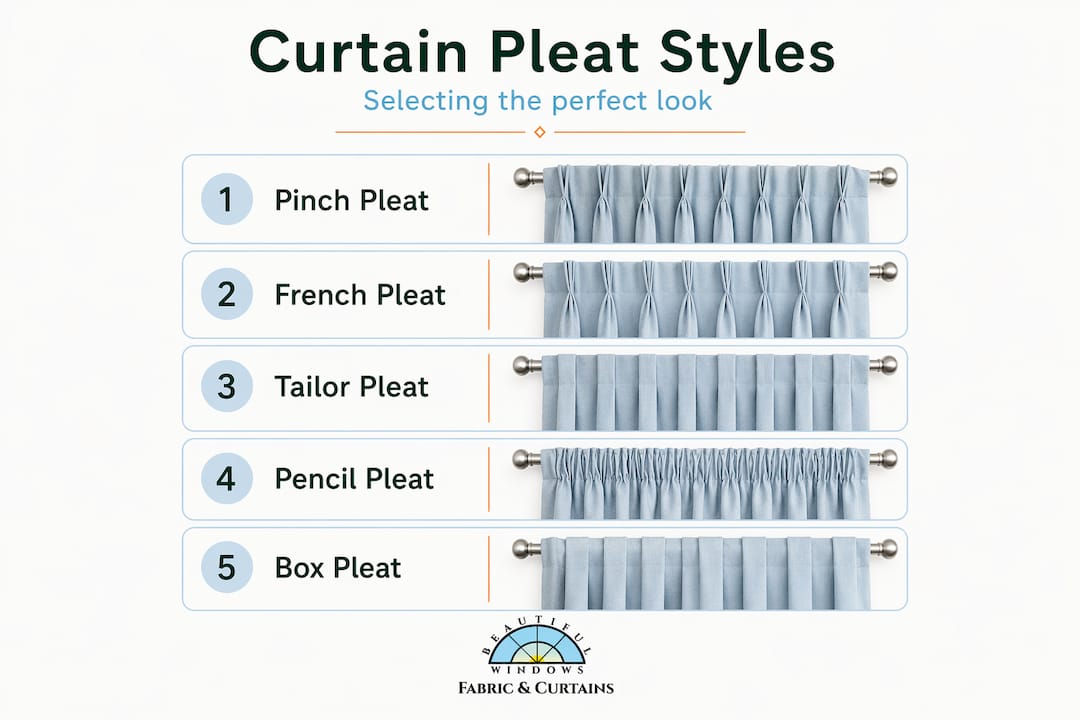
Pinch pleat curtains are the classic choice. Pinch pleats distribute fullness evenly and look symmetrical, making them ideal for formal interiors. The fabric is folded and then pinched together at a single point, with two or three fingers of fabric fanning above. Double pinch pleats produce a cleaner, more contemporary look, while triple pinch pleats move into more traditional territory. Browse pinch pleat panels to see how the structured header reads at different fabric weights.
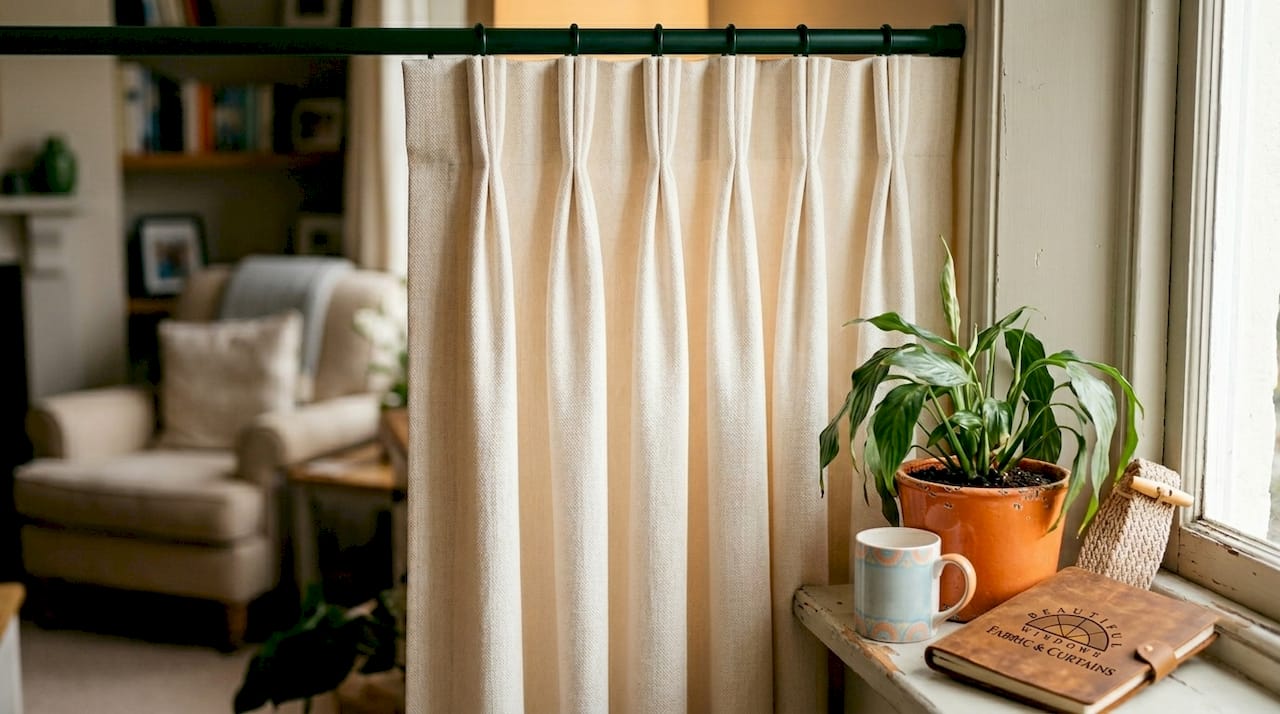
French pleat, which is another name for the triple pinch pleat, is a point of frequent confusion. French pleat is specifically the triple pinch pleat, pinched at the bottom of the header so the pleats fan out at the top, creating a fuller and more formal appearance. It is not simply a “fancier” pinch pleat but a technically distinct variation with more fabric depth and a broader silhouette at the top of the panel. Beautifulwindowselgin carries French pleat curtain panels tailored for interiors that need both presence and precision.
Tailor pleats represent a modern adaptation. Tailor pleats are pinched at the top of the pleat rather than the center or bottom, producing a sleek, architectural appearance that suits transitional and contemporary spaces well.
Pencil pleats create tightly gathered folds that resemble a row of pencils standing upright. They are versatile and relatively easy to install, making them a popular option for bedrooms and casual living areas. Beautifulwindowselgin’s pencil pleat drapery panels offer that gathered look with quality fabric that holds its shape over time.
Box and inverted pleats show up frequently in tailored valances and more structured panel designs. They add geometric depth to the header without the softness of pinch-style options.
Pro Tip: If you want the look of pleated drapery without the investment of custom sewing, tailor pleats are your most forgiving starting point. They read as intentional and polished even when the execution is not perfect.
How pleat style affects function and room mood
Pleat style is not purely an aesthetic decision. It shapes how curtains behave in your room every day. Here is how the choice plays out in practical terms:
- Fullness and fabric use. Pinch and French pleats require significantly more fabric than grommet or rod pocket options. What is pleated drapery in terms of fullness ratio means the fabric width is typically two to two-and-a-half times the window width for structured pleats.
- Light control and insulation. Denser, more stacked pleats create tighter folds when closed, which generally improves light blocking and reduces drafts at the window edge. Grommets, by contrast, create looser folds that allow more light to filter through the sides.
- Room formality. Changing the header style alone can adjust the feel of a curtain without changing the fabric. A linen panel in a pencil pleat reads casual and relaxed. That same linen in a French pleat reads considerably more formal.
- Movement and operation. Pinch pleat draperies feature structured, neat, even folds that stack back crisply when opened. Grommet panels slide easily along a rod but can feel rigid when stacked. Ripple fold panels offer the smoothest travel of all, making them a strong choice for motorized or frequently operated tracks.
- Hardware compatibility. Pinch pleats require either a traverse rod with carriers or drapery rings clipped or sewn to the pleat. Grommets slide directly onto a rod. Rod pocket headers thread through a pole. Mixing an incompatible pleat with the wrong hardware compromises both appearance and function.
Choosing the right pleat style for your space
A pleat style guide is only useful if it helps you make a real decision. These considerations bring the selection process into focus:
- Room style and formality. Formal dining rooms and living rooms with traditional furnishings suit pinch or French pleats. Bedrooms and casual family rooms can accommodate pencil pleats or even rod pockets without looking underdressed.
- Fabric weight and drape. Selecting pleat styles requires matching the pleat to the fabric’s hand. Heavier fabrics like jacquard satin and structured upholstery textiles hang best in pinch or box pleats. Lightweight sheers work well in pencil pleats or gathered headers.
- Visual fullness vs. practicality. More fullness means more fabric, which means higher cost. If budget is a factor, a well-sewn pencil pleat in a quality fabric often delivers better results than a pinch pleat in a lesser material.
- Hardware on hand or planned. If you already own a decorative rod, grommet or rod pocket headers may be your most compatible option. If you are starting fresh, you have more flexibility to choose pleated styles and select appropriate hardware to match.
- Maintenance habits. Structured pleats like pinch and French styles require training the folds periodically after washing or dry cleaning. Pencil pleats and grommet panels are more forgiving in everyday use.
Pro Tip: Before ordering fabric, hold a length of it in your hand and gather it loosely into the pleat style you are considering. That quick test reveals whether the fabric has the right body for your chosen heading.
You might also consider exploring the Euro pleat panel as a modern alternative that sits between a traditional pinch pleat and a tailor pleat in formality and structure.
Non-pleated curtain headers worth knowing
Not every well-dressed window requires a pleat. Non-pleated curtain headings like rod pockets and grommets create distinct visual and functional effects that pleated options cannot replicate.
- Rod pocket: Fabric is sewn into a sleeve that the rod passes through, creating a gathered, slightly ruched look along the top. Works well for stationary panels and sheer layers.
- Tab top: Fabric loops attach directly to the rod, creating a casual, artisan appearance. Best for lightweight fabrics and rarely opened panels.
- Grommet: Metal rings punched through the header create uniform ripple folds. Grommet panels are common in store-bought curtains and produce a different visual effect than pleats, often reading as less custom.
- Ripple fold: A specialty heading style that creates smooth, even S-shaped waves along a track. Highly suited for floor-to-ceiling panels in modern or minimalist interiors.
| Header Type | Visual Effect | Formality | Best Setting |
|---|---|---|---|
| Rod pocket | Gathered, soft | Casual | Sheers, stationary panels |
| Tab top | Relaxed, handmade | Casual | Lightweight panels |
| Grommet | Uniform ripple | Contemporary | Modern living spaces |
| Ripple fold | Smooth S-wave | Modern, refined | Minimalist, motorized tracks |
For a broader look at how different curtain header styles compare across formality and function, Beautifulwindowselgin’s resource library covers the full spectrum.
My perspective on pleat style decisions
I have seen a lot of well-intentioned window treatments fall short because the pleat was selected in isolation from everything else. The fabric was beautiful. The color was right. But the heading style worked against both.
The French versus pinch pleat confusion is real, and it matters practically. When someone orders a “pinch pleat” curtain expecting the volume of a French pleat, the finished panel can look thin and flat. Understanding that French pleat specifically means triple pinch, with the pinching point at the base of the header, saves that disappointment.
What I find most underappreciated is how much a pleat style governs room mood. Most people reach for new fabric or new paint when a room feels off. In my experience, swapping the curtain heading from a grommet to a properly sewn pinch pleat transforms the same window entirely. The fabric barely changes. The room reads completely differently.
My consistent recommendation is to decide on the pleat before selecting the fabric, not after. The heading style sets requirements for fabric weight, fullness ratio, and hardware. Choosing the fabric first often leads to compromise somewhere in that chain.
If you want to explore how drapery pleats connect to fabric and installation decisions, that relationship is worth understanding before you order a single yard of material.
— Marrion
Bring your pleat style vision to life
Once you know which pleat style suits your space, the next step is finding fabric that can deliver on it. Beautifulwindowselgin offers a curated collection of designer drapery fabrics well-suited to pleated window treatments, including jacquard satin, embroidered textiles, and structured upholstery-weight materials sold by the yard. For those who need support beyond fabric selection, professional window treatment measurement services are available to confirm sizing before you cut or sew. Nationwide shipping and personalized consultations make it straightforward to move from knowing what pleat style you want to having it installed correctly at your window.
FAQ
What are pleat styles in curtains?
Pleat styles refer to the different methods of folding and stitching fabric at the top of a curtain panel to create controlled fullness and a structured hang. Common styles include pinch, French, pencil, tailor, and box pleats.
What is the difference between a French pleat and a pinch pleat?
A French pleat is a specific type of pinch pleat. It is the triple pinch pleat, pinched at the bottom of the header so the three fabric fingers fan outward at the top, creating more volume and formality than a standard single or double pinch pleat.
How do I choose the right pleat style for my room?
Consider your room’s formality level, the weight of your chosen fabric, and the hardware you plan to use. Formal rooms suit pinch or French pleats in heavier fabrics; casual spaces work well with pencil pleats or non-pleated headers like grommets.
Are grommet curtains considered a pleat style?
Grommets are not technically a pleat. They are an alternative curtain header style that produces a uniform ripple fold by threading a rod through metal rings. They lack the structured folds that define true pleated drapery.
What are the best pleat styles for formal interiors?
French (triple pinch) pleats and standard pinch pleats are widely considered the best pleat styles for formal rooms. Both create symmetrical, structured folds and require quality, heavier fabrics to achieve their full visual effect.
Recommended
- 7 Essential Curtain Fabric Types List for Homeowners – Shop Designer Fabrics by the Yard | Curtains & Drapery
- Common Curtain Styles to elevate your home decor – Fabric Store in Columbia, SC | Drapery Making Services
- Curtain Style Selection Process for Custom Drapery Success – Shop Designer Fabrics by the Yard | Curtains & Drapery
- What is curtain heading? A complete guide for stylish windows – Fabric Store in Columbia, SC | Drapery Making Services