
The role of samples in fabric selection for designers
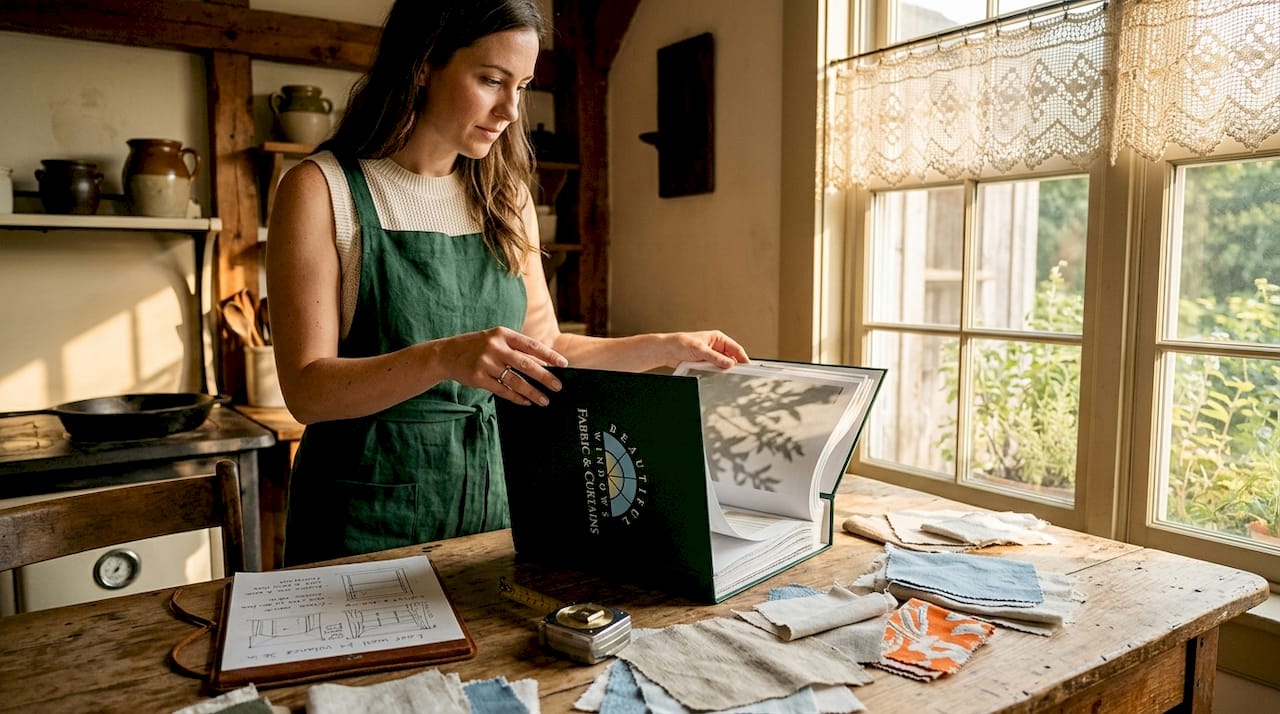
TL;DR:Selecting fabric solely from digital images can lead to costly mistakes due to lighting and display variances. Physical samples provide tactile insight into texture, weight, and color accuracy, minimizing risks in custom window treatments. Testing samples in your space under various lighting conditions ensures confident, informed fabric choices that match your design vision.
Selecting fabric from a digital image is one of the most common and costly assumptions in custom window treatments. The role of samples in fabric selection is not a formality — it is the most reliable step you have before committing to yardage for drapery, curtains, or upholstery. What looks like a warm ivory on screen can arrive as a cold cream in your room. A fabric that photographs as a clean texture can feel stiff and thin in person. This guide walks you through why samples are indispensable and how to use them to make confident, informed fabric choices.
Table of Contents
- Why online photos aren’t enough for fabric selection
- How fabric samples reduce costly mistakes and risks
- Evaluating samples in your room’s lighting and layout
- What to look for beyond color: texture, weight, and drape
- Integrating samples into your design process: best practices
- Why treating fabric samples as physical spec checks changes outcomes
- Explore high-end fabric samples at Beautiful Windows Elgin
- Frequently asked questions
Key Takeaways
| Point | Details |
|---|---|
| Physical samples are essential | Fabric samples provide accurate color and texture that digital images cannot replicate. |
| Evaluate in real lighting | Check samples under natural daylight and evening indoor lighting to see true colors. |
| Test fabric performance | Assess texture, weight, and drape through samples to avoid costly errors. |
| Use samples early | Early sampling reduces risk and supports confident fabric decisions. |
| Compare with your décor | Place samples beside existing furnishings for best color and style matching. |
Why online photos aren’t enough for fabric selection
The role of samples in fabric selection becomes immediately clear when you consider what photographs actually capture: light reflected off a surface at one specific moment, under one specific set of conditions. Your room is none of those things.
Screens vary in brightness and color accuracy, which means the same product photo can look noticeably different on a laptop, a phone, and a tablet. Add in how manufacturers often photograph fabric under studio lighting designed to show it at its most appealing, and the gap between expectation and reality widens further.
“A fabric that reads as a deep teal online may appear as a muted blue-green the moment you hold it under the natural light in your living room.”
Physical samples correct for all of this. They give you the actual fiber, the actual weave density, and the actual finish. You can feel whether a fabric is soft enough for relaxed linen drapes or structured enough for tailored ripple-fold panels. No product description substitutes for that tactile assessment. Understanding the importance of fabric samples is the foundation of a successful fabric selection process.
What photographs consistently fail to communicate:
- Sheen variation: A satin-weave fabric catches light differently at different angles, creating movement that no flat image conveys.
- Surface texture: The difference between a smooth jacquard and a textured boucle disappears entirely in photography.
- Opacity: Whether a fabric will provide privacy or simply filter light is impossible to judge from a screen.
- Weight and body: A heavy linen and a lightweight voile can look similar in a photo but behave entirely differently as a window treatment.
How fabric samples reduce costly mistakes and risks
The financial case for physical samples is straightforward. Custom drapery is made to order. Once fabric is cut, the transaction is final. A wrong color choice, a texture that conflicts with your sofa, or a fabric too lightweight to hold a pleat means starting over — at full cost.
Sampling bridges concept and production, identifying color mismatches and performance issues before bulk ordering commits you to a decision. For a set of floor-to-ceiling panels in a formal dining room, that bridge is not optional.
Here is how a deliberate sampling process protects your investment:
- Order before you commit. Request samples of every fabric under serious consideration before placing any yardage order.
- Check color against fixed elements. Hold the sample next to flooring, existing upholstery, and wall paint, because those elements are not changing.
- Assess scale. A small geometric repeat on a swatch may look entirely different when repeated across six panels. Ask yourself whether the pattern scales well.
- Verify opacity against your window. Hold the sample up to the window during daylight. This reveals how much light the fabric transmits, which matters enormously for privacy and room ambience.
- Launder or steam a scrap if durability is a concern. Performance fabrics marketed as washable should prove it before you invest.
Pro Tip: When working on a custom drapery fabric selection project, keep a small physical file of your shortlisted samples alongside notes on where and how you tested each one. This makes your final decision clear and documented, which is especially useful if you are coordinating with a workroom or installer.
Evaluating samples in your room’s lighting and layout
Color is not a fixed property of fabric. It shifts depending on the light source, the time of day, and the other colors surrounding it. This is one reason why lighting acts as a silent saboteur in fabric selection — and why testing in your specific room is non-negotiable.
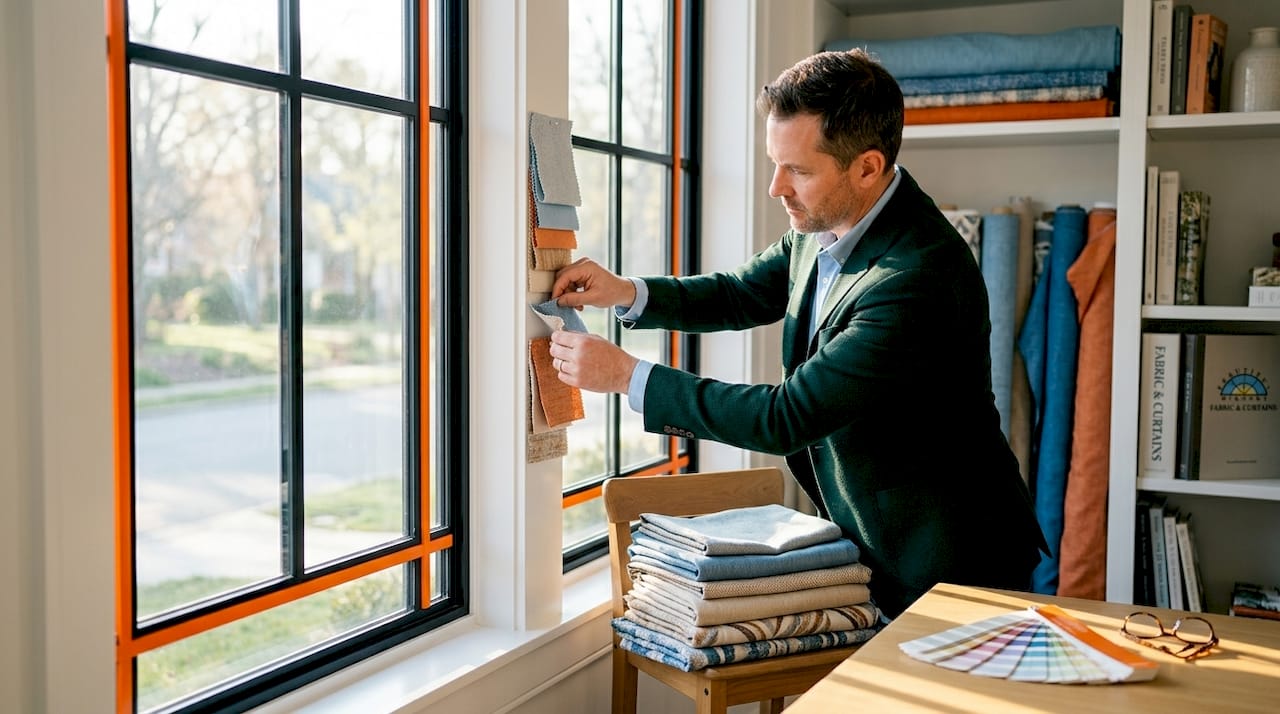
A cream fabric with warm undertones will look inviting under incandescent light and slightly green under cool-toned fluorescents. Interior specialists recommend evaluating swatches in multiple room spots and under the actual lighting conditions the finished treatment will live in every day.
A practical testing approach for any room:
- Morning light near the window: This is often cool and directional. Hold the sample at the window where the treatment will hang.
- Midday diffused light: Check the sample away from the window to see how it reads in ambient light.
- Evening artificial light: Test under your table lamps, floor lamps, and overhead fixtures to confirm the fabric looks right after dark.
- Against adjacent surfaces: Lay the sample on or next to your sofa, rug, or tile. Color harmony depends on these relationships more than on the fabric in isolation.
Understanding the fabric impact on window treatments helps you anticipate how light interaction will shape the final result. Some fabrics absorb light; others reflect or scatter it. Knowing which behavior you want informs both your fabric choice and your lining decision.
Pro Tip: Review your samples at the window during the time of day when the room is used most. A breakfast room evaluated at noon tells you very little if the family gathers there for evening dinners.
What to look for beyond color: texture, weight, and drape
Color is what draws most people to a fabric. Texture, weight, and drape are what determine whether it works. Swatches allow direct evaluation of softness, stiffness, breathability, and drape — all of which affect the finished look and daily function of your window treatment.
| Quality | What to assess | Why it matters |
|---|---|---|
| Weight | Hold the sample in your hand; heavier fabric has more body | Determines how well the treatment will hold its shape and stack |
| Drape | Fold the sample over your finger; it should fall naturally | Affects whether the finished panel looks fluid or stiff |
| Texture | Run your hand across both sides | Influences light interaction, maintenance, and style compatibility |
| Weave density | Hold the sample to light; tightly woven fabric shows less light | Predicts privacy and insulation performance |
| Hand feel | Assess stiffness versus softness | Dictates whether the fabric suits formal or relaxed settings |
Beyond the table, consider these functional questions when reviewing samples:
- Does the fabric crease easily when handled? If so, account for that in your heading style.
- Is the surface prone to snagging? That matters especially if the treatment will be opened and closed daily.
- Does the pattern have a directional repeat that will require extra yardage?
- Is the fabric suitable for the room’s humidity level? Silk behaves very differently in a bathroom versus a study.
Reviewing fabric texture and performance tips before you commit to yardage helps you match the fabric’s physical qualities to the demands of the space.
Pro Tip: Drape the sample over a curtain rod bracket for two to three minutes. A fabric with good natural fall will begin to relax and show you how the finished panel will hang. This quick test reveals far more than any product image.
Integrating samples into your design process: best practices
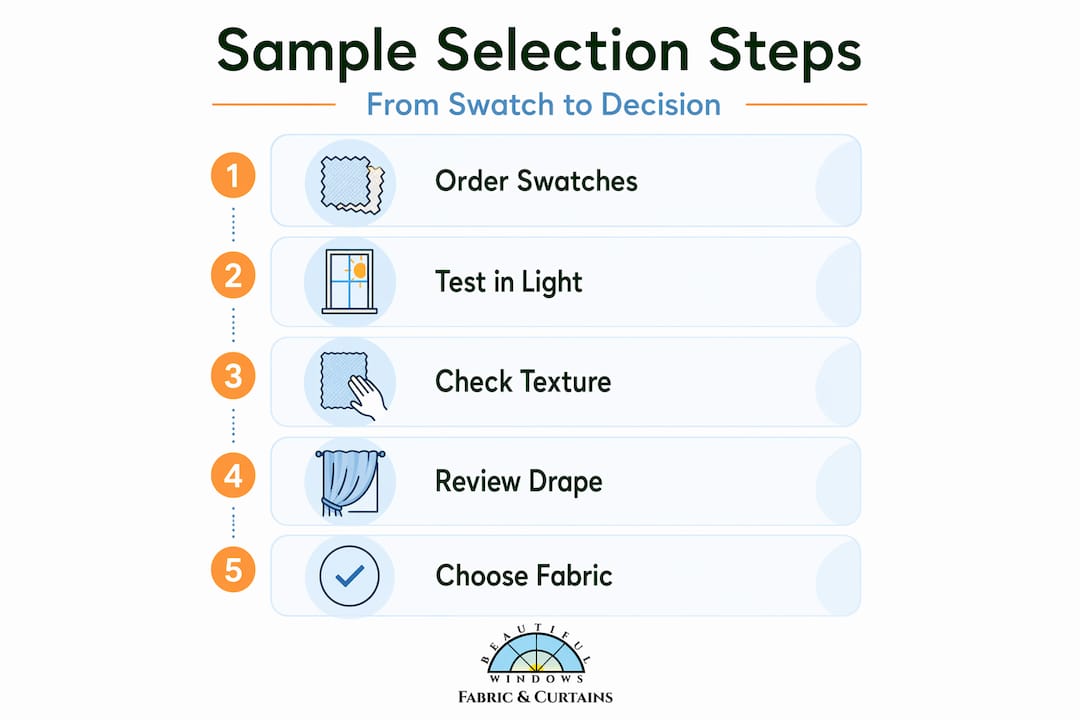
Using samples effectively is not about ordering one swatch and making a quick decision. Swatch evaluation benefits from at least 24 to 48 hours of review because your perception of a fabric changes as you live alongside it, see it in different lights, and observe it next to different room elements.
A structured approach to using samples in window treatment projects looks like this:
- Narrow your selection to three to five candidates. Reviewing too many options simultaneously creates decision fatigue. Pre-screen by color and described weight before ordering.
- Order and receive samples before designing. Do not finalize heading style, lining choice, or panel measurements until you have held the fabric.
- Test each sample at the window location. Tape or pin samples to the wall or window frame at the height of the treatment so you can step back and evaluate proportion.
- Compare samples side by side. Fabric swatch comparison under identical lighting exposes subtle differences in tone and texture that disappear when viewed individually.
- Return after a full day. Review the samples again the following morning and evening. First impressions often change.
- Document your findings. Note which lighting conditions each sample was tested in, which pairings worked best, and any concerns about weight or texture.
Useful habits for any design project involving high-end fabric:
- Label each sample with the fabric name, vendor, and colorway to avoid confusion when ordering
- Photograph your shortlisted samples in situ so you have a visual reference when communicating with your workroom
- Consult window treatment terminology to ensure you are communicating your heading and lining preferences accurately when placing your order
- Keep rejected samples too, since a fabric that does not work for drapery may be the right choice for a coordinating accent pillow
Why treating fabric samples as physical spec checks changes outcomes
Most people treat fabric samples as color previews. That framing undervalues them significantly. Experienced designers evaluate swatches as physical specification checks, assessing weight, drape, and structural behavior alongside color to prevent errors that show up only after installation.
Think about what a sample actually carries: the complete weave structure, the fiber blend ratio, the finishing treatment applied to the surface, and the way the fabric responds to tension and fold. None of that information exists in a product description. All of it lives in the physical sample in your hand.
The designers who avoid costly redos are not the ones with the best eye for color. They are the ones who refuse to finalize a specification until they have held the fabric, tested it in the room, and confirmed that it behaves as expected. A fabric that pools correctly on the floor in a sample test will pool correctly in the finished room. A fabric that resists fold and feels paper-stiff in a sample will produce a rigid, unforgiving panel.
There is also a communication benefit to treating samples as specifications. When you hand a documented, tested sample to a workroom or installer, you eliminate ambiguity. Everyone is working from the same physical reference, not from a screen image that may look different on their monitor than on yours.
Understanding the sample evaluation process as a technical confirmation step, rather than a preliminary aesthetic browse, is what separates confident fabric decisions from expensive guesses.
Explore high-end fabric samples at Beautiful Windows Elgin
At Beautiful Windows Elgin, the fabric selection process begins with confidence, and that starts with holding the material in your hands.
Our curated collection includes durable upholstery fabrics, jacquard satins, embroidered textiles, and decorator-grade drapery fabrics, all available to sample before you order by the yard. Whether you are designing a formal dining room with floor-to-ceiling panels or selecting a light-filtering fabric for a bedroom, our team can help you identify the right options for your space. Learn more about fabric samples and how to integrate them into your project workflow with guidance from our design specialists. Nationwide shipping is available.
Frequently asked questions
Why are fabric samples important for custom window treatments?
Fabric samples let you assess color accuracy, texture, and drape in your actual space before committing to yardage. Because samples reveal true color under your specific lighting, they eliminate the guesswork that leads to costly returns or remakes.
How should I evaluate fabric samples at home?
Check each sample in multiple lighting conditions, including daylight near the treatment window and under your evening lamps, and compare them directly against your existing furnishings. Lighting heavily influences how color reads, so testing under different conditions gives you the most accurate picture.
Can fabric samples save me money?
Yes. Sampling reduces costly mismatches by confirming fabric behavior in real conditions before you commit to a large yardage purchase, which is especially important for custom, made-to-order treatments.
How many fabric samples should I order?
Most customers order three to eight samples to compare different colors and textures without becoming overwhelmed. Keeping your shortlist focused on genuine candidates makes the comparison process more productive and the final decision clearer.
Recommended
- How fabric samples elevate custom interiors and upholstery – Fabric Store in Columbia, SC | Drapery Making Services
- Why fabric samples matter for custom window treatments – Fabric Store in Columbia, SC | Drapery Making Services
- Top designer fabrics for custom drapery and upholstery – Fabric Store in Columbia, SC | Drapery Making Services
- What are designer fabrics: quality and durability guide – Fabric Store in Columbia, SC | Drapery Making Services