
Types of Curtain Accessories: A Homeowner's Guide
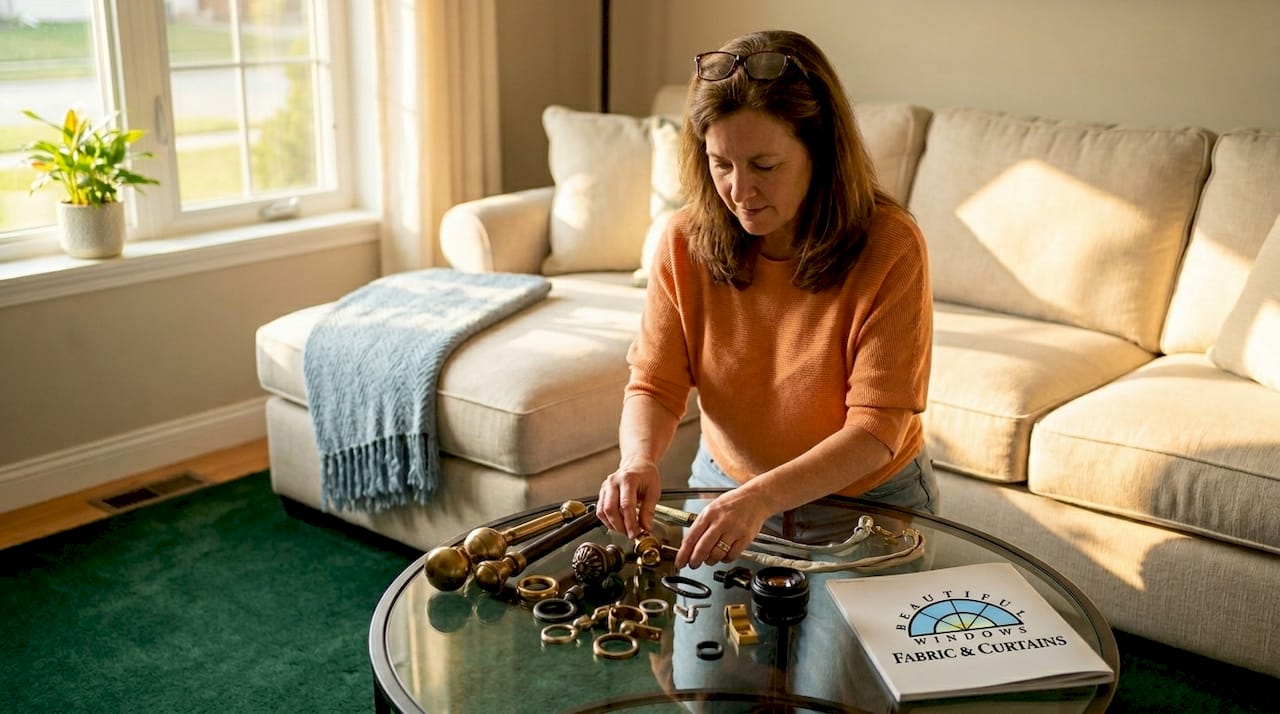
TL;DR:Curtain accessories play a crucial role in ensuring curtains hang properly and complement decor, requiring careful selection based on fabric weight, style, installation, and function. Choosing the right rings, hooks, tiebacks, weights, brackets, and hardware enhances both the appearance and durability of window treatments, with specific options suited for different fabrics and settings. Layering appropriate accessories creates a polished, professional look that elevates any room’s aesthetic.
Curtain accessories do more work than most people realize. The right types of curtain accessories determine whether your drapes hang beautifully or sag, stay tied back neatly or slip free, and whether your hardware blends with your decor or clashes with it. Yet most homeowners walk into a home goods store and face a wall of rings, hooks, brackets, and tiebacks with no clear framework for choosing. This guide breaks down every major accessory category, explains what each does, and helps you decide what actually belongs on your windows.
Table of Contents
- Key takeaways
- 1. How to evaluate your needs before choosing curtain accessories
- 2. Curtain rings and hooks: clip-on, eyelet, C-rings, and decorative variants
- 3. Curtain tieback styles and holdbacks
- 4. Drapery weights and curtain brackets
- 5. Curtain rod accessories: rods, finials, and mounting hardware
- My take on curtain accessories after years in the drapery world
- Discover premium fabrics and drapery services at Beautifulwindowselgin
- FAQ
Key takeaways
| Point | Details |
|---|---|
| Match accessories to fabric weight | Heavy blackout curtains need eyelet rings and sturdy brackets; lightweight sheers work with clip-on rings. |
| Tiebacks serve both form and function | Magnetic tiebacks offer damage-free convenience while fabric and rope styles reinforce your room’s aesthetic. |
| Drapery weights prevent fluttering | Coin, chain, and bar weights align with fabric type and improve curtain drape and longevity. |
| Rod hardware sets the visual tone | Finials, rod material, and mounting style all affect how polished or casual your window treatment looks. |
| Professional hooks outperform clip rings | For formal or lined drapery, pins and hooks create cleaner pleats than clip-on rings can deliver. |
1. How to evaluate your needs before choosing curtain accessories
Before purchasing a single ring or bracket, it pays to assess four factors: fabric weight, decor style, installation constraints, and function.
Fabric weight is the single most important variable. Lightweight sheers and linen panels behave very differently from dense blackout curtains or lined draperies. Heavy blackout curtains require accessories rated for greater load, while sheer fabrics can buckle or tear if paired with hardware that grips too tightly.
Decor style shapes your material and finish choices. A modern minimalist room calls for matte black or brushed nickel hardware. A traditional or classic interior suits oil-rubbed bronze or antique brass. Rustic spaces often benefit from wooden rings, rope tiebacks, and hand-forged iron brackets.
Installation constraints matter especially for renters. Wall material, stud placement, and lease restrictions all affect what mounting hardware you can use. Many renters gravitate toward damage-free clip rings and magnetic tiebacks for this reason.
- Consider the rod type already in place before buying new rings or clips
- Check weight ratings on all brackets and rod supports before hanging heavy fabric
- For children’s rooms, choose lead-free drapery weights to avoid safety concerns
- Think about daily use: frequently opened curtains need durable rings that glide without resistance
Pro Tip: Measure your finished curtain panel weight before shopping for brackets and rings. Even mid-weight fabric in full double-pleated panels can exceed what standard clip rings and economy brackets are rated to hold.
2. Curtain rings and hooks: clip-on, eyelet, C-rings, and decorative variants
Rings and hooks are among the most frequently purchased types of curtain accessories, and the differences between them are more significant than they appear on a shelf.
Clip-on rings, eyelet rings, and C-rings each suit different fabric weights and styles. Clip-on rings attach directly to the top of the curtain without sewing, which makes them fast to install and ideal for renters or casual spaces. They work best on lightweight to medium fabrics. For heavier or formal draperies, they can cause the fabric to bunch unevenly at the attachment point.
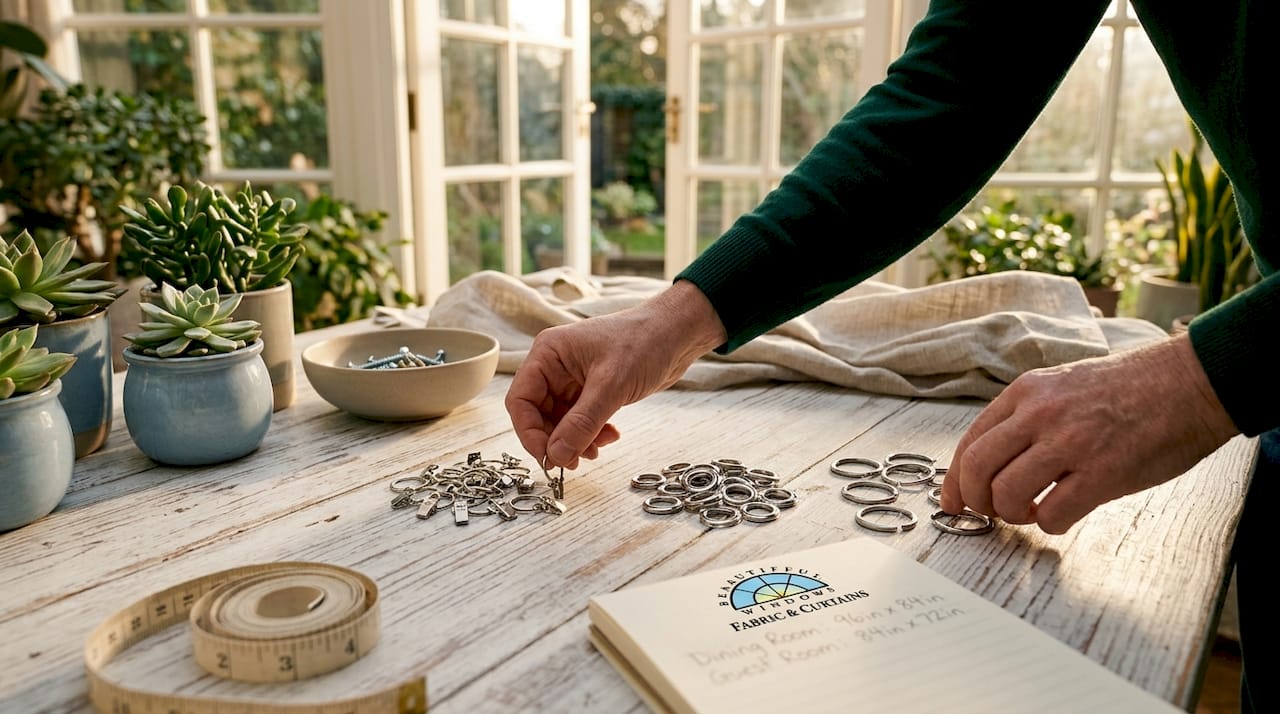
Eyelet rings work with sewn-in hooks or drapery pins and are the preferred choice for pinch-pleat and goblet-pleat curtains. They handle heavier fabrics cleanly and allow the pleats to fall in precise, even folds. C-rings, sometimes called bypass rings, are designed to glide around support brackets without stopping, which gives you smooth, uninterrupted curtain movement across the entire rod.
Decorative rings come in metal, wood, and resin finishes. Metal rings in various finishes range from budget-friendly sets to stainless steel options built for heavier drapes. Stainless steel works particularly well in rooms where moisture is a concern, such as bathrooms or covered patios.
| Ring Type | Best For | Key Advantage |
|---|---|---|
| Clip-on rings | Lightweight to medium fabric | Fast installation, no sewing needed |
| Eyelet rings | Pinch-pleat and goblet-pleat drapes | Clean, structured pleat appearance |
| C-rings | Full rod bypass needed | Smooth glide past support brackets |
| Decorative rings | Style-forward interiors | Available in wood, metal, and resin |
Pro Tip: Space clips every 4 to 6 inches across the curtain header. This spacing maintains consistent pleats and prevents fabric from scalloping between attachment points.
For a step-by-step breakdown of mounting rings and hooks during installation, the complete DIY curtain guide from Beautifulwindowselgin covers hardware placement in detail.
3. Curtain tieback styles and holdbacks
Tiebacks and holdbacks fall under the same functional category but serve distinct decorative roles. Both hold your curtain to the side of the window to let in light and frame the view. The differences lie in material, installation method, and how they interact with your fabric.
Fabric tiebacks are soft, adjustable, and gentle on delicate or textured curtains. They wrap around the panel and attach to a small wall hook. Because they distribute pressure across a wider surface area, they do not crease or mark fabric the way rigid hardware sometimes does. They suit traditional, romantic, and cottage-style interiors particularly well.
Rope tiebacks offer a relaxed, textured look that reads as coastal, nautical, or rustic depending on the braid thickness and color. They are durable and pair well with linen, cotton canvas, and casual weave fabrics. Natural fiber ropes complement warm, earthy color palettes, while white or metallic braided rope suits beachside or contemporary interiors.
Magnetic tiebacks represent one of the more practical curtain accessory ideas available today. Magnetic tiebacks use strong neodymium magnets encased in fabric or plastic housing. Two pieces attach to opposite sides of the curtain panel and hold it securely without any wall hardware at all. They reposition quickly, leave no marks, and work on most fabric thicknesses. This makes them a solid choice for renters and anyone who rearranges their window treatments seasonally.
Holdback hardware refers to rigid metal or resin arms mounted directly to the wall. The curtain drapes over the arm rather than being wrapped or clipped. Holdbacks provide a fixed, formal hold and are available in finishes from polished gold to matte iron. They suit formal living rooms and dining spaces where consistency and structure are the priority.
Pro Tip: When matching curtain tieback styles to your room, treat them as you would any other decorative hardware. The finish on your tieback hooks should coordinate with your rod finials and bracket hardware for a unified look.
4. Drapery weights and curtain brackets
These two accessories work behind the scenes. You often do not notice them when they are doing their job well. You absolutely notice when they are missing or wrong for the fabric.
Drapery weights keep curtain hems from lifting in drafts, help panels hang plumb, and prevent sheers from billowing inward near air vents. The main types include:
- Coin weights: small, round, and sewn into the bottom corners of lightweight panels
- Chain weights: a continuous strip of small metal links that run along the full hem of sheer fabrics
- Square or bar weights: heavier and designed for thick, structured curtains like blackout or interlining
| Weight Type | Best Fabric Match | Placement |
|---|---|---|
| Coin weights | Lightweight sheers, linen | Corner seams of hem |
| Chain weights | Sheer panels with long drops | Full hem channel |
| Square or bar weights | Blackout, lined, or heavy fabric | Hem seams and corners |
For children’s rooms, select lead-free weight options specifically. This is not an area where cutting corners on safety makes sense.
Curtain brackets determine how well your rod holds up over time. The right brackets for curtain weight prevent sagging, keep the rod level, and protect wall anchors from stress failure. Brackets come in single, double, and ceiling-mount configurations. Double brackets allow you to hang two layers of curtains simultaneously, which is practical for rooms that need both a sheer layer and a blackout layer. Always match the bracket’s load rating to the combined weight of your rod and fully loaded curtain panels.
5. Curtain rod accessories: rods, finials, and mounting hardware
Curtain rod accessories complete the top of any window treatment and have a larger visual impact than most homeowners anticipate. The rod, its end caps, and its mounting hardware collectively set the architectural tone of the window.
Rod styles break into three primary categories. Fixed rods are the standard, available in a wide range of diameters and finishes. Extendable or tension rods adjust to fit within a window frame without wall mounts, which makes them ideal for lightweight sheers and café-style curtains. Motorized rods are growing in popularity for large windows and smart homes, allowing curtains to open and close by remote or voice command.
Finials are the decorative end caps that sit at each tip of the rod. They are purely aesthetic but meaningfully affect how polished the installation looks. Common shapes include balls, arrows, acorns, crystals, and geometric forms. The finial finish should match your bracket hardware and ideally echo other metal accents in the room, such as door handles or light fixtures.
Mounting options include wall mounting, ceiling mounting, and inside-frame mounting. Ceiling mounting makes windows appear taller by drawing the eye upward. Inside-frame mounting creates a clean, recessed look suited to contemporary interiors.
For outdoor installations, marine-grade stainless steel or brass hardware is the correct choice. Chrome corrodes quickly in humid or coastal environments and can stain fabric permanently. Using outdoor-rated hardware protects both the rod and the curtain investment for years longer.
| Mounting Type | Best Setting | Visual Effect |
|---|---|---|
| Wall mount | Standard interior windows | Traditional, versatile |
| Ceiling mount | Tall windows or low ceilings | Height-enhancing |
| Inside frame mount | Contemporary or minimalist rooms | Clean, recessed appearance |
| Tension rod | Lightweight sheers, renters | Tool-free, no wall damage |
For guidance on choosing the right curtain style before finalizing rod and mounting choices, Beautifulwindowselgin offers detailed resources on matching drapery style to room function and decor.
Pro Tip: When learning how to install curtain accessories like finials and wall brackets, always locate wall studs or use rated wall anchors. A rod loaded with fabric exerts more lateral force on mounting points than most people expect, especially when curtains are drawn open repeatedly.
My take on curtain accessories after years in the drapery world
I’ve seen homeowners spend considerable money on beautiful fabric and then undercut the entire investment with the wrong rings or a bracket that slowly pulls from the wall. The most common mistake I’ve encountered is over-relying on clip-on rings for heavy or formal drapery. Expert Bilal Hassan points out what experienced drapery workrooms already know: clip rings are convenient, but they cannot replicate the structured look that pins and hooks produce in pinch-pleat panels. For formal living rooms or dining rooms, that distinction is visible from across the room.
I’ve also found that homeowners tend to underestimate drapery weights. Adding chain weights to a sheer panel costs almost nothing, yet it transforms the way fabric hangs. The panel stops lifting in drafts, lies flat against the floor, and looks intentional rather than accidental.
What I’ve come to believe is that the accessories layered together, weights in the hem, the right rings on the header, a well-matched tieback, and sturdy brackets, produce a result that reads as professionally installed. No single accessory carries the entire effect. It is the combination of professionally fitted hardware working together that separates a polished window treatment from an adequate one.
— Marrion
Discover premium fabrics and drapery services at Beautifulwindowselgin
The right accessories deserve fabric that matches their quality. Beautifulwindowselgin offers an extensive selection of designer drapery fabrics in jacquard satin, embroidered textiles, and structured upholstery weaves, sold by the yard with nationwide shipping available.
Whether you are sourcing fabric for a full custom drapery project or selecting yardage to complement your existing hardware, the Beautifulwindowselgin team provides design consultations and professional installation guidance. For homeowners who want a unique look, the abstract artistic textile collection offers distinctive textures and patterns that pair exceptionally well with modern rod and tieback hardware. From fabric samples to finished drapery, Beautifulwindowselgin supports every stage of the window treatment process.
FAQ
What are the main types of curtain accessories?
The primary types of curtain accessories include rings and hooks, tiebacks and holdbacks, drapery weights, curtain brackets, and rod hardware such as finials and mounting brackets. Each category serves a distinct functional or decorative role in a complete window treatment.
What curtain tieback styles work best for heavy drapes?
Rigid holdback hardware mounted to the wall provides the most secure hold for heavy curtains. Fabric tiebacks and rope styles work well for medium-weight panels, while magnetic tiebacks are better suited to lighter fabrics.
How do I choose between clip-on rings and eyelet rings?
Clip-on rings work well for lightweight to medium fabrics and require no sewing, making them ideal for renters and casual spaces. Eyelet rings paired with drapery pins are the better choice for heavy or pinch-pleat curtains where a structured, tailored appearance is the goal.
What type of drapery weight should I use for sheer curtains?
Chain weights are the standard choice for sheer curtain panels. They run the full length of the hem and keep lightweight fabric hanging straight without adding visible bulk to the panel’s edge.
What hardware should I use for outdoor curtain rods?
Marine-grade stainless steel or brass hardware is recommended for outdoor installations. Chrome corrodes in humid and coastal conditions and can permanently stain curtain fabric, making corrosion-resistant materials the practical and long-lasting choice.
Recommended
- Curtain hardware setup: a complete DIY guide – Fabric Store in Columbia, SC | Drapery Making Services
- Step-by-step curtain installation: the complete DIY guide – Fabric Store in Columbia, SC | Drapery Making Services
- Common Curtain Styles to elevate your home decor – Fabric Store in Columbia, SC | Drapery Making Services
- Curtain lining explained: Improve comfort, style, efficiency – Fabric Store in Columbia, SC | Drapery Making Services