
What is blackout fabric? Benefits, uses, and DIY tips
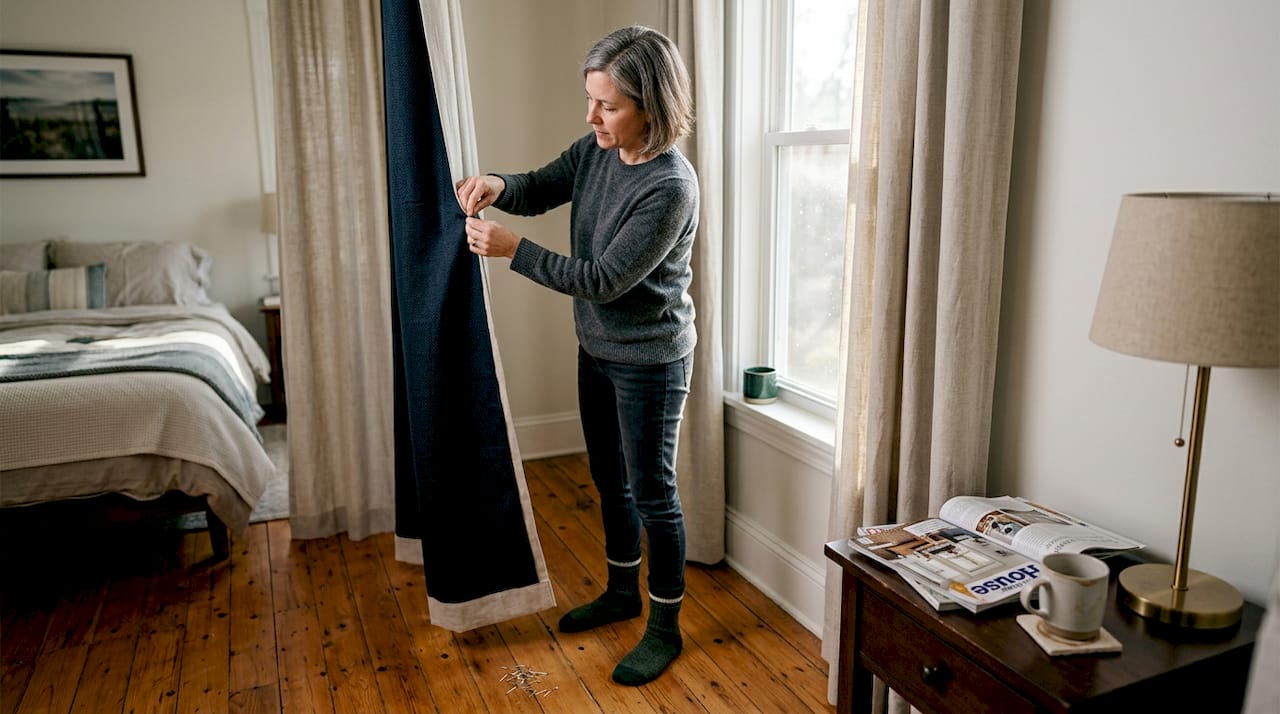
TL;DR:Blackout fabric is specifically engineered to block nearly all visible light for better privacy and sleep.Types vary from single-pass to three-pass coatings, with three-pass offering almost complete darkness.It outperforms standard materials by providing superior light blocking, insulation, and noise reduction.
Most standard curtains and blinds let in far more light than homeowners expect. Even a lined drape can allow enough ambient glow to disrupt sleep, create uncomfortable glare, or compromise privacy. Blackout fabric solves this problem by design. As a specialized textile engineered to block 99-100% of visible light, it goes well beyond what ordinary window coverings can offer. This guide walks you through what blackout fabric is, how it works, the main types available, how it compares to other materials, and practical steps for using it in your own home.
Table of Contents
- What is blackout fabric and how does it work?
- Types of blackout fabric and coatings explained
- Blackout fabric vs. other window treatment materials
- How to use blackout fabric in your home: Practical tips and DIY guidance
- Our perspective: What most homeowners misunderstand about blackout fabric
- Find the perfect blackout or outdoor fabric for your next project
- Frequently asked questions
Key Takeaways
| Point | Details |
|---|---|
| True blackout means 99-100% light block | Blackout fabric with 3-pass or woven design blocks nearly all visible light for maximum darkness. |
| Choose the right coating | Options like 1-pass, 2-pass, and 3-pass give different levels of darkness and efficiency. |
| DIY-friendly and practical | Homeowners can install blackout fabric themselves for enhanced privacy and energy savings. |
| Not all materials perform equally | Blackout fabric outperforms ordinary fabrics for light control and privacy in window treatments. |
What is blackout fabric and how does it work?
Blackout fabric is not simply a heavy or dark-colored cloth. It is a purpose-built textile designed to prevent visible light from passing through it. The distinction matters because many homeowners assume thickness alone determines light-blocking ability. In reality, the construction and coating of the fabric are what make the difference.
Most blackout fabrics achieve their performance through one of two methods: specialized weaving or applied coatings. Woven blackout fabrics use a tight, dense weave structure that leaves almost no gaps for light to pass through. Coated blackout fabrics, on the other hand, have one or more layers of foam or acrylic applied directly to the back of the base fabric. These coatings fill in any gaps in the weave and create a physical barrier against light.
“Blackout fabric is a specialized textile engineered to block 99-100% of visible light, used primarily in curtains and window treatments for darkness, privacy, and insulation.”
Understanding this distinction is helpful when you browse a window treatment terminology guide, because terms like “room darkening” and “blackout” are often used loosely in retail settings but refer to very different performance levels.
The core benefits of blackout fabric in window treatments include:
- True darkness: Blocks nearly all visible light for uninterrupted sleep and rest
- Improved privacy: Prevents outside viewers from seeing into a room, day or night
- Thermal insulation: Reduces heat transfer through windows, keeping rooms warmer in winter and cooler in summer
- Noise reduction: The dense construction also absorbs some ambient sound
- UV protection: Shields furniture, flooring, and artwork from sun damage
Blackout fabric performs best in rooms where light control is critical. Bedrooms are the most obvious application, particularly for people who work night shifts or live in areas with long summer daylight hours. Nurseries benefit greatly because consistent darkness supports infant sleep cycles. Home theaters rely on blackout fabric to eliminate glare and create an immersive viewing environment. Even home offices can benefit when screens are difficult to read due to afternoon sun.
Types of blackout fabric and coatings explained
Now, having a basic understanding of what blackout fabric is, let’s compare the main types and their practical uses.
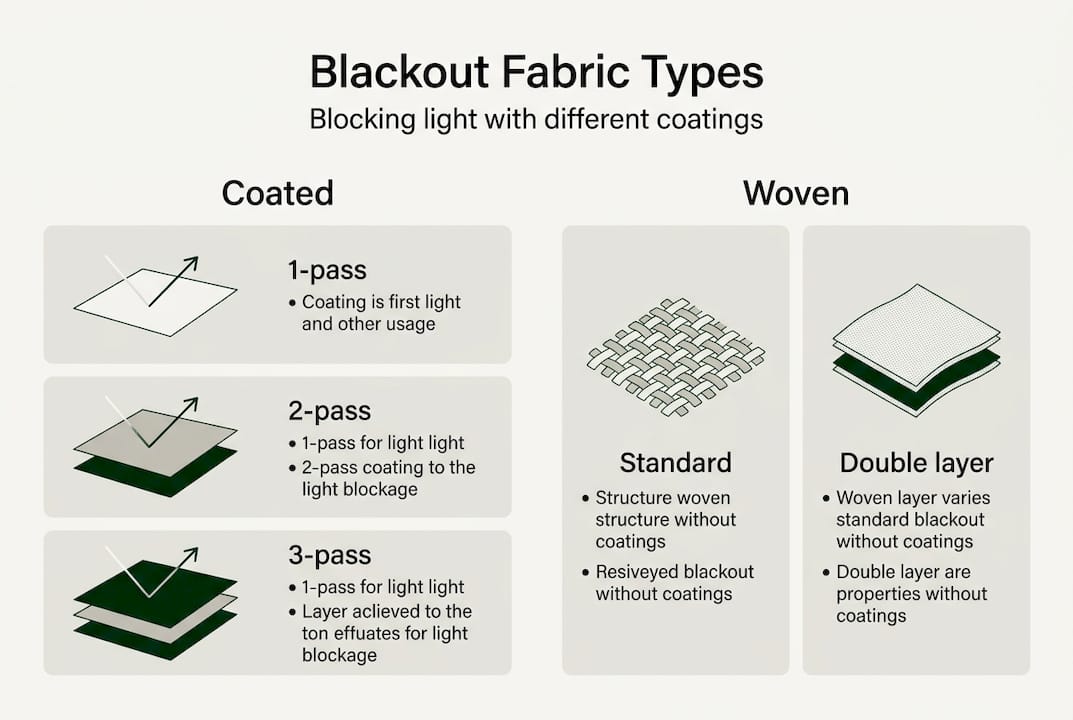
Blackout fabrics generally fall into two broad categories: coated fabrics and woven blackout fabrics. Within the coated category, there are three performance tiers based on the number of coating passes applied during manufacturing.
Coated blackout fabric types:
- 1-pass coated: A single layer of coating applied to the back of the fabric. This provides approximately 60% light blocking, which reduces glare but does not create true darkness. Best for living rooms where some light reduction is welcome.
- 2-pass coated: Two layers of coating, typically with a white or colored layer sandwiched between them. This achieves 85-95% light blocking, suitable for most bedrooms and general use.
- 3-pass coated: Three full coating layers, usually black in the center for maximum opacity. This delivers 99-100% light blocking and is the standard for nurseries, home theaters, and shift workers’ bedrooms.
- Woven blackout: Dense, tightly woven fabric without coatings. Achieves 95-100% light blocking with better breathability and a more refined appearance. Preferred when aesthetics matter as much as performance.
As a useful reference, 3-pass coated blocks 99-100% light; 2-pass 85-95%; 1-pass ~60%; woven offers 95-100% with better breathability.
GSM (grams per square meter) is a measure of fabric weight and density. Higher GSM generally means a heavier, more durable fabric with better insulating properties. For blackout curtains, a GSM between 250 and 400 is common. Heavier fabrics hang more elegantly and tend to last longer, which is worth considering when reviewing window treatment fabric tips for long-term projects.
| Fabric type | Light blocking | Breathability | Best use |
|---|---|---|---|
| 1-pass coated | ~60% | Moderate | Living rooms, offices |
| 2-pass coated | 85-95% | Low | Bedrooms, guest rooms |
| 3-pass coated | 99-100% | Very low | Nurseries, home theaters |
| Woven blackout | 95-100% | Better | Elegant bedrooms, formal rooms |
Pro Tip: If you are choosing fabric for a bedroom or nursery, 3-pass coated blackout is the most reliable option. For a more polished look in a formal room, woven blackout offers comparable performance with a more refined appearance. You can explore drapery fabric selections to see how blackout options compare alongside other drapery materials.
Blackout fabric vs. other window treatment materials
Understanding the main types, it’s helpful to see how blackout fabric stacks up against other window treatment materials.
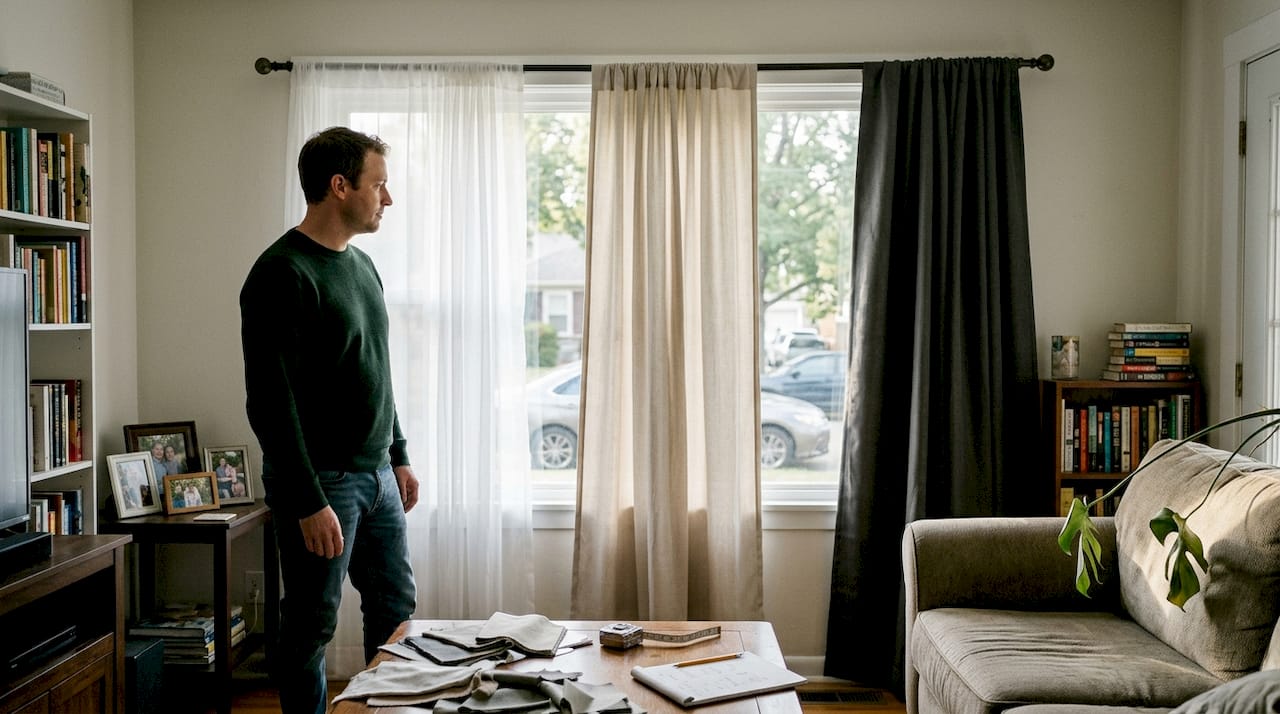
Homeowners often encounter several fabric categories when shopping for window treatments. Each serves a different purpose, and knowing the differences prevents costly mistakes.
Dim-out fabric reduces light by 70-85% but does not eliminate it. It softens glare and adds privacy during the day, making it suitable for living rooms and dining areas where some natural light is still desirable.
Thermal fabric is designed primarily for insulation rather than light control. It typically has a reflective or insulating layer but may only block 50-70% of light. Its main strength is reducing energy loss through windows, as explored in resources about cut energy costs with window treatments.
Sheer fabric allows full light transmission and provides minimal privacy. It is valued for softening harsh sunlight and adding visual texture, not for blocking light.
Standard lined fabric uses a plain lining sewn to the back of a decorative face fabric. It improves drape and adds a small degree of light reduction, but rarely exceeds 40-60% light blocking.
Blackout fabric provides superior light blocking of up to 100% compared to all of these standard materials.
| Material | Light blocking | Insulation | Privacy | Best for |
|---|---|---|---|---|
| Sheer | 0-10% | Minimal | Very low | Softening light |
| Standard lined | 40-60% | Low | Moderate | General rooms |
| Dim-out | 70-85% | Moderate | Good | Living, dining rooms |
| Thermal | 50-70% | High | Moderate | Energy efficiency |
| Blackout | 99-100% | High | Excellent | Bedrooms, nurseries, theaters |
The impact on home comfort is measurable when you upgrade from standard lined fabric to a true blackout option. Rooms feel quieter, temperatures stabilize, and sleep quality improves noticeably.
Blackout fabric is the preferred choice when:
- Complete darkness is needed for sleep or work
- Privacy is a priority, especially in street-facing rooms
- Energy efficiency is a goal alongside light control
- A home theater or media room requires controlled lighting conditions
How to use blackout fabric in your home: Practical tips and DIY guidance
Finally, let’s get hands-on with how you can actually use blackout fabric in your home, even as a beginner.
Blackout fabric is used primarily in curtains and window treatments for darkness, privacy, and insulation, and working with it is more accessible than many people assume. The key is preparation and using the right tools.
Step-by-step guide for DIY blackout curtains:
- Measure your window accurately. Measure the width and height of the window frame, then add 4-6 inches on each side for proper coverage. Panels that are too narrow allow light to leak around the edges.
- Select your blackout fabric. Choose a fabric type based on your room’s needs. Use the comparison table above as your guide. Purchase slightly more fabric than your measurements indicate to allow for seam allowances.
- Cut the fabric cleanly. Lay the fabric flat on a large, firm surface. Use a long ruler and fabric chalk to mark your cut lines before cutting. Sharp fabric scissors produce clean, straight edges that sew together neatly.
- Sew the panels. If lining existing curtains, pin the blackout fabric to the back of your curtain panel with wrong sides together. Stitch around the edges, leaving the top open for the curtain rod pocket or header tape.
- Hang and adjust. Install your curtain rod wider than the window frame to allow the panels to clear the glass entirely when open. This prevents light leakage at the sides.
Pro Tip: Always use sharp fabric scissors when cutting blackout coated fabrics. Dull blades drag against the coating, creating ragged edges that are difficult to sew and may cause the coating to peel over time.
For care and storage, blackout fabric should be machine washed on a gentle cycle with cold water unless the label specifies otherwise. Avoid high heat in the dryer, as it can damage the coating. Store unused fabric rolled rather than folded to prevent permanent crease marks. Reviewing curtain fabric types can help you understand how blackout fabric compares to other materials in terms of care requirements.
Our perspective: What most homeowners misunderstand about blackout fabric
There is a widespread assumption that all blackout fabrics perform equally. They do not. The difference between a 1-pass and a 3-pass coated fabric is not a minor detail; it is the difference between a room that is merely dim and one that is genuinely dark. We see homeowners make this mistake regularly, purchasing a fabric labeled “blackout” and then wondering why morning light still wakes them up.
The other persistent issue is installation. Even the best 3-pass blackout fabric will fail to deliver true darkness if the curtain panels are too narrow or the rod is mounted too close to the window frame. Light leaks around the edges, not through the fabric. This is where style and smart function intersect, and why custom window treatments often outperform off-the-shelf solutions. A custom panel sized precisely for your window eliminates the gaps that standard sizing leaves behind. Investing in the right fabric and the right fit from the start saves time, money, and frustration.
Find the perfect blackout or outdoor fabric for your next project
Ready to take your home’s light control and privacy to the next level? At Beautiful Windows Elgin, we carry a curated selection of fabrics suited to a wide range of window treatment projects, from classic blackout drapery to durable outdoor options. Whether you are lining existing curtains or starting a custom project from scratch, our fabric selection is designed to meet both functional and aesthetic goals.
For outdoor applications or projects that require weather-resistant materials, our outdoor canvas fabric offers reliable durability alongside style. If you need guidance on fabric selection or custom sizing, our team is available to help you find the right solution for your space.
Frequently asked questions
Does blackout fabric block heat as well as light?
Yes, blackout fabric helps insulate windows by reducing both heat loss in winter and heat gain in summer, making it a practical choice for energy-conscious homeowners. Its dense construction acts as a thermal barrier between the room and the glass.
Can I add blackout lining to existing curtains?
Yes, blackout fabric can be used to line existing curtains by sewing or pinning the lining to the back of your current panels. This is one of the most cost-effective ways to upgrade your window treatments without replacing them entirely.
Is blackout fabric safe for kids’ rooms and nurseries?
Absolutely. Blackout fabric is widely used in nurseries because consistent darkness supports healthy infant sleep cycles. It also adds privacy and reduces outside noise, both of which contribute to a calmer environment for young children.
What is the difference between 1-pass, 2-pass, and 3-pass blackout fabric?
3-pass coated blocks 99-100% light; 2-pass 85-95%; 1-pass ~60%, with each additional pass adding another layer of light-blocking coating to the back of the fabric. The more passes, the darker the room will be.
Recommended
- Role of Fabric in Window Treatments– Impact on Style & Function – Shop Designer Fabrics by the Yard | Curtains & Drapery
- 7 Essential Window Treatment Fabric Tips for Homeowners – Shop Designer Fabrics by the Yard | Curtains & Drapery
- Trending curtain fabrics for stylish windows in 2026 – Fabric Store in Columbia, SC | Drapery Making Services
- What is designer fabric? Guide to premium textiles for homeowners – Fabric Store in Columbia, SC | Drapery Making Services