
What is curtain heading? A complete guide for stylish windows
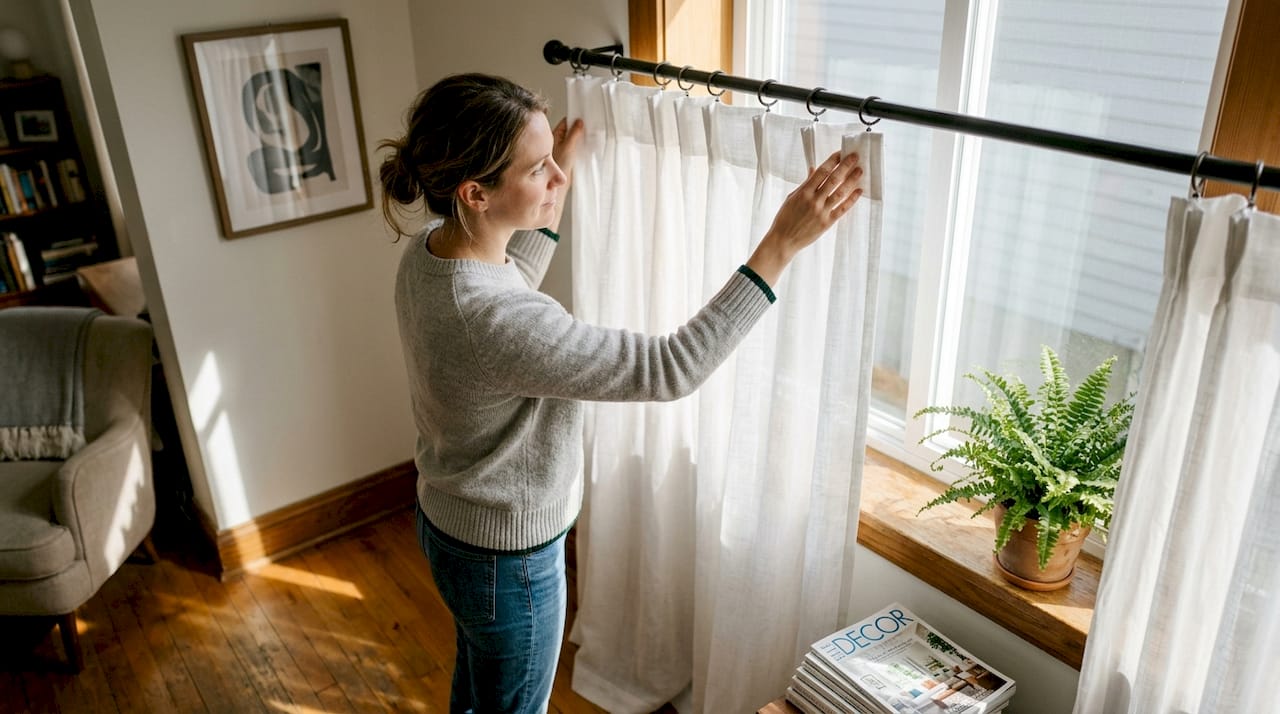
TL;DR:Curtain headings define how curtains hang, look, and function in a space.Different styles like pinch pleat, eyelet, and rod pocket suit various décor and practical needs.Choosing the right heading enhances both the visual appeal and performance of window treatments.
Most homeowners spend hours selecting the perfect curtain fabric, debating between linen and velvet, light neutrals and bold patterns. Yet one detail quietly controls everything: the curtain heading. This single design choice determines how your curtains hang, how full they look, and whether they feel formal or relaxed. Get the heading wrong, and even the most luxurious fabric falls flat. Get it right, and an ordinary window becomes a refined focal point. This guide walks you through every heading style, its functional strengths, and how to match it to your space with confidence.
Table of Contents
- What is a curtain heading?
- Types of curtain headings: Styles and visual effects
- How curtain headings affect function and performance
- Choosing the right curtain heading for your space
- Why the right curtain heading makes all the difference
- Enhance your window treatments with expert curtain headings
- Frequently asked questions
Key Takeaways
| Point | Details |
|---|---|
| Curtain heading defined | The curtain heading is the finished top edge that affects how curtains drape and move. |
| Style impacts | Each heading style changes both the look and function of your window treatments. |
| Function matters | Choosing the right heading enhances insulation, light control, and day-to-day usability. |
| Room-specific advice | Match your curtain heading to room needs, décor, and personal style for best results. |
What is a curtain heading?
The curtain heading is the top section of a curtain panel, the part that attaches to the rod, track, or pole. It is not just a structural element. The heading shapes how the fabric gathers, folds, or hangs, which directly controls the overall silhouette of your window treatment. Think of it as the architecture of your curtain. The body of the curtain carries the color and texture, but the heading defines the form.
As noted in our overview of curtain style varieties, “curtain heading refers to the top finish, which determines how curtains hang and move.” That single detail influences whether a room reads as formal or casual, structured or relaxed, minimal or layered.
Here is what the heading controls:
- Fullness: How much fabric is used relative to the window width. More fullness means richer folds.
- Drape: The way the fabric falls from the top to the hem.
- Stack-back: How much space the curtain takes up when pushed to the side.
- Visual height: Certain headings, when mounted high, make ceilings appear taller.
- Rod compatibility: Not every heading works with every rod type.
“The heading is the foundation of any curtain treatment. Choosing it thoughtfully is just as important as selecting the fabric itself.” — Window treatment design principle
The heading is also distinct from the curtain lining, which is a separate layer sewn to the back of the fabric for insulation or light control. The lining supports the heading’s performance, but the heading itself is the structural and aesthetic decision that comes first. Understanding this distinction helps you plan your window treatment from the top down, literally.
Types of curtain headings: Styles and visual effects
Now that you understand what a curtain heading is, let’s explore the variety of styles available and how each transforms a space.
As our guide on choosing curtain headings explains, “different heading styles, such as pinch pleat, eyelet, and rod pocket, suit different décor goals.” Choosing among popular curtain heading styles means understanding both the visual result and the practical trade-offs.
Here is a breakdown of the five most common heading types:
- Pinch pleat: Fabric is sewn into neat, symmetrical folds at the top. It produces a formal, tailored look and works beautifully in dining rooms and traditional living rooms.
- Eyelet (grommet): Large metal rings punched through the fabric slide directly onto the rod. The result is a contemporary, relaxed wave pattern.
- Rod pocket: A sewn channel at the top slips over the rod. It creates a gathered, casual look ideal for kitchens and bedrooms.
- Tab top: Fabric loops attach directly to the rod. This style is relaxed and bohemian, best suited to informal spaces.
- Wave/pencil pleat: Tightly packed pleats create a uniform ripple effect. Pencil pleat is one of the most versatile styles, working in both modern and traditional rooms.
| Heading style | Visual look | Best room fit | Ease of use | Fullness ratio |
|---|---|---|---|---|
| Pinch pleat | Formal, structured | Dining room, formal living | Moderate | 2.5x |
| Eyelet/grommet | Modern, relaxed | Contemporary living, bedroom | Easy | 2x |
| Rod pocket | Casual, gathered | Kitchen, bathroom | Easy | 2x |
| Tab top | Bohemian, informal | Casual bedroom, studio | Easy | 1.5x |
| Pencil pleat | Versatile, classic | Any room | Moderate | 2.5x |
For formal spaces, pinch pleat and pencil pleat deliver the most polished results. For rooms where you want a lighter, airier feel, eyelet and tab top headings keep things relaxed without sacrificing style. The fullness ratio shown above tells you how wide your fabric needs to be relative to your window. A 2.5x ratio on a 60-inch window means you need 150 inches of fabric width for proper drape.
How curtain headings affect function and performance
Visual style is important, but curtain headings also have a big influence on how your curtains perform day-to-day.
The way a heading is constructed affects how smoothly the curtain opens and closes, how well it stacks when pulled back, and how easy it is to clean. Eyelet and grommet headings glide along rods with minimal friction, making them ideal for curtains you open and close frequently. Rod pocket headings, while charming, can be stiff to move and are better suited to curtains that stay in a fixed position.

| Heading style | Ease of movement | Insulation potential | Maintenance ease | Best for high-traffic rooms |
|---|---|---|---|---|
| Pinch pleat | Good (with hooks) | High | Moderate | Yes |
| Eyelet/grommet | Excellent | Moderate | Easy | Yes |
| Rod pocket | Poor | Moderate | Difficult | No |
| Tab top | Poor | Low | Easy | No |
| Pencil pleat | Good (with hooks) | High | Moderate | Yes |
Lining plays a significant role here as well. The right heading can boost insulation by allowing more or less fabric coverage at the top, and pairing a full-coverage heading like pinch pleat with a thermal lining can meaningfully reduce heat loss through windows. Our detailed look at curtain linings and thermal performance explains how this combination works in practice.
For sun-facing rooms, headings that allow the curtain to stack tightly to one side give you maximum light control without blocking the full window when open. Pinch pleat and pencil pleat headings do this well because the pleats compress neatly. You can also explore different window treatment types to see how headings fit into a broader layering strategy.
Pro Tip: For rooms with intense afternoon sun, choose a heading style that pairs naturally with a blackout or thermal lining. Pinch pleat with a sewn-in lining creates a near-seamless barrier at the top of the window, which is where the most heat transfer occurs.
Choosing the right curtain heading for your space
Armed with knowledge of both the aesthetic and functional aspects, here’s how to pick a curtain heading that fits your space perfectly.
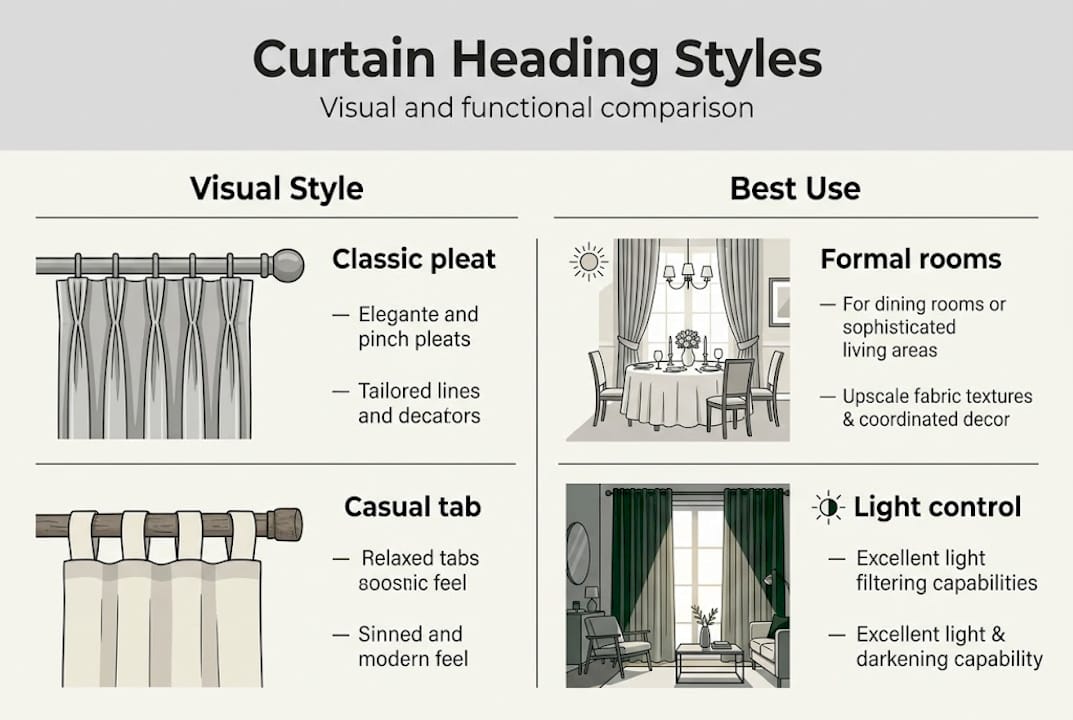
As our curtain material advice resource confirms, “a heading that complements both fabric type and room use creates the best result.” A heavy jacquard fabric, for example, needs a heading with enough structure to support its weight, making pinch pleat or pencil pleat far better choices than tab top.
Follow these steps to select the right heading:
- Define the room’s purpose. A bedroom needs light control and privacy. A living room may prioritize aesthetics. A kitchen needs easy maintenance.
- Identify your décor style. Traditional rooms suit pinch pleat. Modern spaces favor eyelets. Casual rooms work well with rod pocket or tab top.
- Measure your window accurately. Use our guide on measuring for curtain headings to get precise width and drop measurements before ordering fabric.
- Check rod compatibility. Eyelet headings require a pole rod. Pencil pleat works best on a track. Confirm your hardware before committing to a heading style.
- Consider how often you’ll open the curtains. High-traffic rooms need headings that glide easily. Decorative panels that rarely move can use any style.
Pro Tip: Mixing a lightweight sheer with a rod pocket heading and a heavier drape with pinch pleat creates a layered, custom look without requiring two different rod systems. Use a double bracket to hold both rods at different depths.
Common mistakes to avoid include mismatching a heavy fabric with a tab top heading (the weight causes the tabs to stretch and distort), choosing rod pocket on a very wide window (the gathered fabric becomes impossible to move), and ignoring the rod type when selecting a heading. The style selection guide and how to pick curtain headings resources offer additional guidance for specific scenarios.
Why the right curtain heading makes all the difference
In our experience working with homeowners and interior decorators, curtain headings are consistently the most underestimated decision in window treatment design. Clients often arrive with a beautiful fabric selected, a color scheme confirmed, and a clear vision. Then the curtains are installed, and something feels off. The room doesn’t look the way they imagined. In nearly every case, the heading was the missing piece.
A formal fabric like silk or jacquard satin paired with a casual tab top heading sends mixed signals to the eye. The fabric says elegance, but the heading says relaxed weekend. The result is visual confusion rather than cohesion. The style impacts of headings are subtle but powerful, and they affect how the entire room is perceived.
The most important shift you can make is to treat the heading as a design decision, not an afterthought. Choose it before you finalize your fabric, not after. The heading should guide the fabric weight and texture you select, not the other way around.
Enhance your window treatments with expert curtain headings
Selecting the right curtain heading is easier when you have access to quality fabrics that are designed to perform with specific heading styles. At Beautiful Window Elgin, we offer an extensive selection of designer curtain fabrics including cotton, embroidered, and jacquard satin options suited to every heading type.

Whether you are planning a formal dining room with pinch pleat drapes or a relaxed bedroom with eyelet panels, our fabric selection supports your vision from the top of the heading to the hem. We also carry specialty materials such as waterproof canvas fabric for outdoor and utility applications. Our design consultation service helps you match heading style, fabric weight, and lining for a result that performs as well as it looks.
Frequently asked questions
What is the most popular curtain heading style for living rooms?
Pinch pleat and eyelet headings are among the most popular for living rooms due to their elegant look and easy operation. Both styles offer a polished finish that suits a wide range of décor preferences.
Do curtain headings affect energy efficiency?
Yes, certain headings combined with curtain lining can improve insulation and reduce heat loss around windows. Pairing a full-coverage heading with a thermal lining can cut heat loss by up to 40% in some cases.
How do I choose the right heading for my curtains?
Consider your room’s style, window shape, desired fullness, and how often you’ll use the curtains. Room use and décor both influence which heading will deliver the best result.
Are certain curtain headings better for small windows?
Tab top and rod pocket headings can minimize bulk and suit small windows best, especially in casual spaces. These styles keep the top of the window clean and uncluttered, which helps smaller windows appear less confined. Tab top and rod pocket are popular choices for this reason.
Recommended
- Common Curtain Styles to elevate your home decor – Fabric Store in Columbia, SC | Drapery Making Services
- Curtain selection guide 2026: choose fabrics confidently – Fabric Store in Columbia, SC | Drapery Making Services
- Curtain lining explained: Improve comfort, style, efficiency – Fabric Store in Columbia, SC | Drapery Making Services
- Curtain materials guide: expert tips for stunning windows – Fabric Store in Columbia, SC | Drapery Making Services