
What is designer textile? A guide to luxurious home fabrics
TL;DR:Designer textiles are engineered for performance with superior materials and rigorous testing standards.Quality is measured through industry benchmarks like abrasion resistance, colorfastness, and pilling grades.Material choices impact durability, maintenance, and overall room feel, with natural fibers offering luxury and synthetics providing resilience.
Most homeowners assume that fabric is fabric. If it looks good in the store and fits the budget, it must work. But that assumption leads to curtains that fade after one summer, upholstery that pills within a year, and rooms that never quite feel finished. Designer textiles operate by an entirely different set of standards. They are engineered for specific performance outcomes, produced with superior materials, and tested against measurable benchmarks before they ever reach your home. This guide explains exactly what separates a designer textile from an ordinary one, how quality is measured, and how to use these fabrics to genuinely transform your interiors.
Table of Contents
- Defining designer textile: More than just fabric
- Quality benchmarks: Testing standards for designer textiles
- Material choices: Natural fibers vs. performance synthetics
- Designer textiles in home decor: Applications and impact
- Current trends in designer textiles for homes
- A designer’s perspective: What most homeowners overlook about textiles
- Find your perfect designer textile with us
- Frequently asked questions
Key Takeaways
| Point | Details |
|---|---|
| Designer textiles defined | Designer textiles offer exclusive patterns, material quality, and craftsmanship that elevate home decor. |
| Quality benchmarks | Abrasion, colorfastness, and tensile strength standards show real durability in designer fabrics. |
| Material choices matter | Choose between natural fibers for feel and synthetics for performance based on your lifestyle. |
| Custom vs. ready-made | Custom window treatments and upholstery deliver superior fit, style, and impact. |
| Stay on trend | Modern designer textiles blend enduring classics with innovative patterns and functions. |
Defining designer textile: More than just fabric
A designer textile is not simply a fabric with a higher price tag. It is a material developed with intention, from the fiber selection and weave structure to the finishing treatments and pattern design. These textiles are typically produced in limited runs, often in collaboration with recognized designers or specialty mills, and they meet strict quality standards that ordinary fabrics do not.
The distinction matters because fabric does more than cover a surface. It affects how a room feels, how sound moves through a space, how light filters in, and how long a piece of furniture or window treatment holds its shape and color. When you shop designer fabrics, you are choosing materials built to perform over time, not just look appealing at the point of purchase.
Several key attributes separate designer textiles from standard options:
- Exclusive patterns and colorways developed by professional designers, often unavailable in mass-market retail
- Superior raw materials such as long-staple cotton, pure linen, or high-grade synthetics with specialty coatings
- Advanced manufacturing including precision weaving, embroidery, or jacquard construction that creates refined surface detail
- Finishing treatments for stain resistance, UV protection, or dimensional stability
- Rigorous quality testing against industry benchmarks before the fabric reaches market
This combination of design intent and technical rigor is what justifies the investment. As the premium textile guide outlines, the value lies not just in aesthetics but in measurable performance over time.
“Designer textiles are defined not by their label alone, but by the standards they meet and the longevity they deliver in real-world use.”
For homeowners and interior designers alike, understanding this distinction is the first step toward making informed, lasting choices.
Quality benchmarks: Testing standards for designer textiles
After understanding what designer textiles are, it is crucial to know how their quality is objectively measured. The textile industry relies on standardized tests to verify that a fabric will hold up under real conditions. These are not marketing claims. They are measurable outcomes from controlled laboratory procedures.
The most referenced standard is the Martindale abrasion test, which measures how many rub cycles a fabric can withstand before showing visible wear. For residential use, Martindale abrasion benchmarks typically fall between 15,000 and 25,000 cycles, with colorfastness graded on a scale of 3 to 5. A fabric rated below these thresholds may look fine initially but will degrade noticeably within a few years of regular use.
Other critical tests include:
| Test | What it measures | Benchmark for residential use |
|---|---|---|
| Martindale abrasion | Surface wear resistance | 15,000 to 25,000 cycles |
| Colorfastness | Resistance to fading from light and washing | Grade 3 to 5 |
| Tensile strength | Resistance to tearing under tension | Varies by fiber type |
| Pilling resistance | Resistance to surface fiber balling | Grade 3 to 5 |
| Dimensional stability | Shrinkage after washing | Less than 3% change |
For drapes and curtains specifically, colorfastness to light is especially important. A fabric that fades unevenly from sun exposure will compromise the entire look of a room. The quality and durability guide provides further detail on how these numbers translate to real-world performance.
Pro Tip: Before purchasing any designer textile for a high-use area, ask the supplier for the fabric’s test data sheet. A reputable source will provide Martindale ratings, colorfastness grades, and pilling results without hesitation.
These numbers give you a reliable way to compare fabrics beyond appearance alone, and they protect your investment over the long term.
Material choices: Natural fibers vs. performance synthetics
With testing standards explained, it is worth comparing how different material types play a role in designer textile choices. The fiber content of a fabric shapes everything from its drape and texture to its maintenance requirements and lifespan.
Natural fibers such as cotton, linen, silk, and wool have long been associated with luxury. Cotton offers softness, breathability, and excellent dye uptake, making it ideal for printed drapery and upholstery. Linen brings a crisp, relaxed texture with natural temperature regulation. Silk delivers an unmatched luminous quality but requires careful handling. Wool provides warmth, resilience, and natural flame resistance.
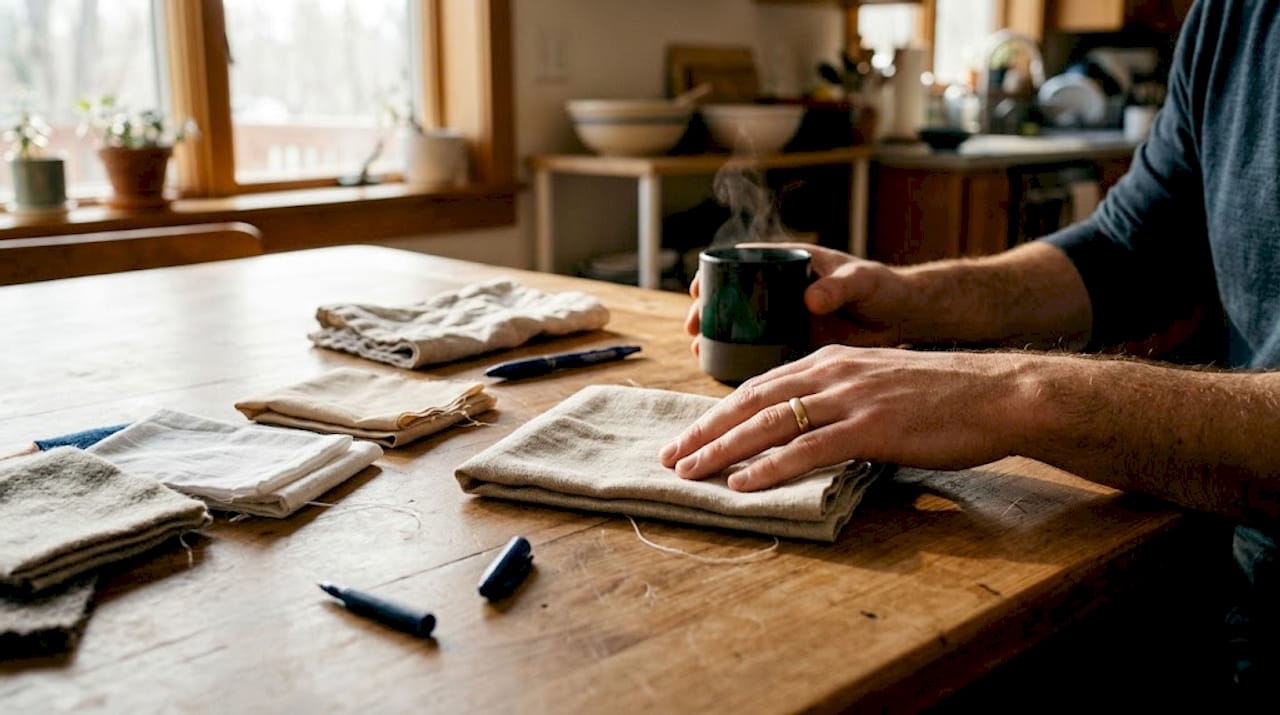
Performance synthetics, including polyester, acrylic, and solution-dyed nylon, offer a different set of advantages. They resist fading, moisture, and abrasion more effectively than most natural fibers. Many carry specialty coatings for stain repellency or UV protection, making them well-suited for high-traffic rooms or spaces with significant sun exposure.
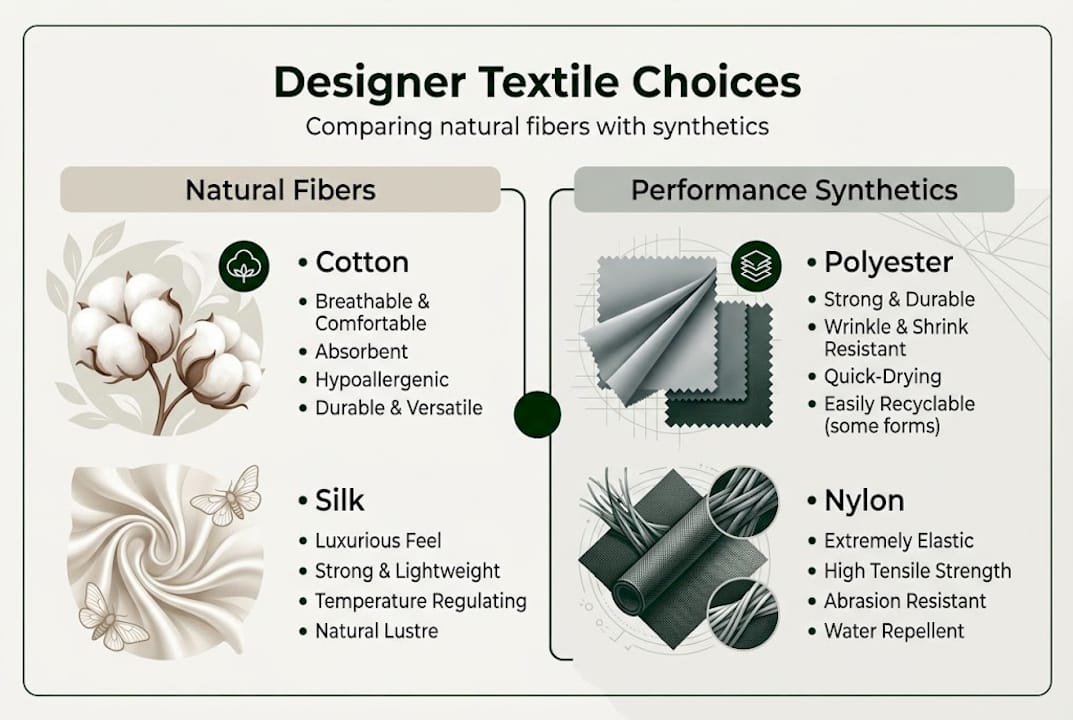
Here is a quick comparison:
| Attribute | Natural fibers | Performance synthetics |
|---|---|---|
| Tactile quality | Rich, authentic feel | Varies; improving with technology |
| Durability | Moderate to high | High |
| Maintenance | Often dry-clean or gentle wash | Generally machine washable |
| Eco-friendliness | Biodegradable | Depends on production method |
| Cost | Typically higher | Moderate to high |
The choice often comes down to priorities. As noted in discussions of luxury textile design, luxury prioritizes natural fibers for their tactile and authentic feel, while performance synthetics lead in durability and ease of maintenance. Neither is universally superior.
Key considerations when choosing:
- Room function: High-traffic areas benefit from synthetics; formal rooms suit natural fibers
- Light exposure: South-facing windows demand higher colorfastness ratings
- Allergy sensitivities: Some wool and silk finishes may irritate sensitive skin
- Style goals: Natural fibers tend to age gracefully; synthetics maintain their appearance longer
Designer textiles in home decor: Applications and impact
Having reviewed both material types, it is worth focusing on how these luxury textiles come alive in real homes. Designer textiles are not limited to window treatments. They shape the entire character of a room through multiple applications.
Custom drapery remains one of the most impactful uses. Floor-to-ceiling curtains in a refined jacquard or embroidered fabric draw the eye upward, creating a sense of height and elegance. Upholstery in a durable, high-Martindale fabric transforms a sofa or armchair from a functional piece into a design statement. Decorative pillows and bedding allow you to introduce pattern and texture without a major commitment.
Textiles also influence room mood in ways that paint and furniture alone cannot. A heavy linen drapery softens sound and light simultaneously. A silk-blend panel adds a quiet shimmer that shifts with the time of day. These effects are difficult to replicate with standard fabrics.
The benefits of custom curtains extend beyond aesthetics. As noted in luxury textile research, custom treatments outperform ready-made options for precision fit and overall satisfaction, particularly in rooms with non-standard window dimensions.
Steps for integrating designer textiles into a room design:
- Assess the room’s function, light levels, and existing color palette
- Identify the primary application: drapery, upholstery, or soft furnishings
- Select a fabric with appropriate test ratings for that use case
- Request samples and evaluate them in the actual room lighting
- Work with a professional or use a guide to designer fabric to finalize your selection
- Order custom treatments for the most precise and satisfying result
Pro Tip: For windows with unusual shapes, arched tops, or bay configurations, custom fabrication is not a luxury. It is the only way to achieve a finished, intentional look.
Current trends in designer textiles for homes
To help you apply what you have learned, it is useful to explore what is popular and innovative in designer textiles today. Trends in 2026 reflect a broader shift toward interiors that feel both considered and livable.
Color and pattern directions currently include:
- Warm, earthy neutrals such as clay, sand, and deep ochre replacing cooler gray palettes
- Botanical and organic motifs rendered in muted, sophisticated colorways
- Geometric patterns with handcrafted irregularity, avoiding the overly precise look of digital prints
- Deep jewel tones used as accent layers against neutral backgrounds
Tactile and material trends are equally significant:
- Layered textures combining sheer and opaque panels in the same window treatment
- Mixed-media fabrics that blend linen with metallic thread or cotton with velvet insets
- Boucle and bouclé-adjacent weaves moving from upholstery into drapery applications
- Matte finishes gaining ground over high-sheen surfaces in formal rooms
Functional innovations are also reshaping the category. Acoustic fabrics designed to absorb sound are increasingly specified in open-plan homes and home offices. Thermal-lined drapery fabrics now offer meaningful energy efficiency without sacrificing visual refinement.
The key to navigating trends is distinguishing between what is enduring and what is seasonal. Classic weave structures like jacquard, damask, and plain-weave linen have remained relevant for decades. Trendy colorways, by contrast, can date a room within a few years. Reviewing curtain fabric trends can help you identify which directions align with your long-term design vision.
A designer’s perspective: What most homeowners overlook about textiles
Most design conversations focus on color, furniture layout, and lighting. Fabric is often treated as the final layer, selected quickly after everything else is in place. This sequence is where many interiors fall short.
The truth is that textile quality is foundational, not decorative. A poorly chosen fabric will undermine even the most thoughtfully planned room. Curtains that sag, pill, or fade after two seasons do not just look worn. They make the entire room feel neglected. The failure is rarely about color choice. It is almost always about compromising on material quality.
Investing in even one or two well-chosen designer textiles, especially in high-visibility areas like windows or primary seating, shifts the perceived quality of an entire space. You do not need to refurnish a room to elevate it. You need to make better material choices in the right places. Reviewing insider quality tips before purchasing can prevent the most common and costly mistakes. Treat fabric as structure, not styling.
Find your perfect designer textile with us
Beautiful Window Elgin offers a carefully curated selection of designer fabrics suited for custom drapery, upholstery, and decorative applications across every room in your home.
Whether you are sourcing fabric for a single statement window or outfitting an entire home, our collection includes refined options from embroidered cotton to jacquard satin. For outdoor spaces, our outdoor designer canvas brings the same quality standards to weather-resistant applications. Browse the full range, request samples, and connect with our team for personalized guidance on custom window treatments. When you are ready to move forward, explore designer textiles and schedule a consultation to bring your vision to life with fabrics that perform as well as they look.
Frequently asked questions
How do I know if a textile is truly designer quality?
Look for third-party test results covering abrasion, colorfastness, and pilling resistance. Reputable suppliers will provide this data on request.
Are natural fibers always better than synthetics?
Not always. Natural fibers prioritize tactility and authentic feel, while synthetics offer stronger performance in durability and day-to-day maintenance.
What are the main uses of designer textiles in homes?
Designer textiles are used for custom curtains, upholstery, decorative pillows, and bedding, each application contributing to the room’s overall aesthetic and comfort level.
Is custom always better than ready-made window treatments?
For most situations, yes. Custom treatments deliver a more precise fit and higher satisfaction, especially for windows with non-standard dimensions or architectural details.
Recommended
- What is designer fabric? Guide to premium textiles for homeowners – Fabric Store in Columbia, SC | Drapery Making Services
- What are designer fabrics: quality and durability guide – Fabric Store in Columbia, SC | Drapery Making Services
- Trending curtain fabrics for stylish windows in 2026 – Fabric Store in Columbia, SC | Drapery Making Services
- Decode designer fabric terminology: a guide for homeowners – Fabric Store in Columbia, SC | Drapery Making Services
- Digital Textile Printing: A Practical Guide for Custom Apparel – Transfer Kingz