
The Role of Fabric Texture in Home Décor Design
TL;DR:Fabric texture significantly influences a room’s mood, visual depth, and acoustic comfort beyond aesthetics. Natural fabrics like wool, linen, and cotton trigger calming neurochemical responses, supporting well-being and better sleep. Proper texture pairing enhances emotional, visual, and functional harmony within interior spaces.
Most homeowners spend hours selecting paint colors and furniture arrangements, yet overlook the one design element that shapes how a room actually feels. The role of fabric texture in home décor goes far beyond aesthetics. It influences your emotional state, defines how sound moves through a space, and determines whether a room feels grounded or flat. Texture is the difference between a room that photographs well and one that genuinely feels good to live in. This guide breaks down the psychological, visual, and functional dimensions of fabric texture so you can make more informed, satisfying design decisions.
Table of Contents
- Key takeaways
- The role of fabric texture in emotional well-being
- How fabric texture affects design and visual depth
- Fabric texture and acoustic performance
- Choosing fabric textures by room and application
- My perspective on texture as a design priority
- Explore textured fabrics at Beautifulwindowselgin
- FAQ
Key takeaways
| Point | Details |
|---|---|
| Texture shapes mood | Soft, natural fabrics trigger calming neurochemical responses that reduce stress and support sleep. |
| Visual depth beyond color | Texture adds dimension and visual weight to spaces that color alone cannot achieve. |
| Acoustic performance matters | Weave structure directly affects sound absorption, making fabric a functional tool for quieter rooms. |
| Match texture to room function | Different rooms and furniture types call for specific tactile qualities to balance comfort and durability. |
| Layering creates impact | Combining contrasting textures like smooth and nubby creates a richer, more satisfying interior. |
The role of fabric texture in emotional well-being
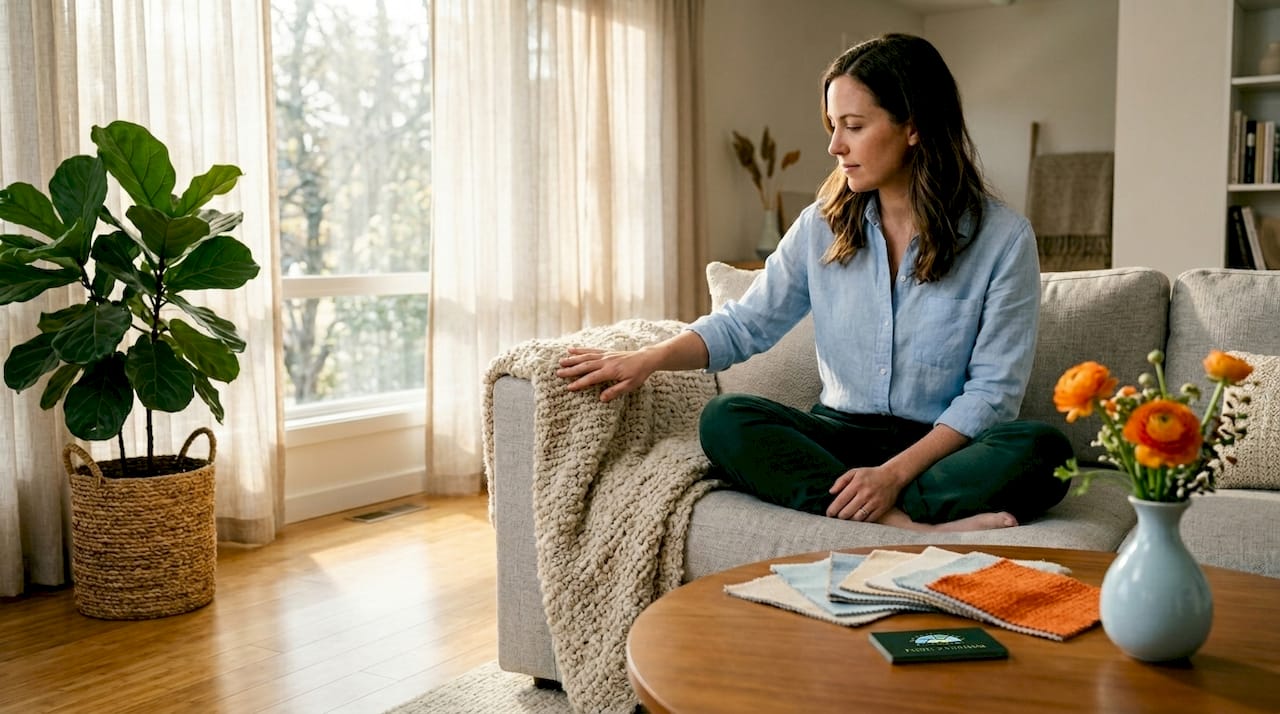
Texture is not simply a surface quality. It communicates directly with your nervous system before you consciously register it. When you settle into a linen sofa or pull a wool throw over your legs, your body reads those tactile signals and responds accordingly.
Research confirms this connection. Soft textures like velvet and cashmere biologically signal safety to the body, triggering serotonin and oxytocin release that down-regulates the nervous system and promotes calm. This is not a subtle effect. It is a measurable physiological shift driven entirely by what your skin touches.
Natural fabrics amplify this response. Hotel redesigns using linen and wool blends showed guests reporting better sleep and a more peaceful environment compared to rooms outfitted with synthetic fabrics. For residential spaces, this finding carries real weight. The fabrics you choose for your bedroom, living room, and reading nook are not neutral decisions.
The importance of fabric texture also extends to how a room makes guests feel from the moment they enter. A space dressed in rough, coarse textiles reads as formal or uninviting. Soft, layered textiles communicate warmth and ease. Understanding how fabric shapes comfort and style at a sensory level lets you design with intention rather than instinct.
“Soft fabrics function biologically as emotional safeguards, activating calming neurochemical pathways when touched.” The psychology of touch
Pro Tip: When selecting fabrics for bedrooms or relaxation spaces, prioritize natural fibers with a soft hand feel. Cotton, linen, and wool consistently outperform synthetics in tactile comfort and stress reduction, making them worth the investment even at a higher price point.
How fabric texture affects design and visual depth
Color gets most of the credit in interior design. Texture does most of the work.
A room with beautiful color but no textural variation tends to feel flat, almost digital. Texture is what gives a space visual rhythm and dimension, making it feel dynamic and human. When designers pair nubby bouclé with smooth leather, or matte linen with a polished satin finish, they are creating contrast that draws the eye and anchors the senses.
Texture also controls visual weight. A chunky knit throw or a heavily woven upholstery fabric reads as substantial and grounding. Lightweight sheers or smooth taffeta feel airy and expansive. Knowing this lets you adjust the perceived scale of furniture and rooms without changing a single dimension.
Here is how common fabric textures compare in visual impact and best applications:
| Fabric texture | Visual impact | Best uses |
|---|---|---|
| Bouclé | Warm, casual, substantial | Sofas, accent chairs, cushions |
| Velvet | Luxurious, deep, light-absorbing | Drapery, headboards, decorative pillows |
| Linen | Crisp, relaxed, organic | Curtains, slipcovers, bedding |
| Jacquard | Formal, refined, dimensional | Drapery, upholstery, table linens |
| Sheer/voile | Light, airy, minimal | Window treatments, canopies |
| Satin | Polished, elegant, reflective | Accent pieces, formal drapery |
One common mistake homeowners make is leaning heavily on color to solve design problems while ignoring textural imbalance. A monochromatic room in soft gray can feel sophisticated or sterile depending entirely on the textures present.
Consider these texture pairing principles when planning a room:
- Pair one dominant texture with one or two complementary contrasts rather than mixing too many at once
- Use rough or nubby textures to add warmth in minimalist or modern spaces that risk feeling cold
- Smooth, reflective fabrics work well as accents against matte backgrounds to introduce light variation
- In rooms with bold patterns, keep textures quieter to avoid visual overload
- In rooms with neutral palettes, let texture carry the visual complexity
Texture defined as a hidden architectural element shapes space quality and emotional resonance in ways color simply cannot replicate over time. Trends in color come and go. Textural richness is timeless.
Fabric texture and acoustic performance
This is the dimension of fabric texture that most homeowners never consider until a room feels uncomfortably loud. Hard surfaces reflect sound. Fabric absorbs it. The texture and weave structure of your fabrics determine how much acoustic work they actually do.
Research on weave structures demonstrates this clearly. Plain weave cotton fabrics achieve a peak sound absorption coefficient of 0.85 at 4,000 Hz, significantly outperforming satin weaves due to the higher structural tortuosity created by frequent yarn interlacements. In plain terms, the tighter and more complex the weave, the more sound energy it captures rather than bouncing back into the room.
| Weave type | Sound absorption | Best acoustic application |
|---|---|---|
| Plain weave | High (α = 0.85 at 4,000 Hz) | Curtains, upholstery, wall panels |
| Twill weave | Moderate | Drapery, heavy cushion covers |
| Satin weave | Lower | Accent pieces, lighter applications |
The role of texture in textiles extends beyond the fabric surface itself. Layering matters significantly. Optimal curtain installation involves 90 to 110mm air gaps behind the curtain, combined with a denser backing fabric, to maximize sound absorption. That gap between the curtain and the wall creates a secondary absorption zone that doubles the acoustic benefit of the fabric alone.
An STC rating above 10 in fabrics can reduce perceived noise by approximately 50%. For open-plan homes, home offices, or rooms adjacent to noisy streets, this is a practical, aesthetically neutral solution that serves both comfort and function simultaneously. Textiles do not soundproof a room, but they absorb internal reverberations and reduce the echo that makes hard-surface rooms feel harsh and fatiguing.
Pro Tip: For the best acoustic performance from curtains, choose a plain or twill weave face fabric with an added interlining or blackout backing. Install the rod close to the ceiling and allow the fabric to puddle slightly at the floor. This setup maximizes both sound absorption and visual drama without any structural changes to the room.
Choosing fabric textures by room and application
Knowing the importance of fabric texture intellectually is one thing. Applying it room by room is another. Different spaces have different demands, and the right texture depends on how the room is used, who uses it, and what feeling you want it to project.
Here is a practical breakdown by room and application:
Living room: This space carries the highest tactile traffic in the home. Upholstery fabrics need to balance durability with comfort. Tightly woven fabrics in mid-weight textures, such as jacquard, textured linen blends, or performance weaves, hold up to daily use while still contributing visual depth. Accent pillows and throws are your opportunity to introduce softer, more delicate textures like velvet or cashmere knit without sacrificing durability on main seating.
Bedroom: Tactile softness should drive every decision here. Cotton’s moisture-wicking properties and softness reduce sympathetic nervous system arousal, shortening sleep onset and improving sleep quality. Prioritize smooth, breathable weaves for bedding and layered window treatments that soften light. Heavy linen drapery adds warmth without feeling heavy.
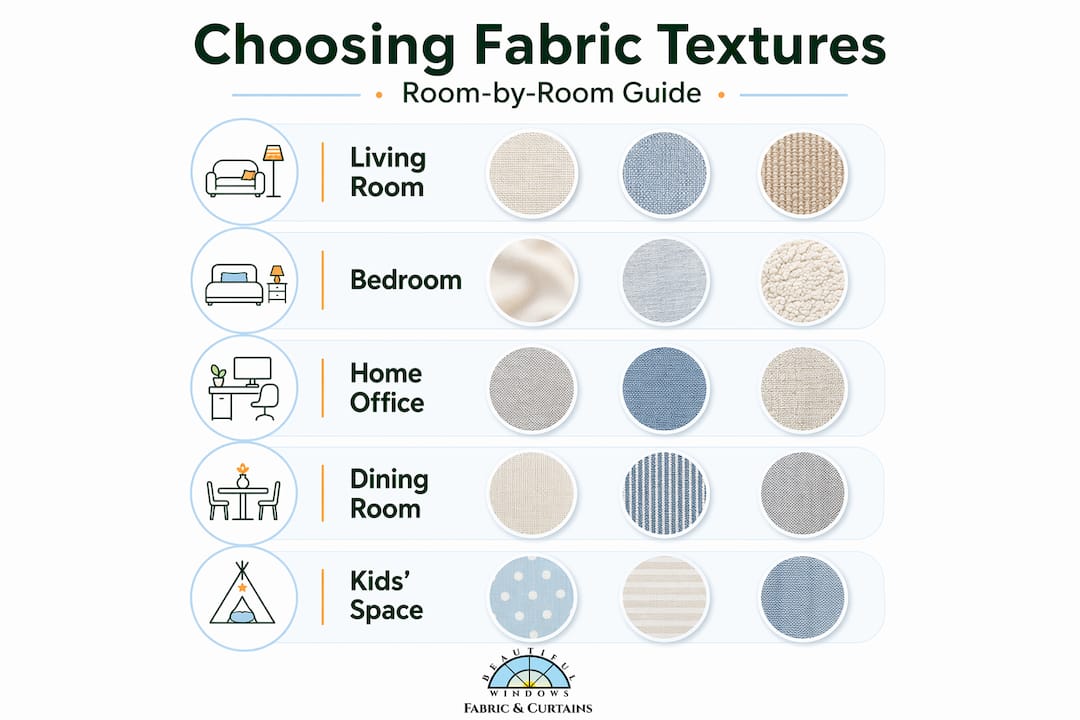
Home office: Acoustic comfort matters more here than in most rooms. Plain weave curtains, fabric wall panels, and upholstered seating all contribute to a quieter, less reverberant space that supports concentration. Avoid shiny or reflective fabrics that add visual distraction.
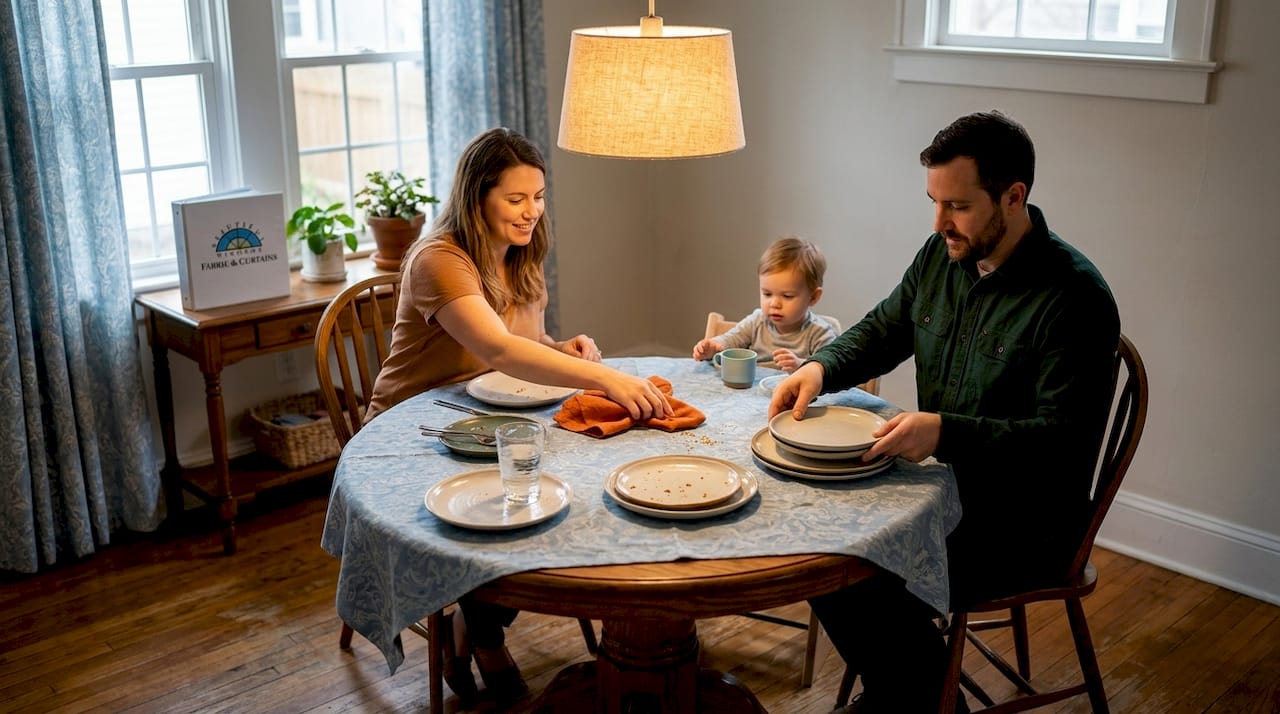
Dining room: This is a space where more formal textures like damask, jacquard, or structured linen work well. The impact of texture on fabric choice for dining chairs is particularly significant since these pieces combine high visual presence with the practical demand for cleanability.
Children’s spaces: Durability and tactile safety come first. Soft-finish, tightly woven fabrics with stain-resistant treatments offer the best combination of comfort and practicality.
For window treatments specifically, texture selection shapes how light enters and filters through a room. Sheer textures diffuse light softly. Heavier woven fabrics block and control it. The trending curtain fabrics for 2026 reflect a clear move toward natural, textured weaves that serve both aesthetic and functional purposes simultaneously.
My perspective on texture as a design priority
I have watched countless well-intentioned home décor projects fall short because the focus stayed entirely on color and furniture placement. What I have found, time and again, is that texture is the element that determines whether a space truly satisfies the people living in it.
In my experience, clients who prioritize tactile quality in their fabric choices report longer-term satisfaction with their interiors. A sofa in a perfectly curated color can feel wrong for years if the texture is harsh or cheap. Meanwhile, a neutral linen or well-woven jacquard in a quiet tone tends to age with a room rather than against it.
My contrarian take: the current obsession with color trends actively misleads homeowners. Color is the most time-sensitive element in any interior. Texture, by contrast, is inherently durable as a design choice. A well-textured space in muted tones will still feel sophisticated five years from now. A boldly colored room without textural depth tends to feel dated within two.
What I encourage is developing genuine tactile awareness. Before purchasing any fabric, touch it. Run it through your fingers slowly. Notice whether it feels reassuring or merely fine. That distinction matters far more than it sounds, because you will live with that texture every single day.
Experiment with layering. Place a smooth fabric against a rough one. See how your eye travels between them. That movement, that visual conversation between textures, is what transforms a decorated room into a genuinely designed one.
— Marrion
Explore textured fabrics at Beautifulwindowselgin
Beautifulwindowselgin offers a carefully selected range of premium textured fabrics designed for homeowners and design professionals who understand that quality begins with the weave. For upholstery projects that demand both durability and refined texture, the Sandwell Residential Seating Fabric delivers on both counts, offering a resilient yet visually sophisticated option for sofas, chairs, and seating accents.
Beyond individual fabric selections, Beautifulwindowselgin provides custom drapery services and design consultations to help you apply textural principles with precision. Whether you are layering window treatments for acoustic benefit or sourcing a statement upholstery textile, the team can guide your selection from sample to installation. Explore the full fabric collection and discover how the right texture transforms not just how your home looks, but how it feels to live in every day.
FAQ
What is the role of fabric texture in interior design?
Fabric texture shapes the emotional atmosphere, visual depth, and acoustic quality of a room. It influences how a space feels to live in, beyond what color or pattern alone can achieve.
How does fabric texture affect emotional well-being at home?
Soft natural fabrics like wool, linen, and cotton trigger serotonin and oxytocin release in the body, which reduces stress and promotes calm. Research shows that natural fabric environments support better sleep and a more peaceful atmosphere.
Which weave type offers the best sound absorption?
Plain weave fabrics outperform satin and twill weaves in sound absorption, achieving a coefficient of up to 0.85 at 4,000 Hz. Pairing a plain weave curtain with a dense backing and an air gap behind the fabric maximizes acoustic performance.
How do you combine fabric textures without clashing?
Choose one dominant texture as your anchor and introduce one or two contrasting textures as accents. The key principle is contrast without competition. A smooth leather chair paired with a nubby bouclé cushion creates tension that feels intentional rather than chaotic.
What is fabric texture used for beyond decoration?
Fabric texture serves acoustic, thermal, and psychological functions in the home. Textured curtains and upholstery absorb sound reverberations, regulate perceived temperature through their tactile quality, and influence mood through the neurological response to touch.
Recommended
- Role of Fabric in Window Treatments– Impact on Style & Function – Shop Designer Fabrics by the Yard | Curtains & Drapery
- How fabric shapes your home’s comfort and style – Fabric Store in Columbia, SC | Drapery Making Services
- Trending curtain fabrics for stylish windows in 2026 – Fabric Store in Columbia, SC | Drapery Making Services
- 7 Essential Curtain Fabric Types List for Homeowners – Shop Designer Fabrics by the Yard | Curtains & Drapery