
What is drapery fullness? The key to stylish windows
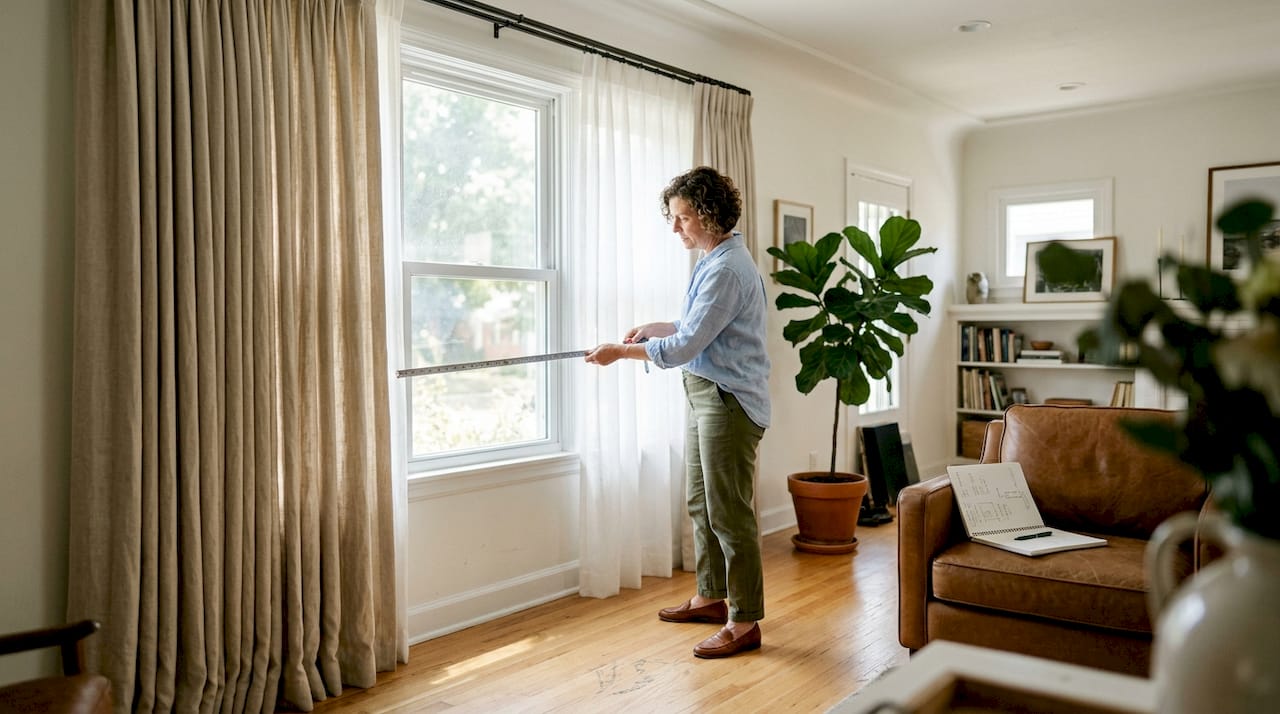
TL;DR:Drapery fullness is the ratio of fabric width to window width, affecting style and function.Standard ratios range from 1.5x for minimalism to 3x for luxurious, layered folds.Choosing the correct fullness enhances room atmosphere and prevents visual or functional issues.
Many homeowners assume that piling on more fabric automatically produces better-looking drapes. In reality, the ratio of fabric to window width matters far more than sheer volume. Drapery fullness is one of those details that quietly determines whether your window treatments look polished and intentional or flat and underwhelming. Get it right, and your drapes hang with graceful folds, control light beautifully, and anchor the entire room. Get it wrong, and even expensive fabric can disappoint. This article covers what drapery fullness means, how standard ratios compare, how to choose the right level for your space, and which mistakes to avoid along the way.
Table of Contents
- What is drapery fullness?
- Drapery fullness ratios: From minimalist to luxury
- How to choose the right fullness for your space
- Common drapery fullness mistakes and how to avoid them
- Our take: Why mastering drapery fullness transforms any space
- Create your perfect drapery look with Beautiful Windows
- Frequently asked questions
Key Takeaways
| Point | Details |
|---|---|
| Fullness defines style | The drapery fullness ratio is key to achieving your ideal look and function. |
| Standard ratios matter | Aim for 2x fabric width for a balanced style, and 2.5x for a luxury effect. |
| Avoid common mistakes | Check fabric weight and room use to keep drapes from appearing too flat or too bulky. |
| Choose based on context | Select the right fullness by considering window size, fabric type, and your preferred style. |
| Plan before you buy | Calculate your desired fullness early to ensure impressive results and avoid disappointment. |
What is drapery fullness?
Drapery fullness refers to the relationship between the total width of fabric used and the width of the window it covers. More specifically, drapery fullness is the ratio of fabric width to window width, and it is the single most important factor in achieving different visual styles and functional outcomes. A panel cut to exactly the window’s width will hang flat and stiff. A panel cut to twice that width will gather into soft, flowing folds.
This ratio shapes everything from how formal or casual a room feels to how well the drapes block light and provide privacy. A higher fullness ratio creates deeper folds and a more layered, sculptural appearance. A lower ratio produces a cleaner, more contemporary look with minimal gathering.
“Fullness is not just about how much fabric you use. It is about how that fabric behaves on the rod and in the room.”
Different rooms and window styles call for different fullness levels. A formal dining room with tall windows benefits from generous fullness that pools slightly on the floor. A modern kitchen with compact windows may look best with a leaner 1.5x ratio that keeps things tidy and uncluttered.
Here is a quick look at what fullness affects:
- Visual weight: Higher fullness adds visual richness and depth to a room.
- Light control: More fabric layers mean better light blocking when drapes are closed.
- Privacy: Fuller drapes close more completely, reducing gaps at the edges.
- Style tone: Minimal fullness reads as modern; generous fullness reads as traditional or luxurious.
- Fabric consumption: Fullness directly determines how many yards of fabric you need to order.
A common misconception is that more fabric always looks better. That is not accurate. Too much fullness with a heavy fabric creates bulk that overwhelms the window and the room. The ratio must be matched to the fabric weight and the intended style. Understanding the custom drapery workflow from the start helps you plan fullness into your project before cutting a single yard.
Pro Tip: Before you choose a fabric or heading style, decide on your preferred fullness ratio first. That single decision will guide every other choice, from fabric type to yardage calculation.
Drapery fullness ratios: From minimalist to luxury
With clarity on what fullness means, you can now compare real-world options and their outcomes. Industry professionals use three primary fullness benchmarks, each producing a distinctly different result.
Standard fullness ratios are 1.5x for a minimal look, 2x as the designer standard, and 2.5 to 3x for a luxurious, deeply pleated appearance. These numbers represent how many times the window width is used in fabric. A 60-inch-wide window with a 2x ratio requires 120 inches of fabric width across all panels.
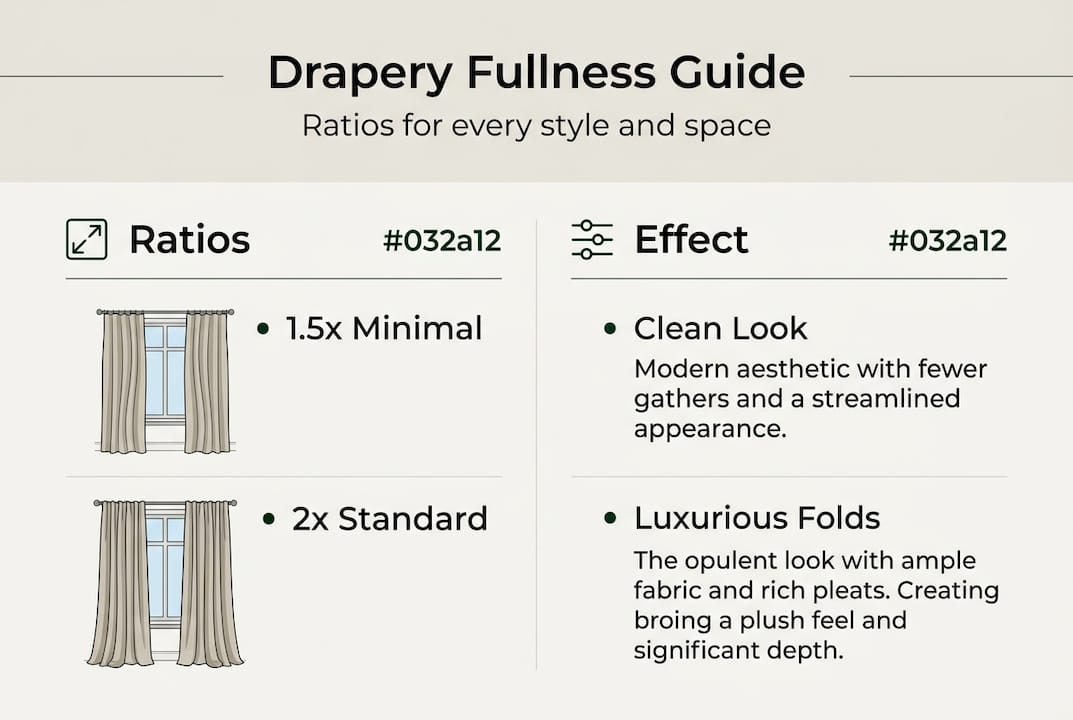
| Fullness ratio | Visual effect | Best for | Fabric behavior |
|---|---|---|---|
| 1.5x | Clean, flat, contemporary | Modern or casual rooms | Minimal gathering, crisp lines |
| 2x | Balanced folds, polished | Most rooms, versatile | Soft pleats, structured drape |
| 2.5x to 3x | Deep, rich, luxurious | Formal spaces, large windows | Full folds, dramatic presence |
The 2x ratio is the most widely recommended starting point because it works across a broad range of fabrics and room styles. It creates enough gathering to look intentional without overwhelming the window. Designers and workrooms often move to 2.5x when the goal is a more elevated, decorating harmony at home feel that makes a room look professionally finished.
Here is what each ratio achieves in practice:
- 1.5x: Produces a flat, streamlined panel. Works well with bold prints or structured fabrics where you want the pattern to read clearly without heavy gathering.
- 2x: Creates soft, consistent folds. This is the baseline most custom drapes are designed around because it balances aesthetics and practicality.
- 2.5x to 3x: Delivers deep, layered folds that move beautifully and hang with real weight. Pairing this ratio with proper drapery lining enhances the structure and longevity of the panels.
One important note: the heading style you choose, whether pinch pleat, goblet, or rod pocket, also affects how fullness reads visually. Pinch pleats at 2.5x look very different from a rod pocket at the same ratio. Always consider both variables together.
How to choose the right fullness for your space
Once you know how each ratio looks, the next step is choosing the right one for your home. Several factors work together to guide that decision.
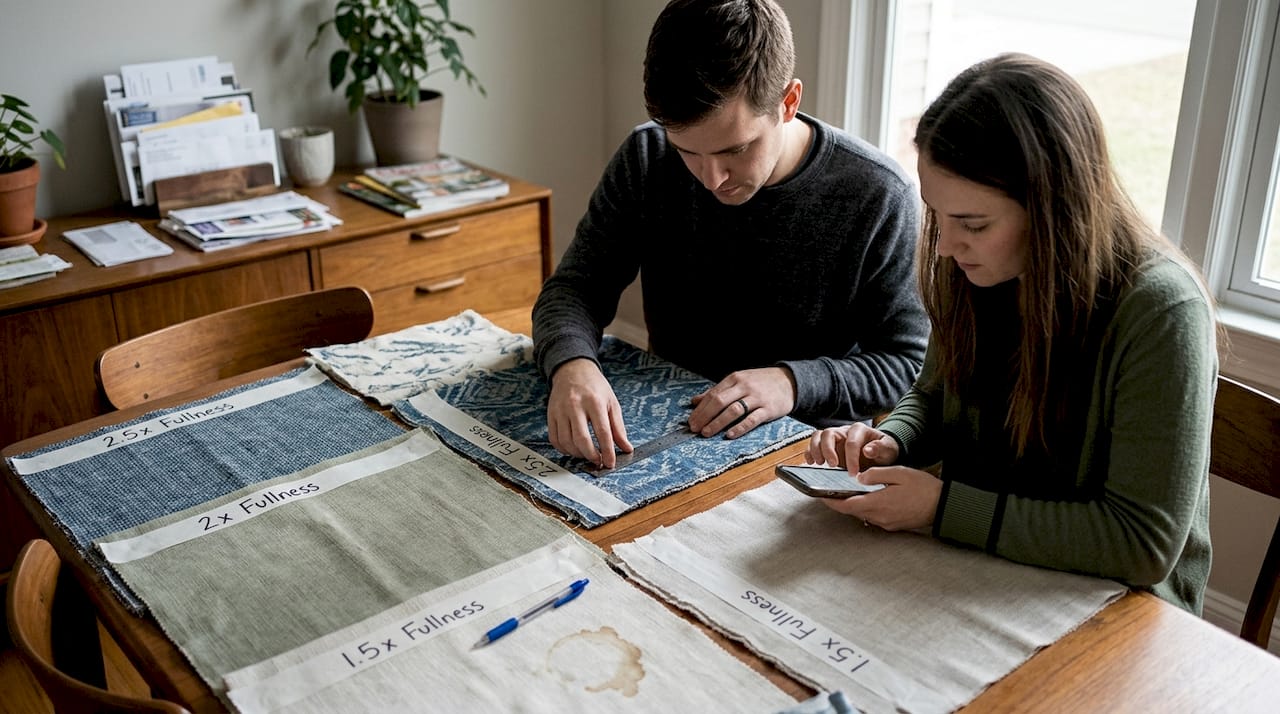
The four key variables are window size, fabric weight and design, room function, and your desired style. Larger windows can handle higher fullness without feeling crowded. Smaller windows benefit from restraint. Heavy fabrics like velvet or jacquard satin already carry visual weight, so they need less fullness to look substantial. Lightweight sheers and linens need more fabric to avoid looking sparse.
Here is a practical step-by-step process:
- Identify the room’s function. Bedrooms need more privacy and light control, so lean toward 2x to 2.5x. Living rooms can vary widely based on style preference. Kitchens and casual spaces often work well at 1.5x to 2x.
- Assess your fabric weight. Hold a yard of your chosen fabric and gather it loosely. If it clumps heavily, reduce fullness. If it falls limply, increase it.
- Consider the pattern. Large, bold prints are best showcased at lower fullness so the design reads clearly. Solid or textured fabrics benefit from higher fullness.
- Match fullness to heading style. Pinch pleats require a minimum of 2x to form properly. Ripple fold systems are designed for 1.8x to 2x. Grommet panels work well at 1.5x to 2x.
- Calculate your yardage. Multiply your window width by your chosen ratio, then divide by the fabric width to determine how many widths you need. Refer to empirical benchmarks where 2x is the common baseline and professionals prefer 2.5x for a more luxurious result.
| Room type | Recommended fullness | Notes |
|---|---|---|
| Bedroom | 2x to 2.5x | Prioritize light control and privacy |
| Living room | 2x to 3x | Style-driven; formal rooms go higher |
| Kitchen | 1.5x to 2x | Keep it practical and uncluttered |
| Home office | 1.5x to 2x | Clean lines support focus |
Pro Tip: Heavier fabrics like velvet or brocade pair best with slightly lower fullness, around 2x, to avoid bulk. Lighter fabrics like voile or linen need 2.5x or more to look full and intentional. When in doubt about choosing drapery fabric, request fabric samples before committing to yardage. The curtain style selection process also helps narrow down the right pairing of fabric and fullness for your specific window.
Common drapery fullness mistakes and how to avoid them
Even with the right ratio picked, there are pitfalls homeowners and DIYers often encounter. Knowing what to watch for saves time, money, and frustration.
Here are the most frequent mistakes:
- Underestimating fullness: Ordering panels that are barely wider than the window produces a flat, underwhelming result. A minimum of 1.5x is needed to avoid a flat look, and 2x is the most reliable baseline for most styles.
- Overloading with fabric: Going to 3x with a heavy fabric like blackout lining or velvet creates panels so dense they are difficult to open, close, and stack properly.
- Ignoring fabric type: Treating all fabrics the same is one of the most common errors. A sheer linen at 1.5x looks sparse. A stiff cotton canvas at 3x looks bulky. The fabric must inform the ratio.
- Skipping the heading calculation: Different heading styles consume fabric differently. A pinch pleat uses more fabric in the heading itself, so the overall fullness must account for that.
- Measuring the window instead of the rod: Always measure the rod or track, not just the window frame. Drapes should extend beyond the frame on each side to maximize light exposure when open.
A real-world example: a homeowner orders two 54-inch-wide panels for a 72-inch window. That gives a combined fabric width of 108 inches, which is only a 1.5x ratio. The drapes hang flat and barely meet in the center. The fix is simple: order three panels instead of two, or choose wider panels, to reach at least a 2x ratio.
Understanding drapery pleats helps clarify how heading styles interact with fullness calculations. If you are unsure about measurements or ratios, a professional drapery consultation can catch errors before they become costly.
Pro Tip: Always double-check your measurements and ratio calculations before placing a fabric order. A small error in fullness planning can mean ordering an entire extra yard or falling short by a full panel width.
Our take: Why mastering drapery fullness transforms any space
With practical steps and pitfalls in mind, here is our perspective on the real power of drapery fullness. Most design guides treat fullness as a technical checkbox. We see it differently.
Fullness is a mood-setter. A room dressed in 2.5x linen drapes feels quieter, softer, and more settled than the same room with 1.5x panels. That is not just aesthetics. It is atmosphere. And atmosphere is what makes a house feel like a home.
The contrarian view worth sharing: more is not always more, but less is rarely better. We have seen too many beautiful rooms undermined by drapes that look like afterthoughts because the fullness was cut to save fabric costs. That savings rarely feels worth it once the panels are hanging.
Small adjustments in fullness, even moving from 2x to 2.3x, can produce a noticeably richer result. Most guides skip that nuance. Beyond style, fuller drapes also contribute to energy-saving benefits, reducing drafts and improving insulation. Trust the ratios as a foundation, then let your personal taste and the room’s character guide the final call.
Create your perfect drapery look with Beautiful Windows
Ready to create your own stylish, functional drapes? Here’s how Beautiful Windows can help.
Getting fullness right starts with choosing the right fabric, and that is where Beautiful Windows comes in. The shop carries an extensive selection of designer fabrics suited to every fullness ratio, from lightweight sheers ideal for 2.5x applications to structured jacquard satin that performs beautifully at 2x.

Whether you are planning a formal living room or a cozy bedroom refresh, the fabric selection at Beautiful Windows supports every style and budget. For outdoor or utility spaces, durable options like waterproof canvas fabric round out the collection. Browse the full range online, request samples, or book a design consultation to get personalized guidance on fullness, fabric, and everything in between.
Frequently asked questions
What is a good fullness ratio for drapery?
A 2x fullness ratio is the standard baseline for balanced, polished folds, while 2.5x delivers a more luxurious, layered look preferred by professional designers.
How do I calculate drapery fullness?
Divide fabric width by window width to get your fullness ratio. A 2x ratio means your total fabric width is twice the width of the window or rod.
Why does drapery fullness matter?
Fullness influences style and function by determining how drapes hang, how folds form, and how well the panels control light and provide privacy when closed.
Can you have too much fullness in drapes?
Yes. High fullness with heavy fabrics creates bulk that is difficult to manage and can visually overwhelm a window, especially in smaller rooms.
What’s the minimum recommended fullness for drapes?
At least 1.5x fullness is recommended to prevent a flat, unfinished appearance, though 2x is the preferred starting point for most window treatments.
Recommended
- Role of drapery fabrics: Cut noise by 70% & save energy – Designer Fabrics by the Yard | Drapery Making Services
- What are drapery pleats? A 2026 guide for stylish window treatments – Fabric Store in Columbia, SC | Drapery Making Services
- Drapery workrooms 2026: 6-8 week custom projects explained – Designer Fabrics by the Yard | Drapery Making Services
- Drapery Fabric Selection Guide for Custom Window Treatments – Shop Designer Fabrics by the Yard | Curtains & Drapery
- Why flooring trims are essential for stylish interiors