
Window treatment trends for 2026: stylish solutions
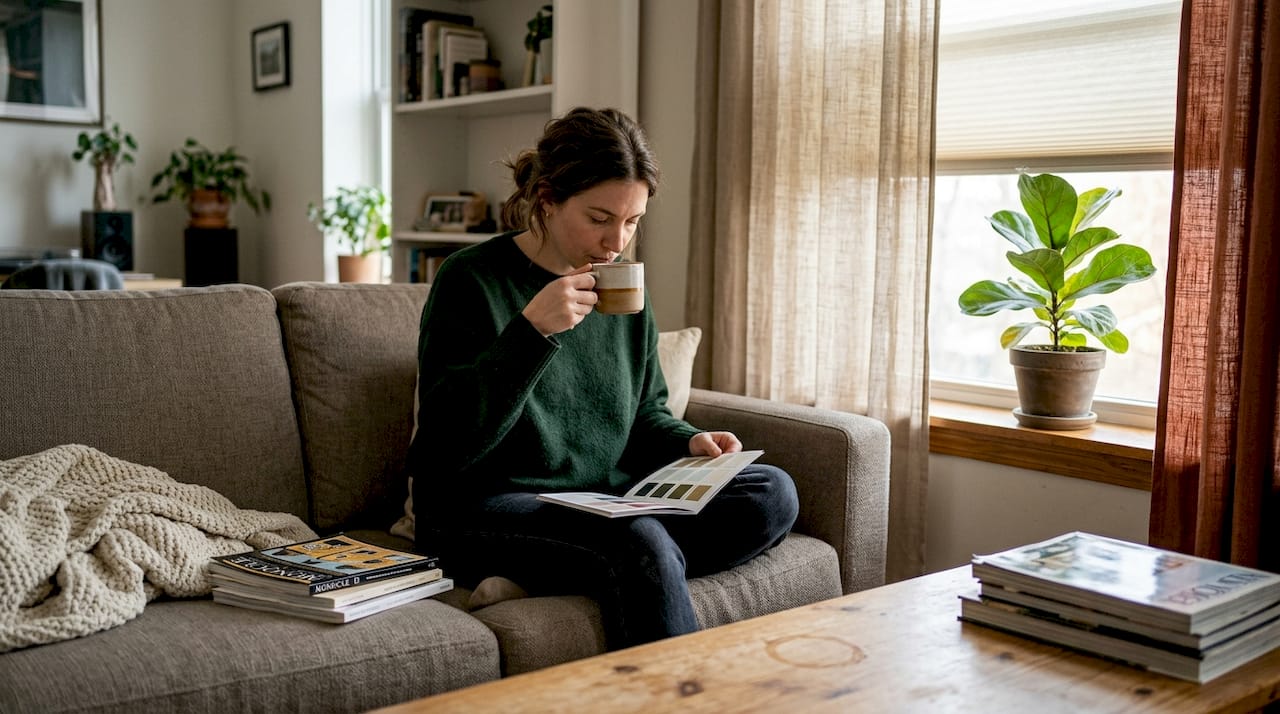
Window treatments have quietly moved beyond simple decoration. In 2026, the best-performing window coverings blend smart automation, sustainable materials, and refined design into a single, purposeful statement. Whether you are updating a single room or planning a full interior refresh, understanding what is driving this year’s trends helps you make choices that last well beyond a single season. This guide walks through the most influential directions shaping window treatments right now, from layered fabric combinations to motorized systems and reimagined classics, so you can apply these ideas with confidence and clarity.
Table of Contents
- Layered window treatments: Depth, dimension, and flexibility
- Smart and motorized window treatments: Technology meets comfort
- Natural materials and biophilic design: Bringing the outdoors in
- Reimagined classics: Roman shades, valances, and warm palettes
- What to avoid: Outdated window treatments in 2026
- A designer’s take: Why real window style is about balance in 2026
- Bring 2026’s window trends to life with custom solutions
- Frequently asked questions
Key Takeaways
| Point | Details |
|---|---|
| Layered looks | Combining sheers, shades, and drapery creates depth and versatile light control. |
| Smart automation | Motorized window treatments improve comfort, safety, and efficiency. |
| Sustainable style | Natural materials like linen and bamboo support wellness and modern design. |
| Revived classics | Reimagined Roman shades, trims, and earth tones blend nostalgia with fresh appeal. |
| Outdated elements to avoid | Skip vinyls, short curtains, and visible grommets to keep your look up-to-date. |
Layered window treatments: Depth, dimension, and flexibility
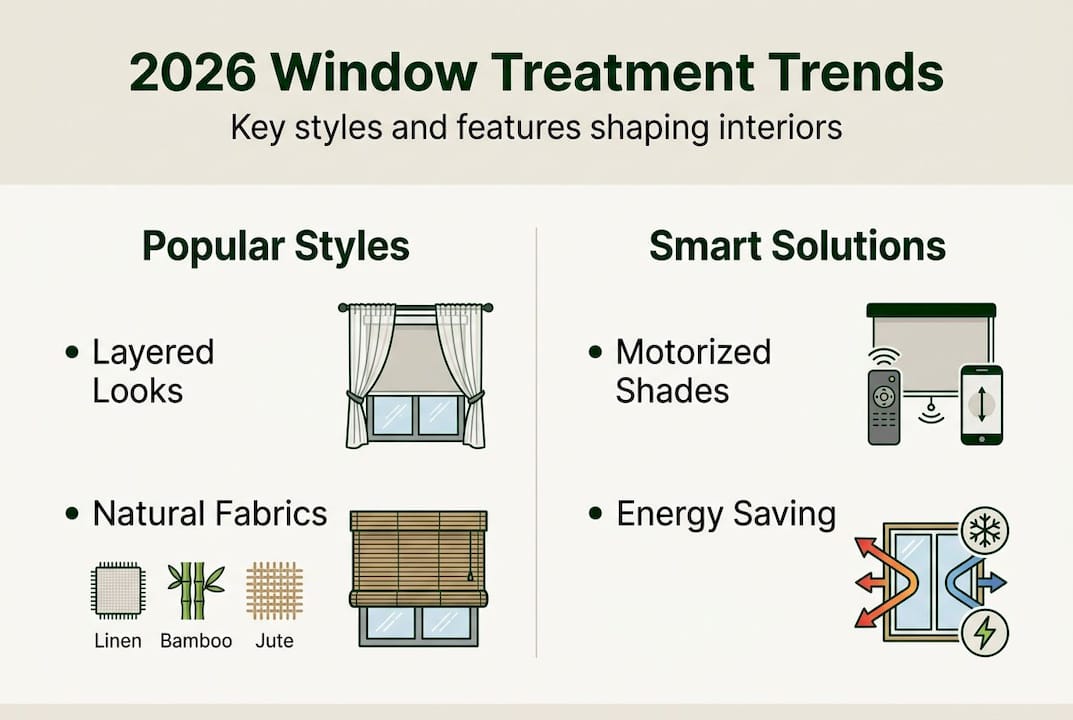
Layering is no longer a luxury reserved for high-end interiors. Layered window treatments combining shades, sheers, and drapery for dimension, light control, and texture are a dominant trend in 2026. The concept is straightforward: stack two or more treatment types on the same window to achieve flexible light management, visual depth, and enhanced privacy.
The most effective combinations typically pair a functional base layer with a decorative outer layer. A cellular shade or roller blind handles privacy and light filtration, while a sheer panel softens the look during the day. A floor-length drapery panel adds warmth and formality when needed. You can explore 2025 layering inspiration to see how this approach has been refined heading into 2026.
Layered vs. single-panel window treatments
| Feature | Layered treatments | Single-panel treatments |
|---|---|---|
| Light control | Highly adjustable | Limited |
| Privacy options | Multiple levels | One level |
| Visual depth | Rich, dimensional | Flat |
| Cost | Moderate to high | Lower |
| Style range | Versatile | Simpler |
For room-by-room application, consider these approaches:
- Living room: Sheer linen panels under velvet drapes for warmth and elegance
- Bedroom: Blackout roller shade paired with floor-length linen for full darkness and softness
- Home office: Solar shade layered with a lightweight panel to reduce glare without blocking views
Pro Tip: Use “hover” drapery, where panels are mounted just above the floor without puddling, to achieve crisp, tailored lines. This also eliminates a common safety concern for households with young children or pets.
Wave Fold headers are gaining traction as a modern finishing detail. Their consistent, soft ripple creates a clean silhouette that suits both contemporary and transitional interiors. As one designer noted when discussing modern layering techniques:
“Layering is not about adding more. It is about adding intentionally. Each layer should earn its place by contributing light control, texture, or visual scale.”
For guidance on customizing window treatments to fit your specific layout, detailed planning resources are available to help you get the proportions right.
Smart and motorized window treatments: Technology meets comfort
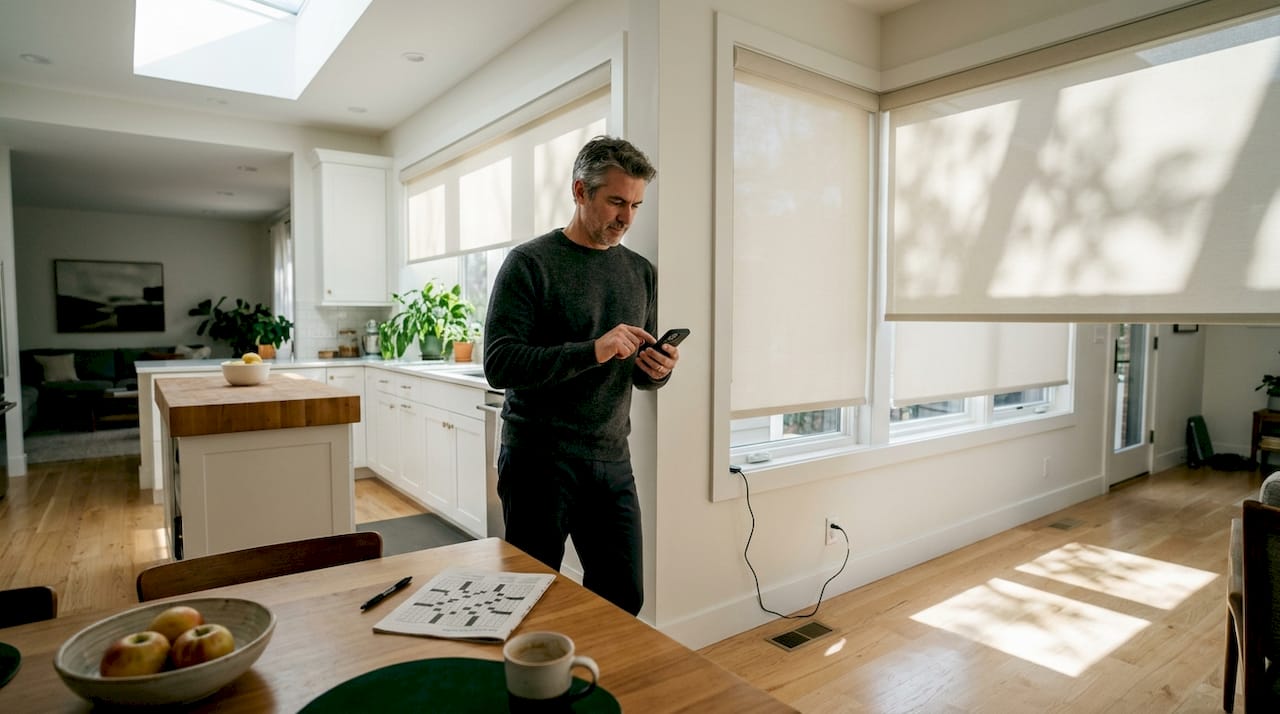
Motorized window coverings have crossed from novelty into necessity. Smart and motorized treatments are becoming standard for convenience, energy efficiency, child safety, and integration with smart homes. App controls, voice commands through platforms like Alexa or Google Home, and programmable schedules now come standard with many mid-range systems.
Motorized feature comparison
| Feature | Basic motorized | Smart-integrated |
|---|---|---|
| Timer scheduling | Yes | Yes |
| Voice/app control | No | Yes |
| Child safety (no cords) | Yes | Yes |
| Energy monitoring | No | Some models |
| Price range | $150 to $400 per window | $300 to $800 per window |
Integrating smart shades into an existing home is more accessible than most homeowners expect. Follow these steps:
- Audit your current window hardware to confirm motor compatibility with existing tracks or headrails.
- Choose a hub-based or hub-free system depending on your existing smart home setup.
- Install a dedicated power source or confirm battery-operated motors meet your usage frequency.
- Connect the system to your preferred app and set daily schedules aligned with sunrise and sunset.
- Test each shade individually before programming group scenes.
Pro Tip: When selecting motorized hardware, prioritize systems that use open-protocol technology such as Zigbee or Z-Wave. These standards are widely supported, which means your investment remains compatible as smart home platforms evolve.
The energy savings with motorized drapes are meaningful. Automated shades that respond to sunlight can reduce solar heat gain by a measurable margin, lowering cooling costs during summer months. For families with young children, the elimination of corded blinds also addresses a well-documented safety concern. The advantages of smart shades extend to accessibility as well, making motorized options especially practical for older adults or individuals with limited mobility.
One common oversight is underestimating installation costs. Factor in electrician fees if hardwired motors are preferred, and budget for a compatible smart hub if your home does not already have one.
Natural materials and biophilic design: Bringing the outdoors in
Biophilic design, the practice of incorporating natural elements into interior spaces to support wellbeing, has become a defining principle in 2026 home interiors. Natural and sustainable materials like linen, cotton, bamboo, woven woods, and eco-friendly fabrics are prioritized for biophilic design and warmth. Window treatments are a primary vehicle for this shift.
The top trending natural materials for window coverings this year include:
- Linen: Breathable, refined, and available in a wide range of natural tones
- Bamboo and woven wood: Textural, sustainable, and ideal for casual or organic interiors
- Organic cotton: Soft, washable, and available in eco-certified weaves
- Recycled polyester: A practical option that mimics natural textures while reducing material waste
- Jute blends: Earthy and durable, suited to relaxed coastal or farmhouse aesthetics
Beyond aesthetics, natural fabrics contribute to healthier indoor air quality. Synthetic treatments can off-gas volatile organic compounds over time, while natural fibers do not carry this concern. You can find more on eco-friendly fabrics to understand which materials perform best in high-humidity or high-traffic rooms.
Pro Tip: When selecting a natural fabric, look for refined weave structures rather than overly rustic textures. A tightly woven linen or a smooth bamboo shade reads as modern and intentional, while a loosely woven material can appear unfinished in more formal rooms.
Natural materials pair exceptionally well with earth-tone palettes, warm wood furniture, and stone or terracotta accents. They also layer beautifully with motorized systems, as many sustainable drapery materials are now available with motorization-compatible track systems. The result is a window treatment that feels grounded, responsible, and visually sophisticated.
Reimagined classics: Roman shades, valances, and warm palettes
Not every 2026 trend points toward the future. Some of the most compelling directions this year involve revisiting traditional forms and updating them with modern proportions, hardware, and color. Roman shades, especially outside-mounted, are surging in popularity for style, light control, and height extension. Mounting a Roman shade outside the window frame extends the visual height of the window and maximizes the amount of glass exposed when the shade is raised.
The revival of traditional elements with modern twists includes valances, trims, tassels, fringe, and cafe curtains for classic warmth. These details, once considered dated, are reappearing in refined, intentional forms. A tailored valance in a textured fabric, a cafe curtain with a simple rod pocket, or a subtle fringe trim on a linen panel all add character without appearing overdone.
Modern reinventions gaining traction in 2026:
- Structured box-pleat valances in solid, warm-toned fabrics
- Cafe curtains in sheer cotton for kitchens and breakfast nooks
- Fringe and tassel trim on drapery panels as a subtle decorative accent
- Contrast banding along the leading edge of drapery panels
“The best interiors I work on right now mix something old with something considered. A classic Roman shade in a new fabric tells a story that a generic roller blind simply cannot.”
Color is shifting significantly. The shift to warmer palettes includes earth tones, bronze hardware, and a move away from cool grays and matte black. Terracotta, warm ivory, deep ochre, and dusty sage are replacing the cool, minimalist tones that defined the previous decade. Explore last year’s color trends to see how this palette shift has been building over time.
Avoid excessive puddling, which reads as outdated, and steer clear of ornate finials or heavily gilded hardware that can overwhelm a refined fabric choice.
What to avoid: Outdated window treatments in 2026
Knowing what to retire is just as useful as knowing what to adopt. Outdated treatments to avoid include vinyl and honeycomb shades, excessive puddling drapes, short curtains, and visible grommets. Each of these choices carries a visual signal that a space has not been updated in some time.
Styles that no longer serve today’s interiors:
- Vinyl roller shades: Inexpensive but visually flat and prone to yellowing
- Honeycomb shades in builder-grade white: Functional but lacking any design intentionality
- Short curtains: Panels that hang below the sill but above the floor visually shrink a room
- Visible grommets: The large metal ring header was widely popular a decade ago but now reads as dated
- Excessive puddling: Fabric pooling on the floor was once a sign of luxury but now appears impractical and heavy
Pro Tip: If you are updating on a budget, the single most impactful change is switching to floor-length panels with a clean header. Even an affordable fabric reads as intentional and current when the proportions are correct and the hardware is simple.
Mismatched hardware is another common issue. Mixing brushed nickel rods with brass fixtures, or using decorative finials that conflict with the room’s overall style, fragments the visual cohesion of a space. Review trends to retire for a practical checklist of what to replace first when refreshing a room on a limited timeline.
A designer’s take: Why real window style is about balance in 2026
Trend coverage is useful, but it can also lead to overthinking. The most successful window treatments we see in 2026 are not the ones that incorporate every new idea at once. They are the ones that reflect a clear understanding of how a room is actually used.
A bedroom that prioritizes sleep quality benefits more from a well-chosen blackout layer than from a fashionable fabric. A living room that hosts gatherings needs treatments that manage both light and acoustics, not just aesthetics. The trends covered here, layering, smart automation, natural materials, and updated classics, are all genuinely valuable. But they work best when applied with restraint and purpose.
Start with one change. Add a natural linen layer to an existing shade. Upgrade a single room to motorized operation. Replace a dated valance with a tailored alternative. These incremental steps build a more considered interior than a wholesale trend overhaul ever could. For a practical framework on custom solutions for 2026, resources are available to help you plan updates that align with your space and budget rather than just the season’s headlines.
Bring 2026’s window trends to life with custom solutions
The trends covered in this guide are most effective when the fabrics and construction behind them are quality-driven. Beautiful Window Elgin offers an extensive selection of designer fabrics suited to 2026’s leading directions, from refined linen weaves and jacquard satins to durable cotton and embroidered textiles.
Whether you are planning a layered treatment, selecting a natural material for a biophilic interior, or updating a classic Roman shade, the right fabric makes the difference. Browse shop designer fabrics to view current selections, or explore outdoor fabric options for covered patios and transitional spaces. Custom drapery consultations are available for those who want expert guidance tailored to their specific windows and design goals.
Frequently asked questions
What are the top window treatment trends for 2026?
Layered window treatments combining shades, sheers, and drapery define 2026 alongside motorized systems, natural materials, and updated classics like Roman shades and tailored valances.
Are motorized window treatments worth the investment?
Motorized systems offer genuine convenience, child safety through cordless operation, and measurable energy efficiency benefits, making them a practical long-term addition for most homes.
How can I make my window treatments more sustainable in 2026?
Choose natural fabrics like linen or bamboo, or look for eco-certified and recycled materials when selecting window coverings to align with biophilic design principles.
Which window treatments should I avoid this year?
Vinyl shades, short curtains, excessive puddling, and visible grommets are the most commonly flagged outdated choices by designers working in 2026 interiors.
Do I have to follow all the trends exactly to refresh my windows?
Not at all. Incorporating just one or two modern features, such as a natural fabric or a cleaner header style, can meaningfully update a space while keeping it personal and functional.
Recommended
- Fall Window Treatment Trends 2025: Warmth, Texture Tailored Elegance – Shop Designer Fabrics by the Yard | Curtains & Drapery
- Fall Window Treatment Trends 2025: Warmth, Texture Tailored Elegance – Shop Designer Fabrics by the Yard | Curtains & Drapery
- Fall Window Treatment Trends 2025: Warmth, Texture Tailored Elegance – Shop Designer Fabrics by the Yard | Curtains & Drapery
- Fall Window Treatment Trends 2025: Warmth, Texture Tailored Elegance – Shop Designer Fabrics by the Yard | Curtains & Drapery
- Upholstery Cleaning Services: Best of 2026